It is not that talent has disappeared from Nepal, but rather that opportunities have disappeared. Given the opportunity, environment, and trust, many young scientists, engineers, and innovators are ready to stay and work in Nepal.
We use Google Cloud Translation Services. Google requires we provide the following disclaimer relating to use of this service:
This service may contain translations powered by Google. Google disclaims all warranties related to the translations, expressed or implied, including any warranties of accuracy, reliability, and any implied warranties of merchantability, fitness for a particular purpose, and noninfringement.
For three years, I was a member of the Auckland Conservation Board in New Zealand, a ministerial appointment of the Ministry of the Environment, and I was the only Nepali on that board. Officials here would look at research, find facts, and ask questions before making any decisions. This was normal for those living here, but for someone who grew up in Nepal, the sight of external experts and citizens formally including their contributions at the policy level was new.
I remember a different incident in Kathmandu a few years ago. A foreign consultant who had been in Nepal for only three weeks was showing a blueprint made in Switzerland and teaching Nepal how to manage its forests. An official sitting next to me said in a whisper, ‘He doesn’t know, we did the same thing in 2001.’ I knew because that evidence was in the drawer of Tribhuvan University. But no one outside the drawer had ever read it.
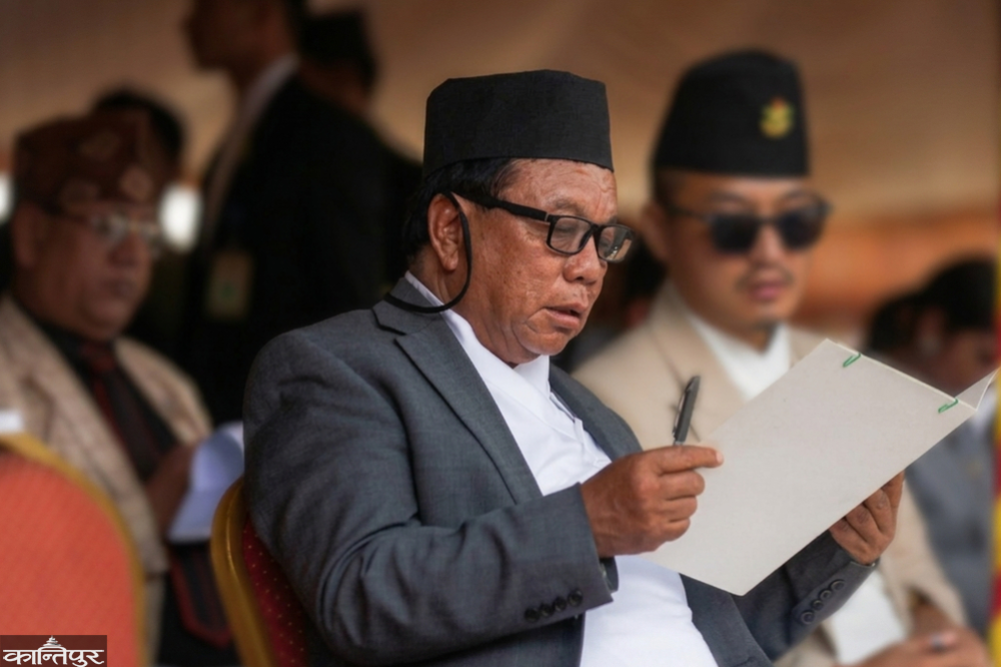
This gap between the knowledge we have and the work the government does is the main problem today. But now there is a good opportunity. For years, Mahavir Pun has been advocating that research, science, and innovation are indispensable for the country. Today, he himself has become a minister. For years, he had been demanding that science and technology be separated from the Ministry of Education.
By May 2026, the government had created a new Ministry of Science, Technology, and Innovation. Pun is now the minister of this ministry. A budget is required to run any ministry, and many countries in the world spend a certain percentage of their total budget on research and innovation. For example, Israel spends 5 percent of its GDP on research, New Zealand spends about 1.5 percent of its GDP on science, innovation, and education, South Korea spends 4.5 percent, and the US, UK, and Japan spend about 3 percent.
An example of how research and innovation are truly important can also be found in the example of a private company, which sounds incredible. Samsung alone spent about 3.8 trillion rupees on research in 2025, which is almost double Nepal's annual budget.
The new ministry has been given a budget of about 4.5 billion rupees so far, which is about 1 percent of the total capital budget. This is a small amount and Pun himself has admitted in parliament that since the ministry is new, the work of formulating a program is still to be done.
What do we have?
We have abundant natural resources. Nepal is considered the second richest country in the world in water resources and we have the potential to produce about 83 thousand megawatts of hydropower, of which up to 42 thousand megawatts is possible from an economic and technical point of view. In Nepal, which used to experience load shedding for up to 18 hours at a time, the problem now is where to sell electricity, and agreements have been made with India and Bangladesh to sell up to 10 thousand megawatts of electricity in the coming decade. Going forward, the government is preparing a policy on the possibility of making and selling green hydrogen and ammonia when there is excess water. If this is successful, Nepal can not only become self-sufficient in energy, but also become an energy exporting country.
Nepal currently has more than 2,000 technology companies, more than one lakh skilled youth are working in them, and IT services worth about $1 billion or about 150 million rupees are being exported annually. When it comes to herbs, Nepal produces more than 80 thousand tons every year and 90 percent of it is exported. But the irony is that most of these are exported raw, unprocessed, and Nepal's share in the world market is only 0.006 percent. We are selling other valuable herbs like Yarchagumbu and Jatamsi raw, while if they can be processed into medicines and sold, the price can increase tenfold.
Chemicals used in cancer drugs can also be extracted from the bark of the tree, but due to lack of technology and research, we have been selling raw materials until now. The Ayurvedic medicine industry is somewhat promising. Its exports from Nepal have increased by 32 percent in the last year, but more than 70 percent of raw materials and machinery still have to be imported from India. What could be more ironic than exporting our own herbs and buying the same processed medicine again?
When it comes to tourism, 8 of the 14 highest mountains in the world are in Nepal, and Lumbini, the birthplace of Gautam Buddha, is also ours. Pashupatinath, Muktinath, Swayambhu, Boudhanath, no other country has so many religious and natural heritages at the same time. However, due to lack of infrastructure and management, this potential has not been fully utilized.
If we look at the most attractive and promising sector, it is the technology sector. There are currently more than 2,000 technology companies in Nepal, more than 100,000 skilled youth are working in it, and IT services worth about 1 billion dollars or about 150 million rupees are being exported annually. This sector has not yet come to the fore and many do not have enough knowledge about it, but it is also the most promising opportunity for Nepal because it does not need water, land, or minerals, all it needs is skill and the internet. This sector should be promoted and supported on a priority basis because it can play an important role in creating self-employment, retaining skilled manpower in Nepal, and strengthening the country's economy.
How is this possible?
The means to connect all these resources is research and technology. Technology to convert hydropower into hydrogen, technology to convert herbs into medicine, and a policy to further expand software exports are exactly the work that the new Ministry of Science will have to do. But budget alone does not bring change. Money is necessary but not enough. Budgets produce results only when the right people are in the right place, in the right institution, with the right authority, and for the right public purpose.
Nepal's own experience has also shown this. In the past, whenever competent, honest, and result-oriented leadership was reached in government-owned industries, there are examples of those industries turning losses into profits. Therefore, the success of the new Ministry of Science is not only in the amount of budget received, but also in the
It depends on who uses the budget, how, on what priority and with what accountability.
6 suggestions to the government
Every processing industry should be given tax exemptions and concessional loans so that raw herbs are not sold raw. Second, Nepali companies should be given priority in government software and technology purchases, which is a demand that IT companies themselves are making. Third, the green hydrogen policy should be completed without delay because it is the second gateway to energy exports.
Fourth, every ministry needs a science advisor because this medium is currently nowhere below the Council of Ministers. Fifth, a part of the research grant should be given with the condition of converting it into usable products, research should not be left in the drawer. And, sixth, Nepali experts abroad should be involved in this and not only as formal advisors but also in policy formulation and implementation.
It is not that talent has been lost from Nepal, but the opportunity has been lost. If given the opportunity, environment and trust, many young scientists, engineers and innovators are ready to work in Nepal. Nepalis living abroad can also contribute not only by sentiment, but also by having a clear policy, capable institutions, and result-oriented leadership. Therefore, another major responsibility of the new Ministry of Science is not to force the youth to go abroad, but to create an environment where they can do something in Nepal.
Now it's your turn
Now let's turn to Honorable Minister Mahavir Pun. He is now a minister himself. Now he has the opportunity to implement what he has been demanding for years.
Nepal now has a new ministry that it did not have until a month ago. But opening the door and entering it are different things. The door has opened, now it's the turn to walk and implement, this work is also Minister Pun's, the government's, and our own.