Bangladesh, once dependent on foreign aid, is today emerging as a successful agricultural model in South Asia through climate-smart technology, cooperatives, and women's leadership.
We use Google Cloud Translation Services. Google requires we provide the following disclaimer relating to use of this service:
This service may contain translations powered by Google. Google disclaims all warranties related to the translations, expressed or implied, including any warranties of accuracy, reliability, and any implied warranties of merchantability, fitness for a particular purpose, and noninfringement.
Nepal and Bangladesh have many similarities – such as geographical location, natural disaster risk, developing economy and rural social structure. However, despite limited resources, high population density and frequent natural disasters, Bangladesh has made the agricultural sector the basis of economic prosperity.
Once known as a country of poverty, hunger and dependence on foreign aid, Bangladesh is today becoming known as a successful development model in South Asia through agricultural innovation, production-oriented cooperatives, climate-smart technology, women's leadership and a well-organized market system.
After a recent five-day study tour with the board of directors of 'Heifer Project Nepal' to Dhaka, Jashore, Godkhali and Salonga regions, I got to understand Bangladesh's rural development journey closely. The practices observed during the tour gave a clear message – Bangladesh's success is not the result of coincidence, but rather the result of visionary policies, active community participation, effective cooperative systems, use of technology, women's empowerment and strong links with the market.
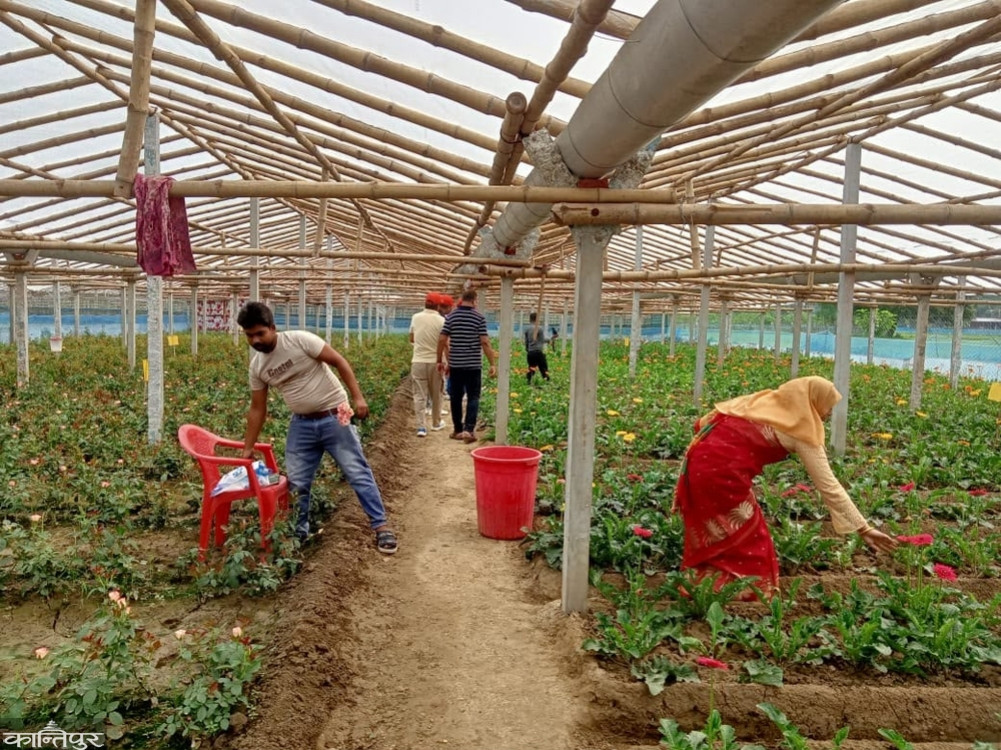
The most impressive experience of the visit was the Godkhali Flower Market in Jashore. It is not just a market where flowers are bought and sold, but a living example of rural economic transformation. Flowers such as roses, daisies, and gerberas produced by thousands of farmers are supplied across the country. And flowers themselves have become the basis of livelihood for thousands of families. At the heart of its success is the cooperative system owned by the farmers themselves, which has systematically operated the entire process from production to collection, grading, packaging, transportation, and marketing. Since farmers determine prices collectively, the influence of middlemen is minimal and the real benefit of the production reaches the farmers.
Although the demand for flowers in Nepal is increasing year by year, the relationship between production and the market is weak. Farmers' products are being destroyed due to lack of markets, while consumers have to pay high prices for imported flowers. If Nepal can establish collection centers, wet houses, processing units, and cooperative markets in the production area according to the Godkhali model, it can replace imports on a large scale. This will create employment in rural areas and also make a significant contribution to reducing migration.
Another inspiring example from Bangladesh is the Salonga Meghna Women's Cooperative. More than 1,400 women are associated with this cooperative. The economic condition of women has improved through agriculture, animal husbandry, savings and credit mobilization, and millions of taka of investment have been mobilized in women's enterprises. This has established women as entrepreneurs, economic decision-makers, and community leaders, not just as laborers.
Although women bear the main burden of agricultural production in Nepal, their financial access, property rights, and participation in the decision-making process are not satisfactory. Salonga's experience has proven that women can become the most powerful agents of rural economic transformation if they are provided with an environment for opportunity, capital, skills, and leadership development.
The ‘Milk for School’ program run by this cooperative is particularly exemplary. On the one hand, this program, which provides regular milk to local school students, has improved the nutritional level of children, and on the other hand, it has created a permanent market for local dairy women. If the mid-day meal program being run in Nepal can be linked to local milk, egg, fruit and vegetable production, schools, farmers and the local economy will benefit.
The group livestock insurance system run through cooperatives in Bangladesh has also been found to be very effective. It has played an important role in reducing the risk of a single animal causing financial ruin to farmers. Since access to agricultural insurance is still limited in Nepal, expanding the group insurance system through cooperatives can increase both attraction and investment in agriculture.
Bangladesh seems to be using climate change not only as a challenge, but also as an opportunity. The ‘Eco-Village’ concept developed in the Jashore region presents an excellent example of climate-smart agriculture. Solar-based irrigation systems have reduced production costs, reduced dependence on diesel, and minimized environmental impact. If such collective solar irrigation systems can be expanded in the Terai and Madhesh regions of Nepal, a qualitative increase in agricultural production is possible.
Modern sheds built to protect livestock from extreme heat, scientific animal husbandry, and technology developed according to local needs have made significant contributions to production growth and cost control.
The original philosophy of the Bangladesh model can be adapted according to Nepal's geography, social structure, and development needs. A structure limited to savings and credit should be linked to production, processing, and marketing, giving priority to production-oriented cooperatives. It is necessary to establish agricultural hubs to reduce the distance between farmers and consumers. Targeted investment in climate-smart agriculture, solar irrigation, modern animal husbandry, agricultural mechanization, and women's entrepreneurship should be increased. It is necessary to adopt a special incentive policy to attract youth who have returned from abroad to agricultural enterprises.
If such successful practices can be implemented in the Nepali context with political will, clear policies, an investment-friendly environment, and active community participation, historic achievements can be achieved in rural employment growth, agricultural production expansion, women's empowerment, import substitution, food self-sufficiency, and reduction of migration.