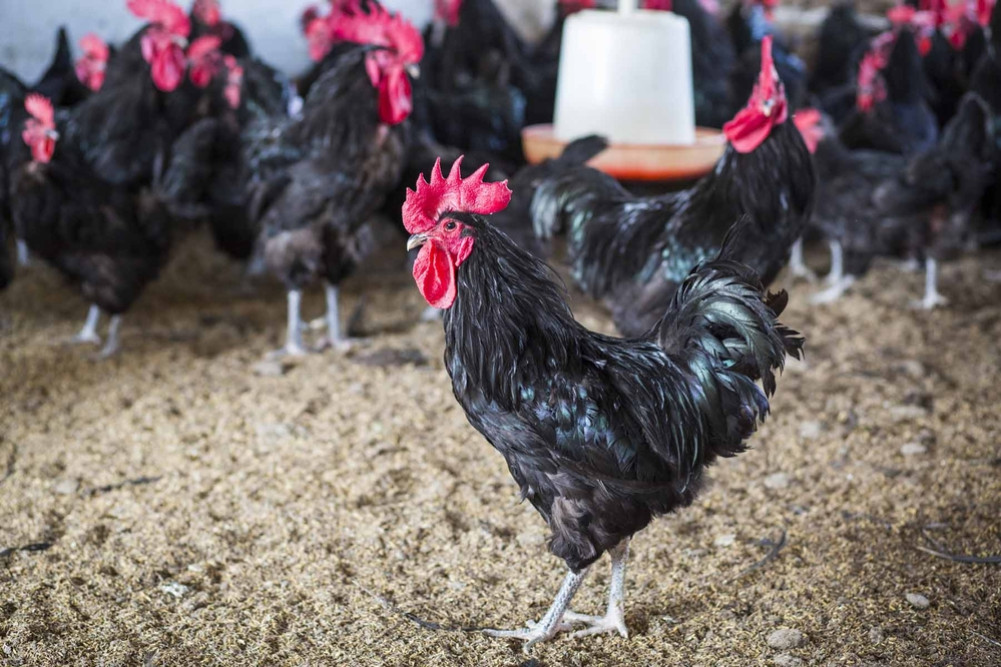
Bird flu is not just a problem for farmers or poultry farmers, it is also an issue related to public health, animal health, and the country's economy. Therefore, it is necessary to act based on accurate information and precautions, not on rumors and fear.
We use Google Cloud Translation Services. Google requires we provide the following disclaimer relating to use of this service:
This service may contain translations powered by Google. Google disclaims all warranties related to the translations, expressed or implied, including any warranties of accuracy, reliability, and any implied warranties of merchantability, fitness for a particular purpose, and noninfringement.
As soon as the news of bird flu spreads, many consumers have a fear - can chicken meat and eggs be eaten or not? But according to health and animal health experts, there is no need to be afraid of it because the bird flu virus is destroyed when meat and eggs are cooked or boiled properly. Therefore, the safest way is to make a habit of eating meat and eggs available in the market after cooking them properly.
The risk of infection can be reduced to a great extent if people working on poultry farms, cutting or selling meat use masks, gloves and boots and wash their hands and feet thoroughly with soap and water after work. Farmers and businessmen also need to take special precautions to avoid bird flu. Putting nets to prevent wild birds from entering poultry farms, disinfecting people and vehicles entering the farm, and paying attention to cleanliness help prevent the spread of the disease.
Vehicles transporting chickens, chicks, feed or eggs should be cleaned and disinfected regularly. If bird flu is detected on a farm, new chickens should not be added in a hurry. It is considered safe to resume rearing only after no new infections have been detected for at least 42 days after the disease has been controlled.
Bird flu is not only a problem for farmers or poultry traders. It is also an issue related to public health, animal health and the country's economy. Therefore, it is necessary to act based on accurate information and precautions, not on rumors and fear. The risk of bird flu can be controlled by providing timely information, informing the relevant authorities if there is any doubt, and taking necessary safety measures.
According to global statistics, compared to 20 years (2004 to 2023), the production of chicken meat and eggs has increased by about 90 percent, and the share of chicken meat in total meat production has increased from 30 to 40 percent during the same period.
During the same period, egg production in Nepal has increased from 580 million eggs per year to 1.64 billion eggs and meat production has increased from about 15,000 tons to about 200,000 tons. The poultry industry has played an important role not only in nutritional security but also in employment and livelihood of low-income farmers.
According to the World Organization for Animal Health, bird flu, which was first seen in birds in 1978, first appeared in humans in 1997. Now, in addition to humans and birds, this disease has also been seen in animals including cows, cats, dogs, tigers, lions, foxes, eagles, pigs, and others, which has increased interest and concern.
The main way to avoid an epidemic is to keep the virus confined to birds through rapid control methods and to minimize mutations or changes in form by preventing infection to other animals and humans.
Bird flu has an almost 100 percent mortality rate in birds. So far, the disease has only been transmitted from animals to humans and the rate of transmission has been found to be very low. There is no evidence of human-to-human transmission of bird flu. So far, about 900 people worldwide have been infected with bird flu and about 50 percent of them have died, according to the World Health Organization.
Impact on Nepal
This disease has been seen in Nepal every year except the last 3 out of the 18 years since 2065. During this period, about 3.4 million birds and 5.5 million eggs have been destroyed. One person has died in Nepal so far due to bird flu. Since 4 Chaitra 2082, about 550,000 birds have been destroyed due to bird flu in 11 different districts of the country.
Recently, some birds and wild animals in the Jawalakhel zoo have died due to bird flu.
According to the Bird Flu Disease Control Regulations, 2078, control work is carried out after the spread of this disease in Nepal. For this, not only infected birds are killed, but all birds, eggs, feed, litter and other objects that have or may have come into contact with infected birds in the vicinity are destroyed and disinfected. Public awareness programs are conducted, disease research programs in humans, wildlife and birds are conducted in coordination with the Ministry of Health and wildlife-related agencies, and the movement of birds and bird products is also prohibited.
In Nepal, infectious diseases such as bird flu, lumpy skin, cholera, African swine flu, enterotoxemia and others have appeared in animals every year. Due to which farmers have suffered billions of rupees in economic losses.
The responsibility for controlling these diseases lies with the union, the chain of command of the Animal Services Department is broken down to the local level, and despite the federal responsibility, there is no structure at the provincial level except for the laboratory for controlling animal epidemics. The delay in timely amending the Animal Health and Animal Services Act of 2055 BS is a major policy and structural problem.
It was estimated that lumpy skin disease alone caused an economic loss of 79 billion. The World Bank and the Asian Development Bank had also projected that Nepal's economic growth would shrink due to lumpy skin disease.
Therefore, the main issue at present is to improve the structural and legal system from the center to the local level by quickly diagnosing and controlling the disease, establishing disease control mechanisms close to farmers and developing capacity for that, managing sufficient technical manpower and budget, and maintaining the chain of command.