Nepal-India should not delay in resolving the policy, infrastructure and practical issues in the trade process. To make economic diplomacy a success, both countries need to take serious initiatives on these issues.
We use Google Cloud Translation Services. Google requires we provide the following disclaimer relating to use of this service:
This service may contain translations powered by Google. Google disclaims all warranties related to the translations, expressed or implied, including any warranties of accuracy, reliability, and any implied warranties of merchantability, fitness for a particular purpose, and noninfringement.
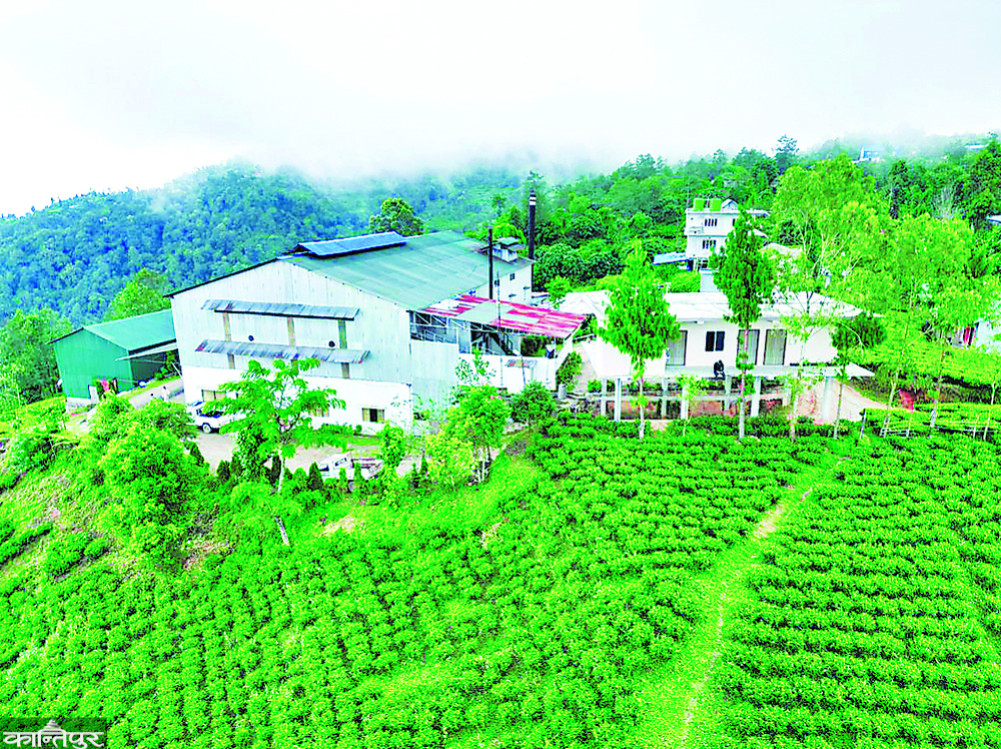
Seven dozen tea factories in Nepal are on the verge of shutting down at once. The reason is the ‘Standard Operating Procedure’ (SOP) implemented by India to make it mandatory to test the quality of tea exported from Nepal.
Industrialists complain that the time taken to meet the standards set in this process has increased business risks. India had implemented this test since May 1. However, the issue has flared up a few days after the visit of the ruling party Rastriya Swatantra Party (RSWP) President Ravi Lamichhane and Foreign Minister Shishir Khanal to India. And, this incident has raised questions about the ‘breakthrough’ that was said to have occurred in the relationship between the two countries through the visit.
Bilateral trade is not just the arithmetic of profit and loss, but also an indispensable necessity for the continuity of bilateral relations. Every country has its own trade rules and laws, which should help manage the adversities of both sides. However, such policies and rules alone cannot always determine the difficulties that arise in bilateral relations. For that, the practical aspect should also be taken into account.
The SOP implemented by India has now created a similar crisis between the two countries. Since it will take more than two weeks to receive the test report, it cannot be sold until the report arrives, and if the sample fails, the tea itself will have to be destroyed or returned, industrialists are saying that they cannot bear this risk.
In the changing global environment, relations between countries are now determined more by geo-economy, geo-biology, economic partnership and trade than by philosophy, ideology, politics and geopolitics. In state-to-state relations, national security is the first concern, while physical infrastructure and 'connectivity' are the second indispensable condition. Then, issues such as economy-investment and employment opportunities, trade-commerce, supply, monetary policy and value chain determine the basis and future direction of the relationship.
India and Nepal are not only neighboring and friendly countries, but also major trading partners. India alone accounts for about 65 percent of Nepal's total foreign trade. India is Nepal's major trading partner from both import and export perspectives. Nepal is surrounded by India on three sides and has a close trade relationship with India. Nepal does not have a trade relationship of this nature with any other country.
India is Nepal's major trading partner from both import and export perspectives. Nepal is surrounded by India on three sides and has a close trade relationship with India. Nepal's second largest partner in import trade is China. However, Nepal's export opportunities to China are limited. Nepal's second largest export trade partner after China is its neighbor across the seven seas. The geographical convenience, easy movement, common cultural and civilizational heritage, and citizen-citizen relations between Nepal and India are naturally very close.
This reality has made Nepal's trade relationship with India unique. Nepal has maintained a stable exchange rate with India for decades. This not only provides monetary stability but also provides trade certainty.
There have been discussions from time to time about changing the exchange rate, but the uncertainty that it may generate
Investors, traders and consumers of both countries are clear about the impact. A stable exchange rate is not a curse for our economy, but an opportunity.
Of course, where there is a deep and close relationship, there are problems. With closeness and proximity, new problems can also arise. That is why the impact of bilateral agreements, understandings, laws and practices should be reviewed and facilitated from time to time. Not all problems that arise in the trade process are accidental. Instead of being a sign of ‘bad relations’, they can be ‘lack of readiness in regular facilitation’. This reality should also be seen in the scenario of economic relations between Nepal and India.
There is also a natural fundamental flow of bilateral trade relations between Nepal and India. The economies of both countries are closely linked. The open border between us has connected the economies daily. Not only today, but for centuries these two countries have had strong economic and trade relations. Both countries should focus on making it more advanced, updated and contemporary and increasing facilitation.
Based on my long-term experience working in the Federation of Nepalese Chambers of Commerce and Industry, and the studies, identifications, and formulations made by the Federation from time to time, I have seen that it is necessary for the governments of both countries to pay attention to the following six main problems for trade facilitation.
Infrastructure
The physical infrastructure of the Nepal-India border area has not yet been sufficiently advanced, modern, and well-equipped. While we have an open border. The easy movement of people has been secured by a bilateral treaty. Now, emphasis should be placed on the construction of easy roads and bridges for freight vehicles, large lorries, and trucks.
Nepal, as a landlocked country, has been granted permission to use India's Kolkata, Haldia, and Visakhapatnam ports. However, there is no separate 'railway track' available for Nepal for freight train services from there to the Nepal border. Having to pay premium fees increases the transportation cost. Efforts to bring freight trains coming from India to Nepal to dry ports within Nepal's borders have not yet been effective. If the proposed Raxaul-Kathmandu railway is built, it can become a 'game changer' for cargo transportation.
Customs
Attention should be paid to scientific management of the Integrated Check Post (ICP) between the two countries. There is a situation where vehicles waiting in line during the customs clearance process have to pay parking fees, which is not fair. Delays in the customs process increase costs and this affects the market price. To take this into account, the customs clearance process should be made easy and simple.
'GST' should be removed from the fees charged at the check points. In the context of the Indian government's decision not to levy GST on exports to Nepal and Bhutan, the implementation should be effective. The office should be kept open 24 hours for clearance, so that the problem of 'detention' does not arise. It is not natural for cargo vehicles to have to wait for a long time at the border. This has increased the cost of transportation.
Security arrangements in the customs area, control of crime in the border area, control of possible mistreatment of passengers in the territory of another country, control of illegal border trade, etc. are equally important. Administrative control on both sides of the Nepal-India border, which is about 1,800 kilometers long, is weak. It is not possible to establish checkposts or customs offices at all places along such a long border. Monitoring and regulation should be effective through joint patrols, CCTV, etc.
In view of the increasing trade and interaction in the border area, it is necessary to emphasize capacity development and construction of customs infrastructure, including small customs offices. Recently, the Nepalese government has significantly reduced the number of small customs offices. How appropriate is this? Does this make bilateral trade easier and more intensive or weaker? This needs to be reviewed. There should be a provision that no transportation fee should be charged to either side when empty trucks return after unloading goods.
Movement
It is necessary to facilitate human movement in the border area of the two countries. The entrance to the border should be opened from 4 am to 11 pm for movement. If this happens, the stay and cost of passengers in the border area can be reduced. This will also address the mutual security interests of the two countries and reduce the feeling of insecurity.
Just as Indian vehicles are allowed to enter Nepal by paying customs duty daily, vehicles with Nepali number plates should be provided with the same facilities. Currently, Indian vehicles are allowed to enter Nepal by giving a customs receipt at the border, while Nepali vehicles have to obtain special permission from the Indian Embassy in Kathmandu to enter India. Reciprocity is necessary in this facility.
If Nepal has an arrangement to fly from Bhairahawa and Pokhara International Airports to various Indian cities, it can make a great contribution to tourism in both countries. Passengers will be able to plan city-centric travel plans. For example, Indian tourists who want to come to Lumbini or Pokhara will not be forced to come to Kathmandu. Nepali passengers will be able to fly directly to the Indian city where they need to work. Nepal has not been allowed to have additional air entry points from India. This needs to be finalized through dialogue between the two governments.
Trade practices
Some trade practices between Nepal and India should be updated and facilitated. For example, arrangements can be made to obtain a certificate of origin online for exports from Nepal. Quality measurement laboratories and quarantine facilities need to be adequate and modern. It is necessary to implement common laws to ensure equal justice on both sides in terms of credit transactions, payment terms, quality assurance, return terms and rights, disputes, etc. between traders of the two countries. Similarly, there should be sufficient official currency exchange centers on both sides.
The situation where raw material quotas and import-export limits make supply difficult and industries have to close or cannot operate at full capacity should end. If Nepal's standards can be determined to be equivalent to the Indian Standards (BIS), market confidence, customs procedures will be simplified and quality assured.
Delays in Indian lab tests when exporting Nepali trademarks have led to increased costs and reduced profits. Long-term solutions should be sought to solve the problems faced repeatedly, especially in the export of tea, cardamom and ginger.
Additional ports
Nepal has received permission from India to use the Kolkata, Haldia and Visakhapatnam ports for trade with third countries. Adding ports in Mundra in Gujarat, Dhandra in Odisha and Mumbai will make it easier for Nepali traders to trade with third countries via India. The Indian side should think liberally on this issue. The concerned parties between Nepal and India should resolve this through dialogue.
Solution to the problem related to tea export
The problem arising in the sale and distribution of Nepali tea in the Indian market is not new, but this time this issue has been seriously raised in the Nepali Parliament and at the diplomatic level of both countries. Even after crossing the customs point, the Indian Tea Board has started collecting mandatory samples of Nepali tea from the buyers' warehouses in major trading centers like Siliguri and Kolkata. The entire supply chain has come to a standstill due to the directive that it will take 10 to 15 days to receive the laboratory test report and that tea cannot be sold or distributed until the report is received. According to the data received, about 1.2 million kilograms of Nepal's processed tea is currently stranded. Of this, 200,000 kg is in Indian warehouses and more than 1 million kg is stuck within Nepal.
This situation has started to affect the Nepali tea industry. The situation of a total of 86 tea industries in Ilam and Jhapa being completely closed due to lack of storage space and inability to pay farmers for green leaves is extremely sad. In Ilam's Suryodaya Municipality alone, 2,995 farmers are involved in tea cultivation. About 20 million kg of green leaves are produced there annually.
The closure of tea industries not only means a decrease in farmers' income - it also means loss of jobs, risk to industry investment, reduced exports and a direct impact on foreign exchange earnings.
The testing process should be transparent, predictable and time-bound to create an environment where Nepali tea can be exported by meeting international quality, food safety and residue standards. Quality testing is a means of securing the market. It should not become an obstacle to stop trade.
The amended provisions of the Tea Board of India dated May 19, 2026, stipulate that laboratory reports should be provided within five days and that customs and food safety agencies should conduct risk-based sample testing of tea sold in India. However, an immediate diplomatic solution should be sought to the situation where reports are not received for weeks, sales are stopped, and tea is being stored in warehouses.
Overall, both countries should not delay in resolving the policy, infrastructure, and practical problems in the trade process. Serious initiatives on these issues are necessary from both sides to make economic diplomacy successful.