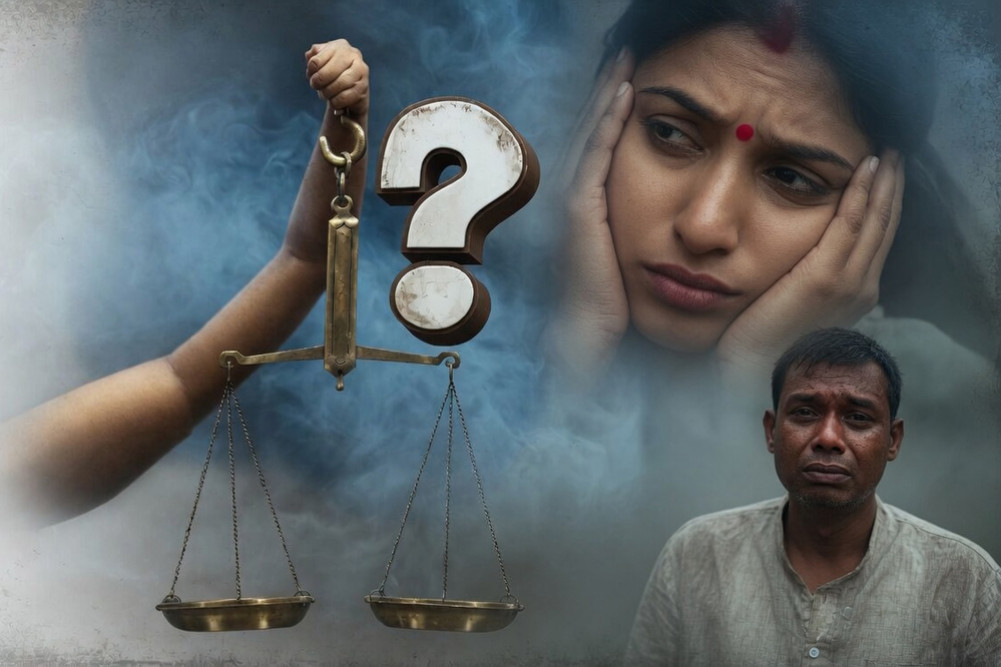
How possible is sustainable peace in Nepal as long as the pain of the conflict is used as a political bargaining chip and a lever for power?
We use Google Cloud Translation Services. Google requires we provide the following disclaimer relating to use of this service:
This service may contain translations powered by Google. Google disclaims all warranties related to the translations, expressed or implied, including any warranties of accuracy, reliability, and any implied warranties of merchantability, fitness for a particular purpose, and noninfringement.
One of the unforgettable political events in the history of Nepal was the ten-year Maoist People's War. Seventeen thousand innocent civilians lost their lives in that brutal, horrific and horrific genocide. Many were made to disappear, many were mutilated. That incident hindered the progress of the country. The development of the country that should have been done ten years ago was pushed back. The Nepali people are still suffering the loss of it. The Maoists were responsible for creating such a terrible and tragic situation and throwing the country into chaos. The then state government was also responsible. The state initially ignored it. It was also the state's mistake to fail to manage and address the problem in a timely manner.
After the success of the 2062/63 people's movement, which arose on the basis of the 12-point understanding between the seven parties and the Maoists, a comprehensive peace agreement was signed between the seven parties and the Maoists. One of the points of that agreement, based on the vision of Nepal's greater prosperity, was the management of transitional justice. However, even after twenty years of the agreement, it has not been finalized. Whose helplessness is this? The conflict victims are tired of hoping. They have stopped crying out in their pain, putting pressure, and making demands because they think nothing will happen no matter how hard they try. This is the result of their despair.
Even the Supreme Court has ruled that the failure to implement transitional justice for a long time is adding to the suffering of the victims, and that this issue should be resolved as soon as possible. In the past, two commissions on enforced disappearances and the Truth and Reconciliation Commission completed their term by doing some work. Those commissions presented arguments that the immediately enacted laws and regulations could not work independently and fairly, but the then government continued to ignore them due to its vested interests. The result was almost zero.
The government changed after the terrible Gen-G movement on 23 and 24 Bhadra. Elections were held. And, an almost two-thirds Rashtriya Swayamsevak Sangh (RSS) government was formed. The current government, which was formed with new enthusiasm and vigor, left out the issue of transitional justice in the 100-point program announced. Why is this not being discussed much? The recently issued ordinance, along with others, dissolved both the commissions ‘Disappeared’ and ‘Truth and Reconciliation’, which were formed to resolve transitional justice, in less than a year.
The government, which received almost a two-thirds majority, did not touch on such a serious and sensitive issue in its 100-point program and the policy and program for the fiscal year 2083/84. International human rights organizations had been pressuring the Nepali government on this issue in the past. It seems that they themselves are tired. The Nepali media world is also not seen to be vocal on this issue.
More than 63,000 cases of enforced disappearances and conflict victims have been registered with the Truth and Reconciliation Commission. Although the complaints of a few of them have been resolved, there is no prospect of the compensation and relief they deserve. According to the Truth and Reconciliation Commission Act, there is a provision that the victim can file a complaint against the perpetrator if he or she does not want to reconcile after forgiving. This issue is a matter of the victim's right to decide. While determining compensation and relief, the difference between the market price twenty years ago and the current price should be taken into account. If compensation and relief are not determined in proportion to this, the establishment of truth and justice cannot be effective. There is a strong expectation from the conflict victims that the incidents of human rights violations during the conflict and the resolution under transitional justice should be prioritized by the government as soon as possible in accordance with international principles and norms and in accordance with the existing laws of Nepal. And, even today, thousands of victim families are waiting for justice. Their question is simple – when will we get justice?
How much sustainable peace is possible in Nepal as long as the pain of the conflict is used as a political transaction and a ladder of power? Reconciliation is not possible without justice and peace cannot be sustainable without truth. If such uncertainty and confusion persists, what other option is there for the conflict victims to regroup and protest? When will the tradition of the government listening only to protests end?