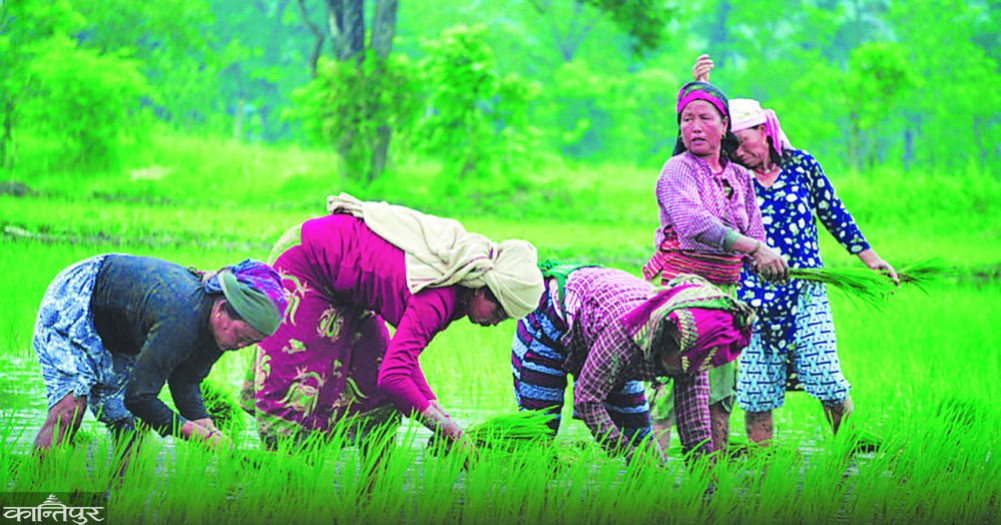
Developed nations were not built in a day. They became strong because their citizens developed a culture of discipline, hard work, patience, and national commitment.
We use Google Cloud Translation Services. Google requires we provide the following disclaimer relating to use of this service:
This service may contain translations powered by Google. Google disclaims all warranties related to the translations, expressed or implied, including any warranties of accuracy, reliability, and any implied warranties of merchantability, fitness for a particular purpose, and noninfringement.
A powerful government with a two-thirds majority has been formed in the country. Many believe that Nepal, which has been stuck in a cycle of unstable governments for a long time, is now moving towards stability. In addition, there is hope that development will accelerate if there is political stability.
There have been signs of improvement in some areas since the government was formed. Efforts to cut public spending, commitment to good governance, and efforts to improve civil services have raised hopes among the people. Efforts to reduce administrative delays, facilitate service delivery, and prioritize corruption control have also been seen. This has at least sent a message that the state is trying to work result-oriented. But we have to wait and see whether this can be transformed into long-term structural reforms.
Investors should not just be invited, but given confidence. Without fast administrative services, corruption control, clear legal processes, and political stability, the dream of economic prosperity remains incomplete. Frequent policy changes, unstable decisions, and the lack of a clear long-term vision in the education sector have left students, parents, and teachers confused. Similarly, even in sensitive issues like squatter management, there is a feeling that political experimentation is more important than long-term solutions. Another important concern is that state governance is gradually becoming more person-centered. When the psychology that the Prime Minister should do everything develops, institutional practice becomes weak. The tendency to not give enough importance to the parliament, to prioritize decisions over discussions, and to limit the parliamentary process to formalities has raised questions about democratic culture. It is necessary to assimilate the fact that democracy is a system that is strengthened not by the popularity of individuals, but by institutional balance and accountability.
The basis of development is the system rather than the individual. If the system is weak, then competent leadership is also limited. But if the system is strong, even ordinary leadership can give good results. Therefore, the biggest need in Nepal today is to build a disciplined, transparent, and result-oriented system.
For a long time, every sector in our country has been in the grip of politics. But production has decreased. Speeches have increased, but respect for labor has weakened. Consumption has increased, but production has decreased. Village fields have become barren, but the market has become flooded with foreign goods. Youth power has been attracted to emigration rather than research, production, and entrepreneurship. As a result, the country's economy has become highly dependent on imports and remittances. Social mindset is also a challenge. The despair that ‘nothing is possible in the country’ is spreading among the youth. This thinking has made emigration abroad not only a compulsion, but also a basis for measuring success. Going abroad is not wrong. But if all hope is sought abroad, who will prepare the basis for possibilities within the country?
Any nation becomes prosperous only when its citizens are ready to build possibilities in their own land even in difficult circumstances. Even if their income is low for some time, they prepare the thought of staying in the country and struggling. Developed nations were not built in a day. Those nations became strong because their citizens developed a culture of discipline, labor, patience, and national commitment.
There is no shortage of possibilities in Nepal. Nepal is a country with great potential in areas such as agriculture, tourism, water resources, herbs, and information technology. The problem is not in resources, but in management and approach. Especially the state has not yet been able to utilize the agricultural sector strategically.
Today, thousands of hectares of land are barren. Villages are becoming empty. Food imports are constantly increasing. This is not just an economic weakness, but also a sign of policy failure. If the government provides subsidies, concessional loans, agricultural insurance, modern technology, and market guarantees to farmers who use barren land, agriculture can once again become a respected and attractive profession.
Agriculture should be seen as the basis of the national economy, not just a means of livelihood. The state can take special initiatives and mobilize unemployed youth in agriculture, animal husbandry, fruit farming, herbal production, and rural infrastructure construction. If the youth are involved in production with minimum wages, it will create employment and increase production.
Today, Nepal needs a production-oriented economy the most. An economy based solely on remittances and imports cannot provide long-term prosperity. Self-reliance comes from production. Therefore, the state should now formulate policies with production at the center. Along with this, it is equally necessary to improve the investment environment. There is a lot of talk about attracting foreign investment, but investors first seek policy stability, transparency, and legal security.
If the policy changes when the government changes, the administration is affected by political interference and investors feel insecure, then big investments will not come. Investors should not just be invited, but also given confidence. Without fast administrative services, corruption control, clear legal processes and political stability, the dream of economic prosperity remains incomplete. Only when an environment is created where investment is safe, industries open, employment increases and economic activity expands. Long-term national consensus is needed on issues such as education, health, agriculture, energy, employment and national security. National priorities should not change even if the government changes.
We have developed a culture of promoting even small work as a big achievement. There is a lot of publicity on social media, but the results are less visible. Now the country needs a culture of working result-oriented, not propaganda-oriented.
Ultimately, nation-building is not a miraculous event, it is a continuous practice. To achieve prosperity, political stability, production-oriented thinking, disciplined citizens, a strong system, capable leadership and a result-oriented work culture are necessary. It should be understood that long-term change is possible only through conscience, labor and institutional reform. Prosperity is not achieved by just dreaming, but through production, discipline and shared responsibility.