Looking at the budget's concerns and priorities, it appears to be a document written not through the eyes of the poor, but through the eyes of the relatively secure and affluent class.
We use Google Cloud Translation Services. Google requires we provide the following disclaimer relating to use of this service:
This service may contain translations powered by Google. Google disclaims all warranties related to the translations, expressed or implied, including any warranties of accuracy, reliability, and any implied warranties of merchantability, fitness for a particular purpose, and noninfringement.
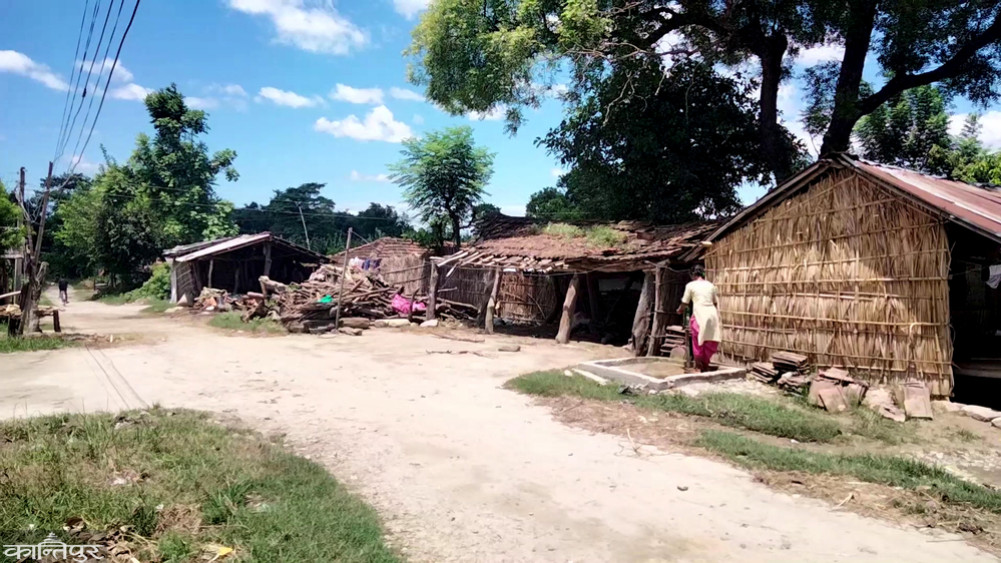
When a wage laborer in Birgunj sits down to calculate whether his earnings can cover food, cooking gas, children's school fees, and medicine, he will not know that the income tax exemption limit has been doubled. He will not care much about the fact that customs duty has been reduced on hundreds of industrial raw materials. He will hardly have heard of the autonomous AI compute center that is said to be set up in Syuchatar. But he will definitely know one thing - whether life has become a little easier or not.
This is the simplest and truest test of the budget. Whether it excites economists or fills a PowerPoint presentation with big numbers is irrelevant. A budget is considered successful when the citizens who bear the heaviest financial burden see their lives, their needs and their hopes reflected in it.
When Finance Minister Swarnim Wagle was presenting the budget for the fiscal year 2083/84, the country expected a big change. Because, the government had promised reforms. So businessmen were hoping for economic growth. The youth wanted jobs. The provinces expected fair treatment. The poor were looking for relief. But the same old Nepali proverb is found - 'Hatti ayo, hatti ayo, fussa π'
The budget communicates somewhat easily with investors, the industry sector and the urban middle class, but it seems to be struggling to connect with the voices and needs of the citizens who bear the greatest economic burden.
This does not mean that this document is completely empty. It includes some significant and positive reform proposals. Increasing the income tax exemption limit to Rs 1 million, reducing customs duty on 273 types of raw materials, abolishing excise duty on 360 items, eliminating 31 redundant agencies, Investment Express Automatic Route, Autonomous AI Compute Center, restructuring of Nepal Electricity Authority, Motherland Fund and Overseas Nepali Bond are serious and far-reaching ideas. But continuity is not reform. Tax cuts alone are not redistribution. The deepest problem with this budget is not what it proposes, but what it fails to see.
The thinker Pradeep Giri often reminded us that the test of democracy is not how the powerful are treated, but whether they can see the people furthest from the reach of power.
A democratic state cannot measure its success solely by the flow of investment or the projection of economic growth. It should consider a simpler question—what has changed for the citizens who bear the heaviest burden? Before discussing where the budget will be spent, a fundamental question must be asked—can the state spend the money it has allocated?
For the past five fiscal years, Nepal has spent an average of only about 65 paise out of every rupee allocated for capital expenditure. This shortfall is not the result of any administrative or paperwork error. This is the result of structural problems such as contractor cartels, delays in land acquisition, environmental clearance hurdles, frequent changes of project managers, and public procurement laws that penalize those who work quickly.
The budget mentions the symptoms of all these problems, but shows no clear commitment to seriously addressing them. There is no clear plan to break the monopoly of contractors. There is also no determination to implement the rule to ensure the tenure of project managers, which the policy and program have already committed to.
Therefore, the record-breaking budget heading of 2.1 trillion rupees is likely to shrink significantly during implementation by next Asad.
American economist Jeffrey Sachs has long argued that poor countries cannot achieve development through hesitant ambition. From that perspective, the size of the budget can be considered reasonable. But Nobel Prize-winning economist Amartya Sen reminds us that public spending only has real meaning when it expands the ‘real freedom’ of the poorest. By that standard, the budget’s ambition is evident in the overall figures, but its sensitivity to the poorest is hard to find.
Looking at the budget’s priorities, the spirit of federalism is yet to be put into practice. A republic that has built its constitution through three revolutions cannot produce a budget in which Madhesh, Karnali and the Far West always come last and leave first.
Rs 37 billion has been allocated for the East-West Highway. Rs 17 billion for the Kathmandu-Terai-Madhesh Expressway. But the Postal Highway, which serves the Terai-Madhesh region, home to the poorest population, has received only Rs 4.6 billion. Only Rs 1 billion has been allocated for the Karnali Highway upgrade.
In the language of imagination, Karnali and the Far West are referred to as ‘tourist regions’, but appear to be neglected in arithmetic.
Then comes the question of taxes. Raising the income tax exemption limit to Rs 1 million seems like a generous step on paper. But in a country where only 1 in 20 adults earns more than Rs 5 million, such a doubling of the limit is actually a gift to the urban professional class, not to the laborer in Nepalgunj, whose taxable income is zero and will remain zero.
A modern state cannot achieve prosperity through tax policy alone. For prosperity, it must redistribute opportunities equitably through health, education and social security. Programs like the health insurance target, the national trauma policy and the doubling of the nutrition allowance for Dalit children are indeed serious commitments. But while the budget appears generous in its tax structure, it appears narrow in its transfer and social security structure.
There is an interesting observation made by anthropologist Isaac Sapera about the Tswana tribe of South Africa. They distinguished the poor and the rich by their reaction to a swarm of locusts. The rich, who raised cattle, were terrified by the locusts, because they destroyed the grass they needed for their livestock. But the poor were happy, because for them the locusts themselves were a source of food. The same event affected different classes of people differently.
This budget that Nepal received can also be read emotionally in the same sense. Looking at its concerns and priorities, it seems like a document written not through the eyes of the poor, but through the eyes of the relatively secure and well-off. It worries about what the urban middle class might lose, pays attention to what foreign investors might think, but does not focus on the question of how an ordinary worker will feed his family next Mangsir.
The Tswana community saw class realities in a swarm of locusts. The same reality is seen in this budget. Those whose biggest concern is employment, income and daily livelihood, rarely find themselves in this budget.
The biggest weakness of such a budget is not only in what it does not deliver. Its danger lies in what it teaches the poor citizens. It teaches them to accept misfortune, pushes them towards retirement, weakens their hope in the state and ultimately forces them to conclude that the state will never stand by their side. This is not just an economic problem for the republic, but also a serious political problem.
Two silences, or unresolved issues, are still evident here.
First, the cooperative crisis. Which has taken away the savings of small savers across Nepal. The budget only mentions ‘regulatory strengthening’, while this would have required a regional levy-funded deposit insurance company, a fast-track corruption tribunal and a binding compensation schedule.
Second, remittances. The annual inflow of around US$15 billion in remittances has kept Nepal’s economy afloat. The budget celebrates this fact but makes no attempt to end the structural dependency it has created.
Initiatives like the ‘Mother Land Fund’ and migrant bonds point in the right direction. But what is lacking is a coherent programme to transform household consumption into village-level capital.
The contradictions between the budget and the government’s own policies and programmes are clear. The policy and program promised to immediately set a minimum cash transfer floor, but the budget has made provision for double allowance only for a certain community.
The policy and program had promised to ensure a real minimum support price, but the budget only mentions the ‘Agriculture Bill’ to be introduced later.
The 100-point reform agenda had prioritized grassroots entrepreneurship, but the budget provides for a 40 percent capital subsidy to firms investing Rs 20 million, i.e., those who already have Rs 20 million.
The employment-centric economy put forward by the Rashtriya Swayamsevak Sangh (RSS) government is now only a ‘skill-based system’. There is no guarantee of employment. The youth who took to the streets last Bhadra are only visible in the preamble, but they have disappeared in the allocated part.
The work that can still be done through the appropriation debate is clear. Some recommendations could be as follows: Direct cash transfers to the poorest 20 percent of households, paid through national identity cards. Rural development program based on South Korea's Saemaul Undong model - the state provides materials, rural municipalities select labor and projects, and build physical infrastructure instead of competing among villages and distributing wages.
A system of real minimum support prices implemented through state procurement. An equality-based provincial allocation formula based on the Human Development Index, which prevents Madhesh, Karnali, and Sudurpaschim from always being the 'leftovers'. Microenterprise grants for women, Dalits, Tharu, Muslims, and indigenous entrepreneurs, with a maximum limit of two hundred thousand rupees per applicant - not two crore rupees. A legal obligation to spend at least 60 percent of every capital allocation within the month of Falgun, otherwise it will be automatically re-allocated.
Article 51(j) of the Constitution commits the state to allocate funds in accordance with the federal balance. Spending Rs 37 billion on a highway and allocating only Rs 1 billion for the main road of Karnali is not unconstitutional in the sense that it can be legally prosecuted, but it does not seem to honor that commitment at all.
This budget may satisfy those who have already made their place in the economy. But it may provide very little benefit to citizens who are still waiting for their due opportunities, security and respect.
Even if a republic is administratively capable, fiscally disciplined and politically vigilant, it is not judged by how well it treats those who are in a comfortable situation. The real test of this is whether the poorest citizen can feel that the state is with them in difficult times.
Unfortunately, many Nepalis will not feel such support in this budget. Without the feeling that the state sees, hears and remembers them, citizens begin to distance themselves not only from the budget but also from the system.