Nepal has not encroached on any border area like India has done in Limpiyadhura, Kalapani, and Susta.
We use Google Cloud Translation Services. Google requires we provide the following disclaimer relating to use of this service:
This service may contain translations powered by Google. Google disclaims all warranties related to the translations, expressed or implied, including any warranties of accuracy, reliability, and any implied warranties of merchantability, fitness for a particular purpose, and noninfringement.
Nepal has never encroached on Indian land. It has not even crossed the border. However, in some places along the border, cross-holding occupation (cross-border occupation and encroachment) has taken place on cultivated land.
This means that India has also encroached on the land of Nepali farmers. Nepali farmers have also encroached on the cultivated land of Indian farmers. This is called cross-holding occupation.
For example, the Sirsia River in the Birgunj Metropolitan City area can be taken. When the Sugauli Treaty was signed, the Sirsia River used to flow straight. Over time, the river changed its course and started flowing in a serpentine shape. After it started flowing in a serpentine shape, some two to four kathas of land that the Nepalis were enjoying came into the possession of the Indians.
The Nepalis also started enjoying some of the land of the Indians. The reason for this is that the river first flowed straight and later changed its course and became serpentine. After that, the Sirsia River was considered the border. This is the reason for the cross-holding occupation.
Nepal has not encroached on any border area like India has done in Limpiyadhura, Kalapani and Susta. The Prime Minister had raised the issue of India's encroachment on Limpiyadhura and Kalapani when he spoke in Parliament. It cannot be compared to cross-holding occupation. This is a matter of one or two bighas of land, while the Lipulekh, Kalapani and Limpiyadhura area is about 372 square kilometers of land.
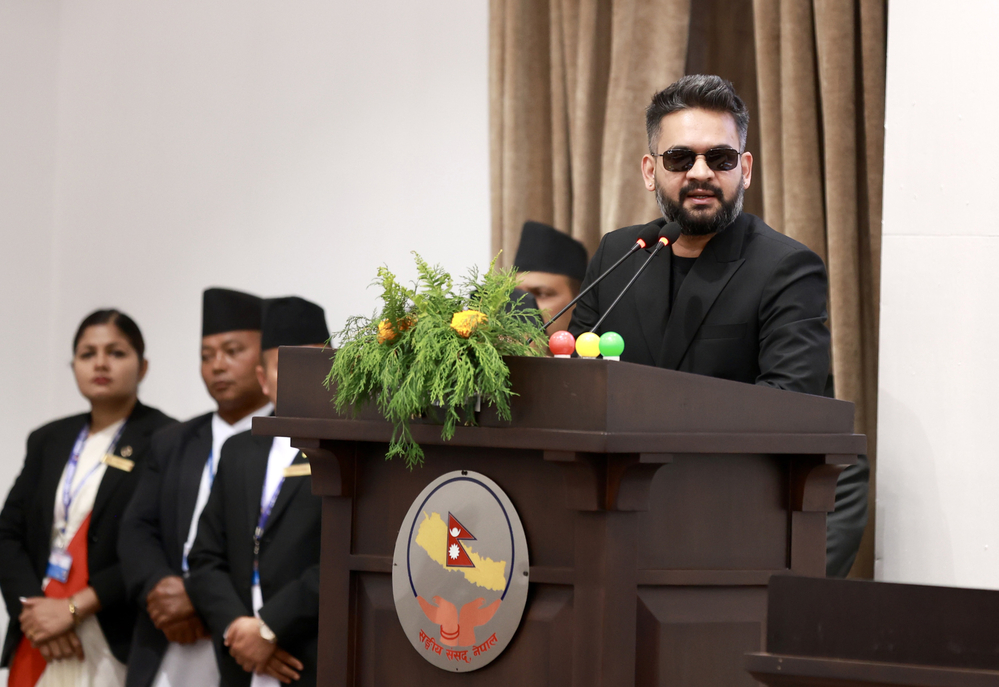
The Prime Minister has told the Parliament that he has talked not only with India and China but also with the British government regarding the border. So far, there has been no information that the Nepal government has formally talked to the British government regarding the Nepal-India border. Even though Prime Minister Balendra Shah said that he had talked, it has not even been reported in the media. If the Prime Minister has had an internal dialogue, that is a positive thing.
The Sugauli Treaty was between Nepal and British India, not with present-day India. If the Prime Minister has called for the initiative of Britain as a third party to resolve the border dispute between Nepal and India, that is a good thing. If he has requested Britain to mediate, that can also be taken positively. Because when there is a border dispute between two countries, the first solution is mutual dialogue. A solution should be sought through diplomatic dialogue. If a solution cannot be found through mutual dialogue, a third party can be requested to mediate.
It is good to seek mediation, because the Lipulekh, Limpiyadhura and Kalapani areas have been under India's control for 64 years. India has not given up even after Nepal raised the issue repeatedly. If the Prime Minister has requested Britain to mediate and India accepts it, it will be a very positive and important initiative.
-Based on a conversation with Kulchandra Neupane of Kantipur