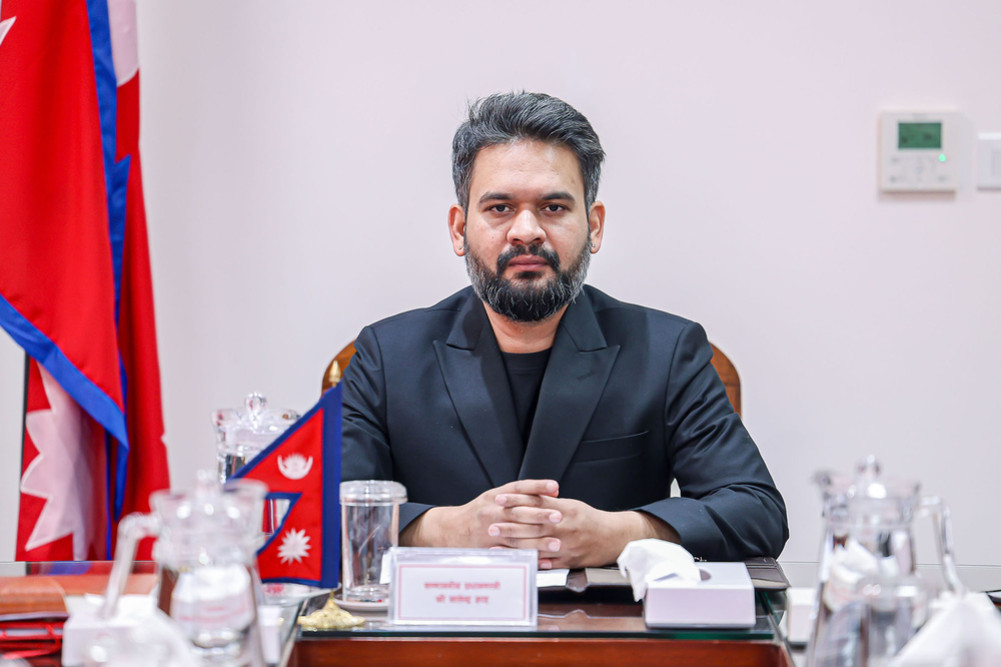
Youth are going abroad in search of employment. If an environment for entrepreneurship is created in Nepal, youth will not have to go abroad. Youth have expectations from Walendra Shah – promotion of entrepreneurship.
We use Google Cloud Translation Services. Google requires we provide the following disclaimer relating to use of this service:
This service may contain translations powered by Google. Google disclaims all warranties related to the translations, expressed or implied, including any warranties of accuracy, reliability, and any implied warranties of merchantability, fitness for a particular purpose, and noninfringement.
The country is standing at a historical turning point today. After the youth and Gen-G movement of 23-24 Bhadra, there has been a comprehensive change in the overall political situation of Nepal. With political change, social transformation, economic challenges and rapid development of technology, Nepali society is searching for new thinking and new leadership. The young generation expects a result-oriented and courageous leadership that will inspire hope for the country. The youth have great hopes and trust in Prime Minister Balendra Shah due to his independent thinking, development-oriented approach and style different from traditional political practices.
Most of the youth of Nepal are going abroad in search of employment. If an environment for entrepreneurship is created in Nepal, the youth will not have to go abroad. Therefore, the first expectation of the youth from Balendra Shah is to promote entrepreneurship. Today's youth are not just looking for jobs, but also thinking about creating jobs. However, due to difficult access to banking, complicated investment processes, unclear policies and weak government cooperation, the dreams of many youth have been stopped. The Prime Minister needs to effectively advance the 'Startup Nepal' campaign targeting youth. The government should support young entrepreneurs through concessional loans, vocational training, tax exemptions, market management and digital platforms. If the 'One Municipality, One Youth Enterprise Program' is implemented from the local level to the federal government, thousands of youth can create self-employment in their villages. There is great potential for youth entrepreneurship in sectors such as agriculture, tourism, information technology, green energy, handicrafts, digital services. Youth need investment, training and opportunities, not speeches. If this need can be met, the youth's trust in leadership will grow stronger.
Youth representation is necessary in all sectors including education, health, agriculture, tourism, technology, environment, sports. Today's world is becoming based on the 'idea economy'. Creative thinking, technology and innovation are changing the country's economy. There are thousands of talented youth in Nepal, who have new ideas, new inventions and new possibilities. However, the structure and investment environment to support and protect those ideas are still weak. The youth's expectation from Prime Minister Balendra is to establish an 'Innovation Center' in each province and implement it as soon as possible. Such a common place, where youth can present innovative ideas, conduct in-depth research and build 'prototypes' and establish business relationships with investors. Many youth in Nepal have come up with new concepts in the fields of apps, software, agricultural technology, green energy, digital education, health services, etc. However, due to lack of initial investment, those plans have not been successful. If the government can establish a 'Youth Idea Fund' and come up with a policy of investing in excellent plans, then world-class innovation is possible in Nepal. The Innovation Center will not only strengthen business but also research, technology transfer, job creation and national self-reliance.
Corruption has had the biggest impact on Nepal's development. Irregularities in planning, delays in public services, political patronage and opaque processes have created deep frustration among the youth. However, the current government is moving towards solving all these challenges, which is very positive. The youth are expecting tough steps against corruption from the Prime Minister. 'Zero tolerance' should not be limited to slogans but should be seen in practice. Making government services completely digital, making the public procurement process transparent, making asset disclosure mandatory, not giving political patronage to those involved in corruption and adopting speedy judicial processes are urgently needed. Many youth in Nepal are deprived of opportunities despite being qualified, because the system is being influenced by access and money. If opportunities can be ensured based on merit, the future of the country can be much brighter. If a firm resolve against corruption can be shown, the youth's trust in the Prime Minister will be strengthened. Today, the youth are looking for honest governance, a transparent system and accountable leadership.
Thousands of Nepali youth are skilled in information technology. They are working with various companies around the world in Nepal. If the government can encourage the IT industry, Nepal can become the digital hub of South Asia. Digital Nepal is not just technology - it is also the basis for good governance, transparency and easy access to services. There should be a system for citizens to get services from home. If the digital education system can be expanded from school to university, skilled manpower will be produced for the future. Today's generation is dreaming of 'Smart Nepal'.
Despite the large youth population in Nepal, participation in the decision-making process is still limited. Youth representation is weak at many policy-making levels. From the local level to the federal government, youth are looking for opportunities in decisive roles. Youth are not just a force for election campaigning - they are also citizens with the ability to make policies. Youth representation is necessary in all sectors including education, health, agriculture, tourism, technology, environment, sports. A 'Youth Advisory Committee' can be formed in every ministry, where youth from different sectors can suggest policies. If youth participation in local government can be legally ensured, democracy will become stronger. Ensuring special opportunities and inclusive participation for women, Dalits, indigenous people, Madhesis, and youth from backward areas is the need of the day. Today's youth do not want to be just spectators, they want to lead.
Nepal's youth today are standing at the crossroads of despair and opportunity. On the one hand, unemployment, emigration, corruption, and political instability have exhausted the youth, while on the other hand, they are also optimistic due to the desire for new thinking, technology, innovation, and change. Youth are looking for honest, visionary, result-oriented, and courageous leadership. If the country is taken forward by focusing on entrepreneurship, innovation, good governance, digital development, climate justice, and youth participation, Nepal can usher in a new era.