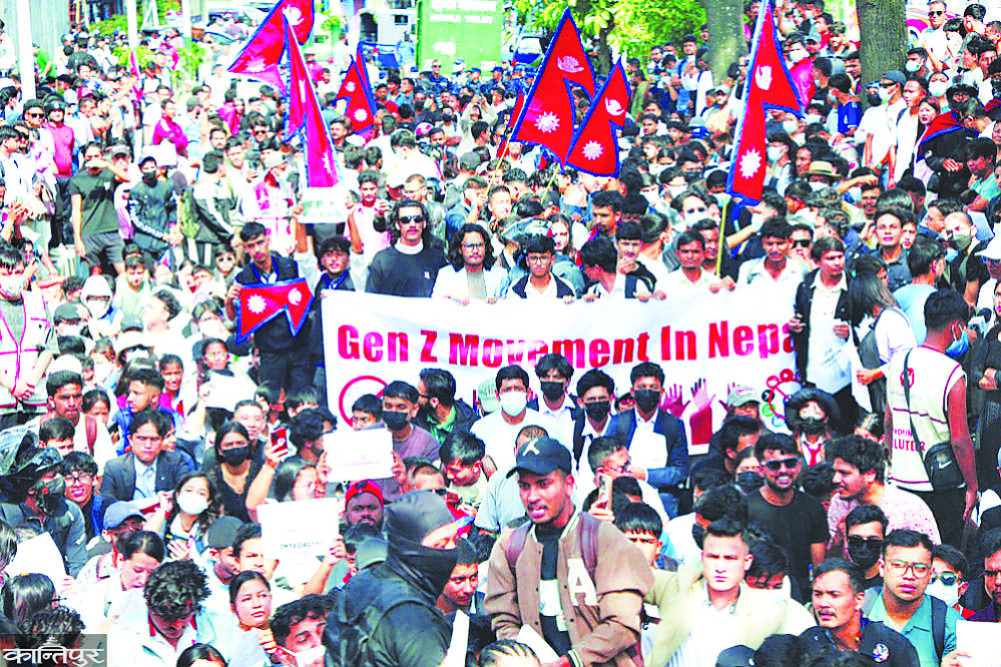
What did Madhesh get in the Gen-G movement? The reality is that Madhesh only got opportunities, not achievements. The participation of Madhesh youth was seen in the movement, but Madhesh issues did not become the central agenda of the movement.
We use Google Cloud Translation Services. Google requires we provide the following disclaimer relating to use of this service:
This service may contain translations powered by Google. Google disclaims all warranties related to the translations, expressed or implied, including any warranties of accuracy, reliability, and any implied warranties of merchantability, fitness for a particular purpose, and noninfringement.
Nepal's political history is a history of movements. But not every movement has provided equal achievements and equal justice. The Madhesh movement of 2006/07 and the recent Gen-G movement, although seen at different times, in different languages and in different styles, are ultimately movements that are questioning the same state structure. Today, there is a generation standing at the junction of these two movements - the Madhesh Gen-G, whose role, achievements and future direction are being seriously questioned. The Madhesh movement is a political and social movement that began against the long-term discrimination, exclusion and humiliation of the Madhesh community in the state structure of Nepal.
The problem of citizenship, low representation in the state machinery, lack of access to security agencies and administration, devaluation of language and culture - all these were the central reasons for the Madhesh movement. The goal of this movement was not only to fulfill some demands, but also to redefine the state-citizen relationship. Due to the pressure of this movement, concepts such as federalism, inclusiveness and proportional representation were introduced into the constitution.
But although the achievements of the Madhesh movement were seen on paper, they remained limited in practice. Agreements and agreements were reached, commitments to amend the constitution were made, but implementation always remained incomplete. The citizenship problem has not been completely resolved even today, the provincial government is powerless and has not been able to reach the power structure due to limited representation.
The Madhesh Gen-G could not build a collective bargaining force. They should have kept issues like citizenship, provincial rights, inclusive appointments, and a clear roadmap for constitutional amendment at the center of the negotiations, but due to the vague nature of the movement, these issues did not become a priority. This is where they failed. Meanwhile, the Gen-G movement that emerged was not a movement of any one community, identity or region. It was an expression of generational dissatisfaction - corruption, impunity, unemployment, inequality of opportunity and rebellion against the old political culture. This generation, raised on digital media, raised the voice of 'system change' using the streets and social media together. After the Gen-G movement, Nepal entered a kind of political transition. It seemed that the power had been shaken, but the structure remained the same. Such transition periods are generally considered the most appropriate time to fulfill demands, because the state is under pressure. But to convert pressure into achievement, a clear agenda, collective leadership, and institutional negotiation are needed. This aspect was seen as weak in the Gen-G movement. The results of Madhesh in the elections held after the heat and fury of the Gen-G movement surprised everyone.
It is not uncommon for the Rashtriya Swayamsevak Sangh (RSS) to receive significant votes in about 31 of the 32 constituencies in Madhesh and about 1.3 million more votes in the proportional representation system. However, the question arises here, has Madhesh fully accepted the Rashtriya Swayamsevak Sangh (RSS)? Or is it just a new face chosen amidst the lack of alternatives? The more important question is this – can the Rashtriya Swayamsevak Sangh (RSS) embrace Madhesh and its issues (identity, citizenship and federalism)? There is no clear roadmap for Madhesh’s historical wounds and inclusiveness anywhere in the RSSS’s agenda. Will this vote be utilized in the interest of Madhesh or will the Madhesh public opinion be merged with Kathmandu’s ‘populism’? This is a serious test for the Madhesh Gen-G.
In this context, the question of Madhesh Gen-G arises. What did Madhesh get in the Gen-G movement? The reality is that Madhesh only got an opportunity, not an achievement. The participation of Madhesh youth was seen in the movement, but the issues of Madhesh could not become the central agenda of the movement. There is no concrete mention of Madhesh, inclusion or historical exclusion in any of the agreements or dialogue documents related to the Gen-G movement. This shows that the Gen-G movement could not accept the Madhesh question as a ‘collective issue’. Madhesh is not seen as a formal party in the negotiation process of the Gen-G movement. The Madhesh Gen-G could not build a collective bargaining force. They should have put issues like citizenship, provincial rights, inclusive appointments, and a clear roadmap for constitutional amendment at the center of the negotiations, but due to the vague nature of the movement, these issues did not become a priority. This is where they failed.
The state made many agreements with the Madhesh like 8 and 22 points, but all of them have not been implemented and have been kept in the drawers of the ministry. Isn’t the current government also making the Madhesh issue just ‘bargaining chips’? This character of the state that makes agreements but does not implement them is a big betrayal for ‘Gen-G’. The current rule that prohibits bringing goods worth more than Rs 100 has hit the Madhesh bread-and-butter relationship and economy. Is this policy of treating its own citizens like smugglers a gift of ‘system change’? Similarly, the debate on amending the constitution has started again, but is it for the rights of Madhesh or a ploy to seize power? If the representation of Madhesh in the drafting committee is limited to ‘tokenism’, then that amendment will never address the feelings of Madhesh.
The reason why the Madhesh Gen-G’s negotiations have been partially unsuccessful is clear – the ambiguity of the agenda, the lack of leadership and the lack of long-term strategic thinking. The path forward is not possible without self-reflection. Madhesh Gen-G will have to combine both the politics of identity and the politics of system reform. The movement should not be limited to protest alone but should be transformed into a long-term political journey that intervenes in policies, the constitution and the power structure. Even after reaching the height of the movement, if its historical pain, incomplete rights and structural discrimination cannot be transformed into a clear political agenda, then that movement will be limited to an emotional explosion. The Gen-G movement gave the slogan of 'system change', but the Madhesi Gen-G could not firmly establish their identity, rights and political existence within that slogan.
Now, for the Madhesi Gen-G, self-pity is not necessary, but ruthless self-criticism. Politics today will neither be based on street slogans alone, nor will justice be achieved by mixing with others' agendas. The Madhesi Gen-G must clearly choose, either they will become a force that history will repeatedly use and abandon, or they will become a political force that will reach the center of power, the constitution and policy-making and ensure their rights. This decision will decide whether or not to take Madhesi Gen-G out of the question and form Nepal's political answer.
In conclusion, the Madhesi movement raised awareness of rights, the Gen-G movement questioned the system. But the Madhesi Gen-G has yet to combine the power of these two movements. The struggle now should not be only on the streets, but should be a struggle to seek justice within policy making, institutional reforms, and the power structure. Only from here can Madhesi Gen-G become the answer to the future, not a question of history.
(Yadav is a law student and civic activist. He is also the Vice President of the Nepal Law Campus, Independent University)