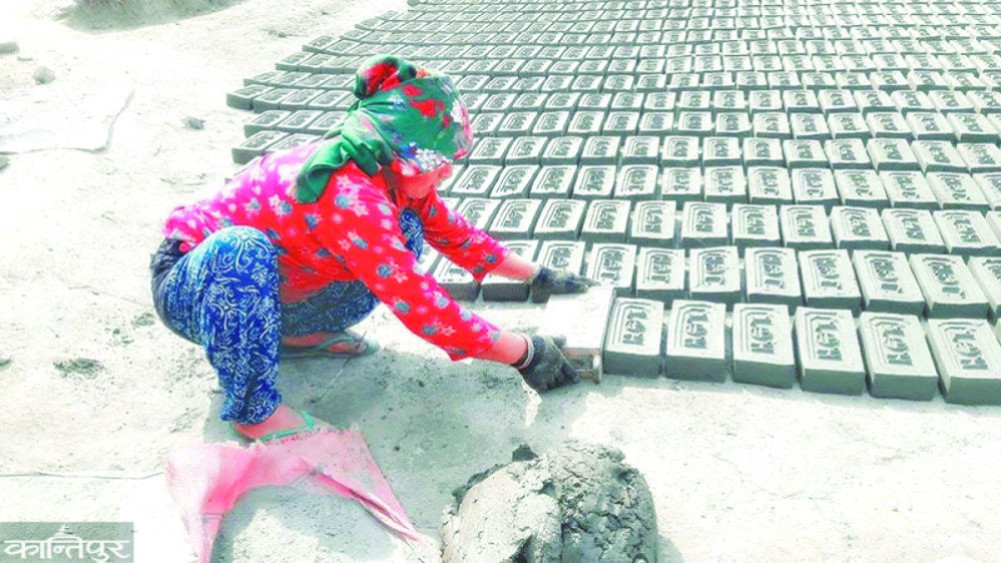
The significance of Labor Day lies in the resolve to transform labor from a chore into a culture. For this, our education system must teach 'skills', not just 'careers'.
We use Google Cloud Translation Services. Google requires we provide the following disclaimer relating to use of this service:
This service may contain translations powered by Google. Google disclaims all warranties related to the translations, expressed or implied, including any warranties of accuracy, reliability, and any implied warranties of merchantability, fitness for a particular purpose, and noninfringement.
History is always said to be the story of the victors. In fact, history is the architecture of those anonymous hands, who turned the mud into letters and the jungle into cities. Today is May 1, i.e. Workers' Day. Red flags may be waving on the noisy streets of the city, slogans may be shaking the sky, and seminars on 'respect for labor' may be taking place in the air-conditioned halls of hotels. Meanwhile, have we ever wondered - where is the identity of those anonymous craftsmen who built this huge structure of civilization? Is our modernity not just a 'beautiful neglect' built on the foundation of their blood and sweat?
We have always coated labor with 'sorrow'. We have imprisoned the laborers in the frame of 'poor' and 'victim', killing their creative pride. However, the truth is that labor is not just a torment to feed the stomach, labor is the most beautiful human intervention that man can make on this earth.
The movement for ‘eight hours work, eight hours rest and eight hours recreation’, which began on May 1, 1886 and culminated in the Haymarket Square uprising, was not just a demand of the time, it was a rebellion by man to avoid becoming a machine. The ‘value of labor’ established by that movement has not been fully achieved even after a century and a half.
When we turn the pages of history, we see that the blood and sweat of workers have been mixed in the foundation of everything from the great pyramids to the Great Wall and from the magnificent palaces to the modern metropolis. Ironically! The names of those who built those structures are nowhere to be found in the original text of history. The names of the rulers were engraved on the inscriptions, but the palms of the stone cutters were not recorded anywhere.
There is a wonderful contradiction in our society. We call the paint a painter paints on a canvas ‘art’ and buy it for lakhs, but we label the skills of a mason who mixes salty sweat with ‘plaster’ on a wall in the scorching sun as ‘labor’ and reduce it to two to four hundred. Is there a difference between a writer playing with words and a carpenter putting his soul into woodwork? The difference lies in our perspective. Is the value of a creation determined by the time and skill spent making it or by the social status of the creator?
We have erected an invisible wall of ‘white collar’ and ‘blue collar’, which on the one hand spreads the illusion of intelligence and on the other hand looks at physical labor with hatred. Workers need dignity, not mercy. They need ownership of their creation, not charity.
Karl Marx spoke of ‘alienation’ decades ago. When a person is separated from the things he produces, his creativity dies. This has become even more frightening in today's corporate and digital era.
The current free labor market (gig economy) has put workers in a strange illusion. Behind the slogan of 'be your own boss' lies the slavery of algorithms. However, technology itself is not to blame, it has also opened new doors of employment. The challenge is to give technology a human face.
When we talk about labor, we always talk about the streets and factories, but we forget the 'invisible contribution' inside the home, which sustains this world. According to various studies, the monetary value of unpaid 'care work' done by women inside the home is about 9 percent or more of the world's gross domestic product.
Unfortunately! Patriarchal thinking has called it 'duty' or 'love' and kept it out of the definition of labor. Can we keep a huge part of labor invisible in the name of love? The foundation of civilization is actually where someone's hands are playing with fire since morning to satisfy someone's hunger. Until domestic labor is respected economically and socially, the debate on labor will remain incomplete.
The significance of Labor Day lies in the determination to transform labor from a chore into a culture. For this, our education system should teach 'skills', not just 'careers'. When a student understands the importance and science of carpentry, plumbing or modern agricultural technology in school, then his hatred of labor disappears from his mind. Instead of making degrees a standard of social prestige, education should make skills a source of self-reliance.
Similarly, the minimum wage is not enough to be fixed on paper. Its implementation requires strict monitoring by the state. It is essential to bring domestic workers, agricultural workers and construction workers, especially those in the informal sector, under the umbrella of the social security fund.
The first condition of social democracy is respect for labor. As long as society sees the difference between the skill of a shoemaker and the intelligence of a software developer, we cannot be truly modern. We need a cultural revolution that measures a person's status not by their 'position' but by their creative contributions.
Sweat has no fixed color. However, when it mixes with soil, it has the power to change the color of civilization. In fact, sweat is the 'white blood' that flows from the body, which has filled the canvas of development in this world. Workers are the silent builders of civilization, who are making this world habitable without making a fuss. The carts in their palms are not just the drums of labor, they are the living letters that write the future of this earth.
On May 1, we must learn to respect not only the 'fist' of the worker, but also his 'brain' and 'heart'. Labor Day will be meaningful only when we start seeing the broom in the hand of a road sweeper, not a broom that sweeps civilization. When we understand the beauty and value of the rainbow that appears when the sun's rays fall on a drop of water from the forehead of a craftsman.
(Siva is a sociology student. She writes for the rights and justice of women, children, and Dalits)