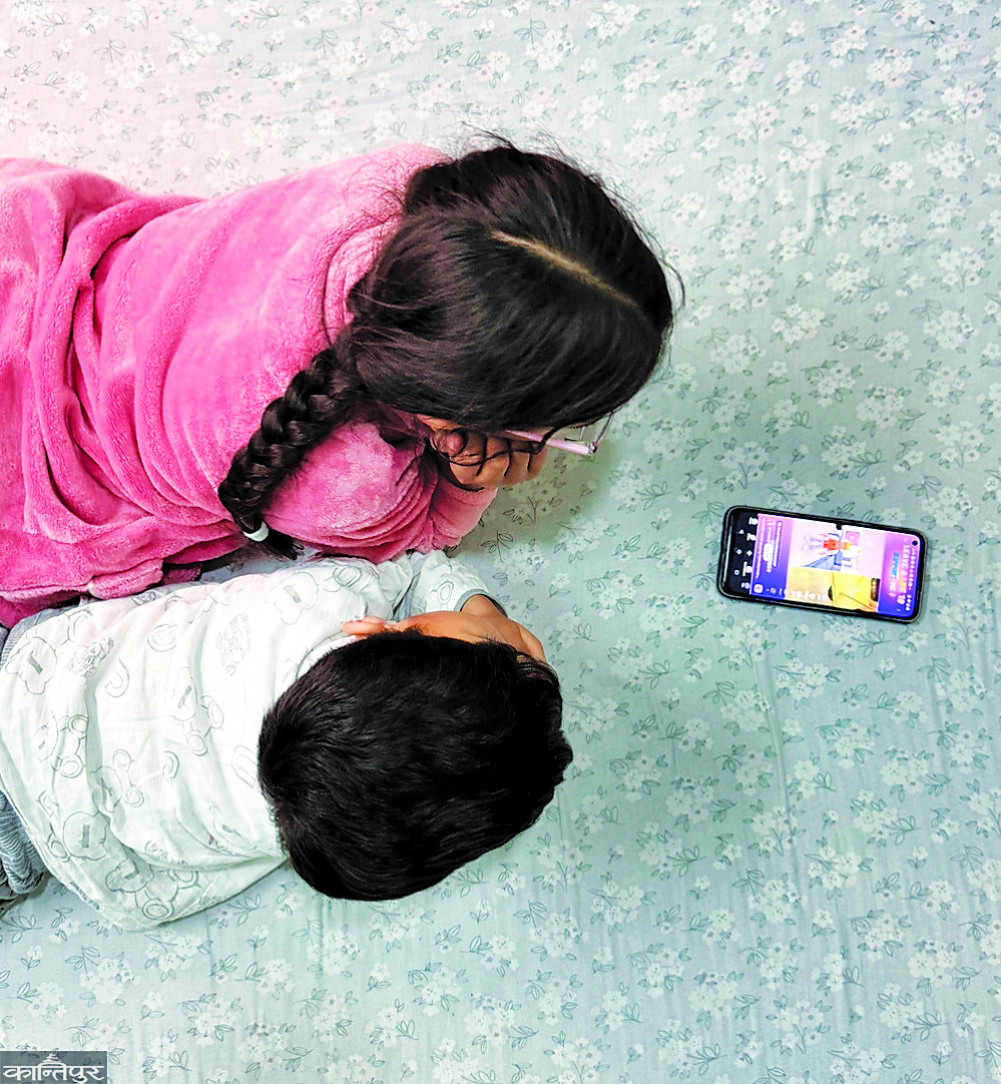
Children from some families, where both parents have to work due to financial constraints, are confined to their rooms due to the unsafe environment outside the home, and are forced to move their games entirely online.
We use Google Cloud Translation Services. Google requires we provide the following disclaimer relating to use of this service:
This service may contain translations powered by Google. Google disclaims all warranties related to the translations, expressed or implied, including any warranties of accuracy, reliability, and any implied warranties of merchantability, fitness for a particular purpose, and noninfringement.
My educational journey from a community school in Thabang to Harvard was not determined by textbooks alone. Its foundation was laid in my free playtime as a child. The most important steps of my life were based on the agreements exchanged with the flow of the river while shepherding and the secrets of the pottery played in the village. The success of the national swimming competition and the in-depth study of various dimensions of society are the results of such free playtime.
However, for many children of the current generation, this experience of mine has become a legend of a single country. Most children's play is limited to the backyard. Moreover, children from families who have migrated in search of opportunities and settled in the narrow streets of the city do not have access to open playgrounds.
Some children from families where both parents have to go out to work due to financial constraints are confined to their rooms due to the unsafe environment outside the home. And, they are forced to completely shift their play online. Nepali children are losing both physical and mental 'space'.
Children from some families where both parents have to go out to work due to economic constraints are confined to their rooms due to unsafe environments outside the home. And, they are forced to completely shift their games online. One of the main weaknesses of modern urban planning is that we have never seen children as independent citizens. We have limited them to a group dependent on their parents. Therefore, the needs of children have always been overlooked in policy terms while designing our structures. Even the recently passed National Urban Policy, 2081, has not specified minimum standards for safe play areas.
Due to rapid and unplanned urbanization, the area occupied by physical structures in Kathmandu increased by about 412 percent between 1989 and 2016 alone. Currently, there is only about 0.25 square meters of open space available per capita in Kathmandu Metropolitan City. This means that every Kathmandu resident has only one open space area. This is much less than the minimum of 9 square meters recommended by the World Health Organization. Other cities in Nepal are also slowly moving towards this pattern.
Even children in villages, which have adequate playgrounds compared to cities, are no longer deprived of the tendency to move their playgrounds online. There is a competition to make social networks and ‘online games’ addictive in a planned manner. In this case, recently, courts in California and New Mexico in the US have also given historic judgments of millions of dollars in fines and compensation to companies like ‘Meta’ and ‘YouTube’. Where can children who cannot distinguish the fine line between usefulness and addiction get the strength to resist this planned competition? These days, bright eyes that observe the environment around them, young minds trying to understand the world, and small creative hands are stuck on the phone screen.
Looking back, learning to swim with friends by blocking the river was a social internship. Those who could lift heavy stones would roll stones. Those who could climb trees would bring apples. Those who knew how to use stones and apples would build dams that would not be washed away by the flow of the river. How deep and how wide was needed? There would be discussions. They would try to sharpen their stunts by learning from others. There would be an assessment of what was learned, taught, and not taught. They would find friends who would do risky stunts. They would also find brothers and sisters who would hold their ears while doing risky stunts. They would also find spectators who would encourage them to do risky stunts. Without realizing it, through those jumps, we were looking at the collective cooperation that takes place in society in a mirror.
Calling free play the social internship of children is not only a slogan etched in my memory, but also a fact proven by scientific thought. Children play these games under social internship face to face. Children determine the structure, dignity, content, and purpose of the game – all on their own autonomy. World-renowned psychologist Jonathan Haidt has drawn attention to the declining opportunities for such direct social internships around the world in his book ‘The Anxious Generation’.
Children determine the structure, dignity, content and purpose of play – all in their own autonomy. World-renowned psychologist Jonathan Haidt has drawn attention to the declining opportunities for such direct social internships around the world in his book ‘The Anxious Generation’. In Thabang, where rapid and haphazard urbanization is taking place, swimming pools built by children are rarely seen. The signs of pottery shacks in the courtyards are decreasing. This face of Thabang is a miniature version of villages and cities across the country. These changes are not the fault of children, but rather the result of our failures. Our greatest responsibility today is to create a safe environment for children to play and learn, who are unable to advocate for their own rights.
To fulfill this responsibility, our policies and priorities must focus on the overall well-being of children. It can start not with big announcements, but with small but meaningful changes in our surroundings. Children can be given priority in existing common open spaces by eliminating the tendency to encroach on unauthorized parking, parties, political events or other play areas and time. In addition, traffic management in the surrounding areas should be tightened, ensuring regular cleaning, drinking water provision and safe fencing in such public spaces. In this way, ‘one ward, one child-friendly open space’ is possible within a year.
Let us talk about Kathmandu. The strong network of past patis, pauwas, choks and bahas was child-friendly. We can revive such structures according to modern needs when they suit Nepali culture and local climate. This can be easily started from the ward or municipality level. However, building large infrastructure in Nepal’s dense cities, which have been urbanized in a haphazard manner, is certainly challenging. Nevertheless, there is ample potential to develop riverside corridors, historical choks and remaining public lands as ‘pocket parks’. We have examples of such commendable work already underway in some places. Therefore, a policy commitment should be made to ensure access to a green park within a 15-minute walk of every citizen's home. And, it should be implemented and maintained within the next five years.
Similarly, balanced and conscious monitoring of internet use is necessary during the most sensitive years of children. For this, it is imperative to educate and make parents aware of technological tools like 'parental control'. Technology companies should also be made responsible for creating simple mechanisms that the average Nepali parent can easily understand and use.
Some children can easily learn the skills to circumvent such technological controls. Therefore, it is more effective to mold internet use into a 'routine' of a certain time. Children will be able to use their time and attention that is not captured by the internet in creative play and art. Children are equal partners in the open space. We must ensure the right of children to weave their future with these soil, rivers, and open skies. Only then will our development be meaningful.
(This article is published as part of a series of thoughts prepared in collaboration with ‘The Nepal Discourse.’ ‘The Nepal Discourse’ is a program organized at Harvard University and MIT, which focuses on setting Nepal’s strategic vision for the coming decade) (Nirupama holds a bachelor’s degree in environmental science and public policy from Harvard University)