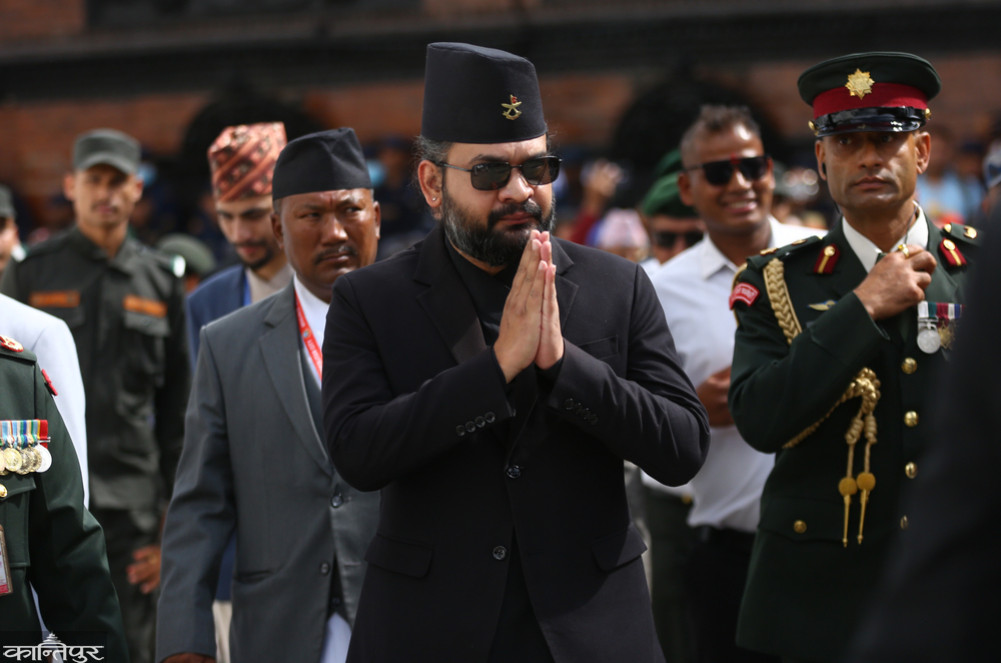
Miraculous leadership, supermajority, and short, prescriptive chatter posted on social media do not strengthen democracy.
We use Google Cloud Translation Services. Google requires we provide the following disclaimer relating to use of this service:
This service may contain translations powered by Google. Google disclaims all warranties related to the translations, expressed or implied, including any warranties of accuracy, reliability, and any implied warranties of merchantability, fitness for a particular purpose, and noninfringement.
Balendra Shah's journey from the mayor of Kathmandu Metropolitan City to the prime minister's chair in Singha Durbar is the shortest but most interesting chapter in Nepali politics. Shah, who joined the National Independent Party just three months ago, has today become the country's executive head. In the elections held on Falgun 21, 2082, the Rashtriya Swatantra Party won 182 seats in the 275-member House of Representatives, the largest single majority in Nepal's democratic history.
This is not only Shah's personal achievement, but also an example of how 'the direct trust of the people can bring a new party and leadership to power', setting aside the old monopoly of party politics. However, Prime Minister Shah and the Rashtriya Swatantra Party now face very difficult challenges. The operation of the parliament, federal structure, and pluralistic society is not possible with miracles and historic majorities alone. This is the reality that will test his leadership.
In 1922, in his essay ‘Types of Legitimate Dominance’, German sociologist Max Weber mentioned three types of leadership: traditional, legal-logical and magical. Nepal’s central politics had long oscillated between traditional party dominance and constitutional legal process. The rise of Shah has revived magical leadership.
The people have now based their image on the miraculous image built on the foundation of some visible work done by him during his three-year term as mayor, not on the party’s flag, old status or financial resources. Prachanda, who emerged from the chaos of the ‘people’s war’, and KP Oli, who challenged him and created the image of a nationalist ‘Ba’ during the blockade, were certainly the magical leaders of some time ago. Although there are many similarities and differences between Oli and Shah, who have been celebrity-friendly for almost ten years, the words of one and the actions of the other seem to have left an impression on the general electorate.
The cooperative-related issue had tarnished his and the party's image and Shah's popularity during the Gen-G movement in Bhadau, so Rashtriya Swayamsevak Sangh (RSS) President Ravi Lamichhane proposed him as the leader of the parliamentary party and future Prime Minister. Over time, the RSSP won a large majority. This has given a new dimension to the relationship between personal miracles and institutional structures. However, Weber himself has warned that 'any miracle is of an unstable nature.' If the miracle or charm of governance cannot be converted into daily administration and regular politics, it can become a crisis in itself. Prime Minister Shah will now have to present himself from the role of the 'single decision-maker' of Kathmandu Metropolitan City to the role of a consensus builder as the leader of the majority party.
As Prime Minister, Shah will now have to convert symbolic capital into institutional good governance. The criterion for his success will be to be able to transform ‘honesty visible online’ into ‘transparency of procurement contracts’ and ‘activity visible on the streets’ into ‘effective coordination of ministries’. Non-political and middle-class issues like good governance and corruption do not play a significant role in long-term justice and economic transformation. Only by exploring the causes of the country’s socio-economic inequality, identifying the challenges of the surrounding geopolitics and geo-economics, and seizing opportunities, can the door to long-term possibilities open.
The victory of Balendra Shah and the Rashtriya Swayamsevak Sangh (RSS) is the greatest application of digital democracy. Social media has bridged the gap between citizens and rulers. Compared to traditional newspapers and TV, today’s information technology and digital dialogue on social media have changed the pattern of political communication. The various patterns of ideas posted by Shah during the ‘Gen-G’ movement on 23 and 24 Bhadra and the curiosity and attraction it aroused among his supporters signaled a new digital dialogue.
According to the late German sociologist Habermas, the vitality of democracy depends on the quality of free, critical and inclusive public discourse in society. Shah’s digital presence has created an ‘other public sphere’ free from the monopoly of traditional parties, where citizens can directly connect with the ruler. However, the practice of keeping leaders speaking and the people listening on the internet not only destroys public dialogue but also weakens the public and parliamentary debate and administrative accountability that should precede any political decision. Miraculous leadership, overwhelming majorities and short prescriptive chatter posted on the internet do not strengthen democracy.
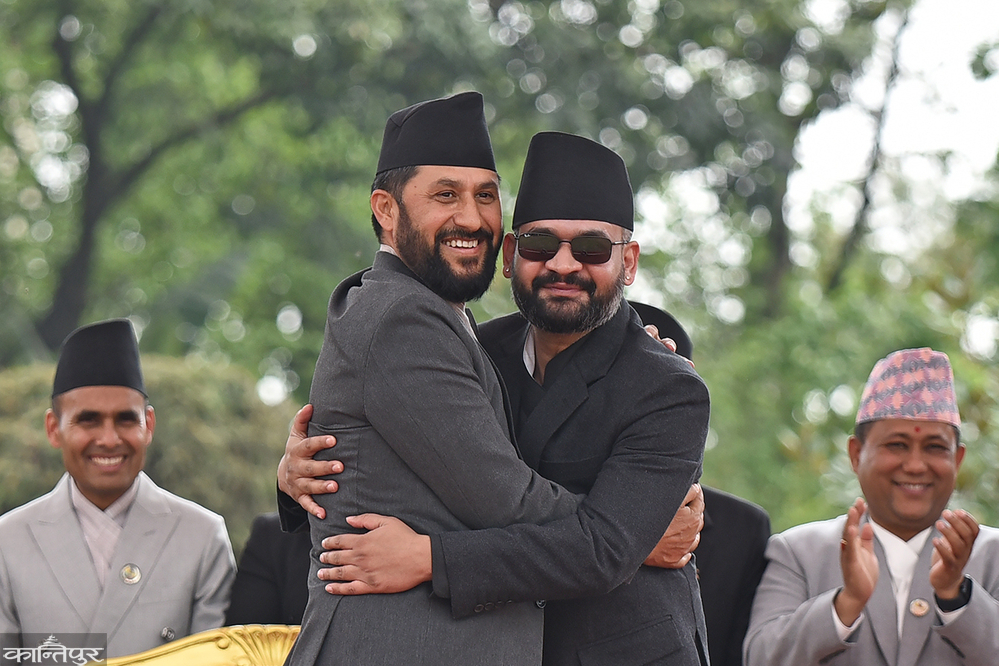 Connecting digital popularity with institutional governance is complicated. Because the history of structures is very old and except in some major revolutions, it is very difficult to reconcile the new leadership and the old structure. Ukrainian President Zelensky also rose to national leadership with a 'seductive image' created on television. However, his tenure has been stuck in geopolitics between Russia and the West, putting economic and social issues on the back burner. In the case of Shah, hashtag comments on social media cannot replace major economic reforms, coordination with federal bodies, and international diplomacy. He must learn to cooperate with administrative regulations, the Constitutional Council, and the institutional structures of the state. The rush of impulses and orders must be diluted with dialogue.
As mayor, Shah worked with the model of 'single order' and 'direct monitoring'. He was a directly elected executive. However, at the federal level, the role of the Prime Minister is that of a 'coordinator' rather than a 'chief administrator'. Collaboration between seven provincial governments, 753 local levels, federal ministries, and separate judiciary and constitutional bodies is essential.
Habermas's analysis of structure and the public sphere helps us understand the complexity here. Structure or 'system' is the institutional, personnel administration, and legal structure of the state, while the public sphere is the sphere of citizens' daily lives, families, community relations, and direct needs. Shah's local success was fundamentally focused on the public sphere and he had direct access to the system. However, even as mayor, there is a great deal of controversy about which sphere he supported and which class he neglected. However, in national governance, the voice of the 'public sphere' cannot be heard alone without collaborating with the 'system'.
Shah's biggest challenge is to restructure the federal structure and administrative structure to match the direct expectations of citizens. For this, just as he 'confronted' the central administration in Kathmandu to expand roads and build infrastructure, if he repeats the same style with the provinces and local levels, conflict may be created instead of cooperation. This may lead to a distorted dialogue between the system-structure and the public aspirations. The issue of neoliberal good governance raised by the Rashtriya Swayamsevak Sangh (RSS) also expects systemic reform, but that reform has the potential to promote the economy and ignore the political aspect by creating a gap between economics and politics. This may further increase socio-economic inequality in society. Therefore, it seems that the new government should examine various components of society and the state in detail.
Shah's rise was due to 'impatience for change'. In Kathmandu, he won public trust to some extent by working quickly, visibly and directly. But expectations at the national level are numerous and diverse. The manifesto ‘Commitment Letter 2082’ issued by the Rashtriya Swayamsevak Sangh (RSS) has ambitious commitments such as corruption control, public awareness-based good governance, ending politicization of the civil service and job creation. Amidst limited resources and high expectations, he will have to present a clear vision of ‘prioritization’. National policy making, the parliamentary process of bills and the management of international relations are much different and complex than ‘project management’.
Despite so many challenges, Shah’s prime ministership holds great potential. First, it can establish the message that ‘politics is not a profession, it is a service’. Second, it can rise above party structures and encourage the tendency to put performance at the center. Third, it can make digital transparency, direct participation of citizens and openness of information the core principles of governance.
This historic majority of the RSS has provided an opportunity to completely change the old political structure. If Shah can move ahead systematically with administrative reforms and mold his 'charming image' into an institutional system, the door to 'alternative leadership' in Nepali politics may open forever.
The rise of Prime Minister Shah is a historic turning point in Nepali democracy. What this incident has proven is that when political parties fail to address public expectations, society itself gives birth to new parties and new leadership.
However, Shah's success as Prime Minister does not rest on miracles and majority. This will be meaningful only when he can transform from 'voice of the opposition' to 'unanimous leadership'. The complexity of parliamentary politics, the constraints of the federal structure, the management of large majorities and the operation of a huge administrative body are major tests before him. However, if Shah learns from these tests, improves himself and uses the trust of the citizens as capital, there is a strong possibility that he can give a new direction to Nepali politics.