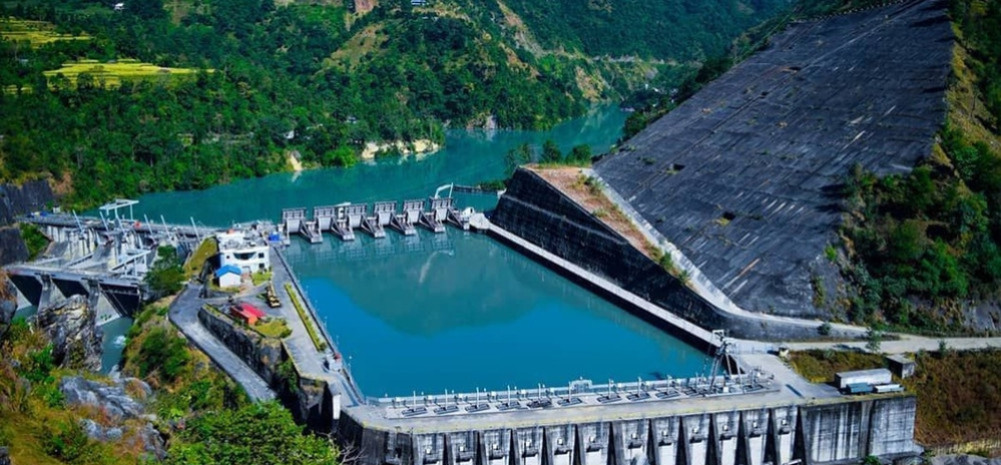
Now, a policy of gradually converting all energy consumption to electrical energy should be adopted. Even ten years ago, such a concept was difficult to envision, but in the last decade, Nepal has made significant progress in the hydropower sector. Imported fossil fuels based on petrol, diesel and gas should be gradually replaced with electrical energy.
We use Google Cloud Translation Services. Google requires we provide the following disclaimer relating to use of this service:
This service may contain translations powered by Google. Google disclaims all warranties related to the translations, expressed or implied, including any warranties of accuracy, reliability, and any implied warranties of merchantability, fitness for a particular purpose, and noninfringement.
The current conflict in West Asia is causing an energy crisis all over the world. The supply of fossil fuels including petrol, diesel, and gas is decreasing. And, South Asian countries are being particularly affected by this. Its impact has already started to be directly seen in Nepal, from cooking to transportation. In the past two weeks alone, the price of petroleum products has increased by about Rs 30. This situation is projected to continue for a long time. This could have a major impact on Nepal's economy.
Nepal has faced energy crises many times in history. In particular, in 2072 BS, imports were affected due to obstacles created at major customs checkpoints with India, resulting in an extreme shortage of gas, petrol, and diesel. At that time, the country faced a serious electricity crisis, resulting in load shedding for up to 18 hours a day. We had to spend most of the time in darkness, it was difficult to cook food without gas in the kitchen, transport services were affected due to the shortage of petroleum products, and we could not even use electrical appliances and services due to the shortage of electricity. At that time, the installed capacity of hydropower in Nepal was only about 800 MW, and even 300 MW could not be generated during the dry season. Even in such a situation, we were successful in ending load shedding of domestic consumers since Kartik 2073.
However, the situation today is not the same as before. Currently, Nepal has about 4,200 MW of installed capacity of hydropower projects in operation. These projects are generating an average of about 1,300 MW of electricity even in winter. In addition, peaking run-of-river and reservoir hydropower projects with an average capacity of about 1,000 MW are in operation, which are helping to provide additional electricity, especially during times of high demand. In addition, various hydropower projects with a capacity of about 8,000 MW are in various stages of construction. Currently, the country's peak electricity demand has reached about 2,200 MW, while at other times it is around 1,200 to 1,500 MW. Although there is still a need to import some electricity in the winter, Nepal has reached a point where it can export about 1,500 to 2,000 MW of electricity during the rainy season (especially from Asar to Kartik). This clearly indicates that Nepal has moved towards self-reliance in electrical energy.
Now the country should be made self-reliant in energy in the real sense. A policy of gradually converting all energy consumption to electrical energy should be adopted. Ten years ago, such a vision was difficult, but today it is possible. Because Nepal has made significant progress in the hydropower sector in the last decade. Now we must move forward at a pace where imported fossil fuel-based petrol, diesel and gas are gradually replaced with electrical energy.
Extensive electrification in transportation, kitchens, irrigation, industry and other sectors has become inevitable . The current expansion of the use of electric vehicles and induction cookers is a positive sign . The current situation should be seen as an opportunity, not a crisis . The government needs to come up with a clear, practical and long-term policy to replace fossil fuels with electric energy .
Electric transformation towards clean, sustainable and self-reliant transportation
Transportation is one of the most important sectors of Nepal's energy transformation . Vehicles running on petrol and diesel not only send foreign exchange abroad but also increase air pollution, trade deficit, urban health crisis and external dependence . In contrast, electric transport running on domestic hydropower lays the foundation for strengthening the national economy, reducing fuel imports, reducing environmental pollution and strengthening energy security . Therefore, electric transport should not only be a possibility of the future but should be promoted as a primary action plan for the present . And, a policy should be taken to manufacture electric vehicles in Nepal.
For this, charging centers should be expanded up to the rural municipality and municipal levels. Customs and tax concessions should be added on electric vehicles, batteries and necessary spare parts. EV vehicle assembling and old petroleum vehicles should be converted into electric vehicles. And, electric buses, electric vans, taxis and other electric vehicles should be given priority in public transport. In addition, the state should provide special policy incentives for the establishment and expansion of electric vehicle battery assembly industries, battery pack manufacturing, charging equipment manufacturing and used battery recycling industries in Nepal. This will create employment, develop technical skills, reduce dependence on imports and prepare the basis for making the electric transportation system affordable, sustainable and self-sufficient in the long term.
A densely populated city like Kathmandu is today suffering from extreme air pollution. Pollution levels many times higher than the standards set by the World Health Organization have created a public health crisis here. In such a situation, it would be appropriate to introduce trolley bus services to reduce pollution and replace fossil fuels. Trolley buses should be reintroduced as a clean, sustainable and effective alternative to public transport. A large-scale public transport system based on electricity will reduce pollution in the Kathmandu Valley, reduce the pressure of private vehicles on the roads, and make urban life safer and more manageable. Similarly, trolley buses can be operated on 6-lane roads connecting big cities (Attariya-Dhangadhi, Kohalpur-Nepalgunj, Butwal-Bhairahawa, Bharatpur-Hetauda, Pathlaiya-Birgunj, Itahari-Biratnagar, Ring Road and Koteshwor-Bhaktapur-Dhulikhel). A preliminary feasibility study for this has also been started. The use of electric ropeways to transport limestone to cement factories will reduce dependence on petrol and diesel. In the long term, the state should focus on the construction of an east-west electric railway and an electric railway connecting Kerung-Kathmandu-Raxaul.
Such policy and structural reform steps in the transport sector will reduce dependence on imported fuel, save foreign exchange, reduce air pollution, open up new industrial potential and strengthen the country's energy security. A clean transport system based on indigenous electricity is no longer a luxury option - it is an indispensable necessity for Nepal's economic, environmental and public health security.
Replacing LPG in the kitchen
The fastest and most effective start to energy self-reliance can be made in the kitchen. A large number of households in Nepal are still using firewood and LPG for cooking, while the number of families using electricity as the main cooking fuel is very low. This shows more than the lack of electricity in Nepal, the lack of policies, access to equipment, household wiring, trust in usage and behavioral change.
The government can make a big transformation in the kitchen by implementing a scheme to purchase induction stoves, electric pressure cookers, rice cookers and necessary utensils in large quantities through open competitive bulk tenders and deliver them to households at affordable prices. Running such a program, along with targeted subsidies, installment facilities and secure household connections, can take lakhs of families out of LPG dependence. Once households get used to cooking on electricity, they are less likely to switch back to gas. And, it can help reduce LPG imports worth billions of rupees. Having said this, the question may also arise – can the electrical infrastructure of the authority handle the load? Currently, the electrical infrastructure of the grid has been expanded across the country and there is no problem in this as work is being done at a faster pace in some remaining places. However, for this, the Electricity Authority should continuously upgrade the distribution lines and transformers. The Authority needs to ensure reliable and quality supply.
Irrigation, water pumps, brick kilns and industry
The debate on energy self-reliance should not be limited to kitchens and vehicles. Diesel pumps used in agriculture, rural water pumps, small industries and the service sector should also be included in the main framework of electrification. In Nepal's agricultural sector, the diesel-based lift irrigation system is still an expensive, polluting and temporary irrigation system. The government should provide grants or concessional loans to convert this system to electric or solar-electric pumps. By providing free electricity to farmers at night, the cost of agriculture can be significantly reduced.
The brick kiln industry is also one of the major sectors that increase air pollution and drain foreign exchange. Almost all brick kilns in Nepal still use coal-based energy. Coal worth about 20 to 25 billion rupees is imported annually for the brick industry alone. Therefore, the government needs to come up with a special incentive package to gradually convert coal-based brick kilns into electric brick kilns. This will not only reduce coal imports, but also significantly reduce air pollution. And, it will make a significant contribution to moving the world's most polluted city like Kathmandu towards a clean and healthy environment.
Similarly, moving small industries, processing industries, tea, dairies, cold stores and other rural enterprises towards electricity-based equipment will reduce production costs, increase productivity and create a basis for the rural economy to be based on indigenous energy. The impact of providing electricity to water pumps, irrigation systems, agricultural equipment, local processing and rural industries will not be limited to energy alone - it will also directly affect production, income, employment and local development.
Domestic consumption, investment and prosperity
Increasing electricity consumption within the country will increase the demand for electricity in the domestic market and it will be easier to raise investment in new hydropower projects. Confidence in hydropower projects will increase among banks and financial institutions, the private sector, local levels and general investors. On this basis, the country can move forward towards the construction of large reservoir projects. Such projects not only provide electricity but also prepare the basis for employment, irrigation, flood control, industrialization and regional development.
When we widely increase electricity consumption within the country, it will not only replace imported fuel, but also strengthen the basis for raising investment for new hydropower projects. When the domestic market becomes large, stable and reliable, confidence in investment in the hydropower sector will increase among the private sector, banks and financial institutions, cooperatives, local levels and general investors. When the electricity produced starts being consumed in the kitchen, transportation, irrigation, industry and service sectors within the country, hydropower projects will become more economically viable. On this basis, the country can move forward towards the construction of large reservoir projects, which can contribute greatly to job creation, year-round reliable power generation, irrigation expansion, flood control, industrial development, electricity export and overall regional prosperity.
New industrial potential including green hydrogen
Adequate use of domestic electricity also opens the door to a new industrial era. Nepal should prepare the basis for industrialization in the hydropower sector by making long-term plans for the production of green hydrogen, ammonia and chemical fertilizers. On the one hand, this will help in providing timely fertilizer for domestic agriculture, and on the other hand, it can also open the door to the possibility of exporting green hydrogen and ammonia abroad.
A debate has now begun in Nepal that the use of electricity can lead to a long-term thinking towards the production of chemical fertilizers without importing large quantities of raw materials. In addition, it is necessary to give special priority to the use of hydrogen-powered machinery, equipment and transportation services. स्वदेशी बिजुलीको उपयोगबाट हरित हाइड्रोजन, अमोनिया र त्यससँग सम्बन्धित औद्योगिक सम्भावना विकास गर्दै नेपालले कृषि क्षेत्रका लागि महत्त्वपूर्ण आधार तयार गर्नुपर्छ ।
यसरी नै धेरै विद्युत् खपत गर्न सक्ने तथ्यांक प्रशोधन केन्द्र (डाटा सेन्टर), डाटा कम्प्युटिङ तथा आवश्यक पर्ने डिजिटल सेवा तथा क्रिप्टो मुद्रा माइनिङ जस्ता क्षेत्रमा पनि नेपालले अतिरिक्त वा कम उपयोग भएको विद्युत् प्रयोग गरेर ठूलो आर्थिक लाभ लिन सक्छ । आठ लाखभन्दा कम जनसंख्या भएको भुटानले स्वच्छ जलविद्युत् उपयोग गर्दै सन् २०१९ देखि हरित क्रिप्टो मुद्रा माइनिङ अघि बढाएको छ । त्यसबाट देशको आम्दानी बढाउनुका साथै डिजिटल सम्पत्ति सिर्जना गरेको उदाहरणले देखाउँछ– स्वदेशी र स्वच्छ बिजुलीलाई सही नीतिसँग जोड्न सकियो भने नेपालले पनि नयाँ आयस्रोत, रोजगारी र वैदेशिक आम्दानीका ढोका खोल्न सक्छ ।
समग्रमा भन्नुपर्दा, जलविद्युत् क्षेत्रले मात्रै पनि नेपाललाई ऊर्जा सुरक्षा, रोजगारी, औद्योगिकीकरण, कृषि आधुनिकीकरण, निर्यात प्रवर्द्धन र गरिबी न्यूनीकरणतर्फ कायापलट गर्न सक्ने क्षमता राख्छ ।
युद्धका कारण पश्चिम एसियाका पानी प्रशोधन केन्द्रहरूमा समेत क्षति पुगेको छ । त्यस क्षेत्रमा पानीको अभाव बढ्दो छ । विश्वका अन्य धेरै स्थानमा जलवायु परिवर्तन र ग्लोबल वार्मिङको असरले पानीको संकट क्रमशः गहिरिँदै गएको सन्दर्भमा नेपालले यो अवस्थालाई अवसरका रूपमा लिनुपर्छ । नेपालको सस्तो, स्वच्छ विद्युतीय ऊर्जाको उपयोग गर्दै पानीमा आधारित उद्योगहरू स्थापना गर्नुपर्छ । हिमाली स्रोतबाट प्राप्त स्वच्छ पानीलाई प्रशोधन र ब्रान्डिङ गरी विश्व बजारसम्म पुर्याउने दीर्घकालीन रणनीति लिनुपर्छ । यसका लागि नीति, पूर्वाधार र लगानीको स्पष्ट खाका तयार पारी तत्कालै कदम चाल्नु जरुरी छ ।
पश्चिम एसियामा भएको युद्धका कारण विश्वव्यापी रूपमा देखिएको ऊर्जा संकट र त्यसबाट नेपालमा पर्न सक्ने प्रभावलाई केवल चिन्ताको विषयका रूपमा नलिई एक ऐतिहासिक अवसरका रूपमा ग्रहण गर्नुपर्छ । यसरी योजनाबद्ध ढंगले काम गर्न सकियो भने यो जीवाश्म इन्धनमा आधारित वर्तमान प्रणालीलाई विद्युत्मा रूपान्तरण गर्ने ठूलो अवसर हुनेछ । आशा छ, नयाँ सरकारले यस अवसरलाई गुमाउने छैन ।
(घिसिङ पूर्वऊर्जामन्त्री एवम् उज्यालो नेपाल पार्टीका अध्यक्ष हुन्)