There is a strange and cruel paradox in our society - if a woman goes to Europe or America, she is considered successful, modern, and courageous. If the same woman goes to sweat on the hot sands of the Gulf, she is viewed as poor or ”characterless.”
We use Google Cloud Translation Services. Google requires we provide the following disclaimer relating to use of this service:
This service may contain translations powered by Google. Google disclaims all warranties related to the translations, expressed or implied, including any warranties of accuracy, reliability, and any implied warranties of merchantability, fitness for a particular purpose, and noninfringement.
Every year, the morning of March 8th fills the Nepali media and streets with slogans of ‘women’s power’. Speeches on gender equality are heard in five-star hotels in the capital.
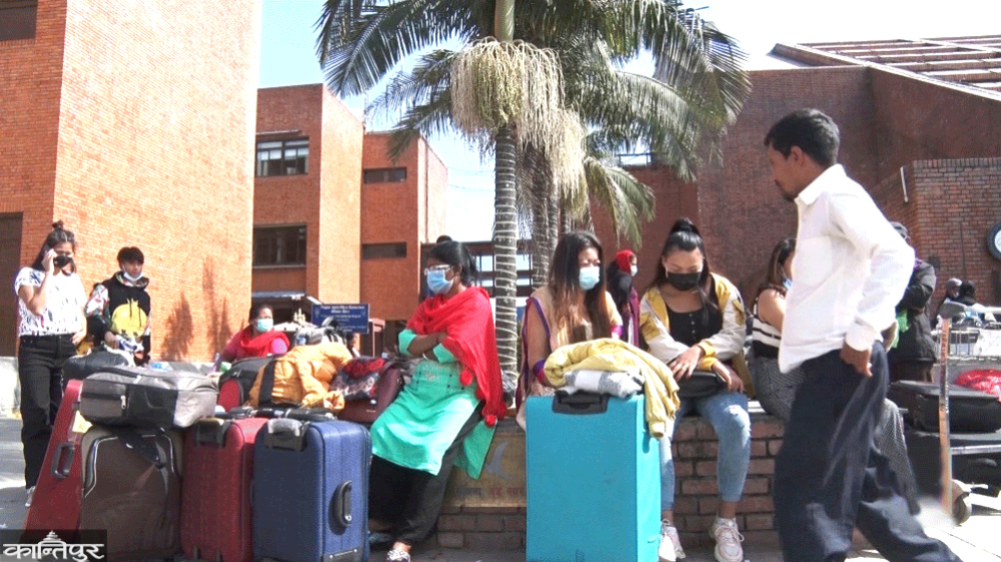
Far from the glitter of this celebration, a woman stands in the departure hall of Tribhuvan International Airport, crying over her baby, clutching a ticket to Qatar or Kuwait, which has the smell of desert.
There is a strange and cruel paradox in our society – if a woman goes to Europe or America, she is considered successful, modern and courageous. If the same woman goes to sweat on the hot sands of the Gulf, she is seen as poor or ‘characterless’. This is not just a geographical difference, it is a class and gender illusion ingrained in our minds.
The beauty of labor and the arrogance of geography
How society connects labor with social prestige is a serious question. According to the latest data from the Department of Foreign Employment, more than 700,000 Nepalis have obtained work permits for foreign employment in the last fiscal year alone, with the number of women increasing significantly
. A large portion of this workforce is consumed in the domestic and service sectors of the Gulf countries and Malaysia.
When a woman working in Japan or Europe posts a photo of herself holding a cup of coffee as a carer for an elderly man on social media, we shower her with praise. However, we always look at a woman doing the same job in a Gulf home only from the perspective of 'character'. Is the dignity of labor different between making coffee in Sydney and cleaning a house in Riyadh? Of course not. However, our society values respect based on 'position'. This discrimination hurts the confidence of those women, who are the backbone of this country's economy.
State helplessness and 'blood drain'
Statisticians celebrate when remittances reach about one-third of the gross domestic product. However, there is no line in those graphs of the dreams of women who have melted in the Gulf. The state always worries about the ‘brain drain’ of educated manpower leaving, but it remains silent about this ‘blood drain’ happening in the Gulf.
The unreasonable ‘age limits’ or ‘restrictions’ imposed in the name of security are not really protection, they are an attack on the constitutional right of women to move freely. The state, which considers men ‘brave’ to take risks, always sees women as ‘vulnerable’. This is a humiliating discrimination in the name of security, which is forcing them to choose even more risky paths and fall into the clutches of human traffickers.
Digital motherhood and empty childhood
In this geography of sweat, one aspect is even more shocking—the ‘wall of technology’ between the warm embrace of a mother and the parrot-like speech of a child. While a mother is forced to dry up her milk in the scorching desert and nurse her moneylender's child, a child in the village is searching for his mother through the screen of his mobile phone.
Government statistics do not account for the 'emotional trauma' inflicted on a child's psyche in the absence of a mother. This void, which is being filled with gifts and money, is making an entire generation 'semi-orphaned'. This is not just a separation, it is the cruel reality of a generation's childhood being held hostage in the sands of the Gulf.
Virtual Lynching: Digital 'Sati Pratha'
In the current era of technology, smartphones have become the new pyres of 'modern Sati Pratha'. Yesterday, women's bodies were burned in Sati Pratha, today their 'character' and 'self-respect' are burned digitally.
When a working woman posts a video or photo on social media expressing her tiredness throughout the day, the 'self-proclaimed contractors of morality' descend to burn her character. Even in a video of a normal performance, there is a barrage of abuse saying, ‘This is why Nepalis lost their dignity.’ The bitter truth is that, by buying data packs on mobile phones with the money sent by those same sisters, and sitting on the terrace of the house built with their sweat, these ‘contractors’ of society are giving sermons on character.
The ‘freedom’ of going to Europe becomes modernity, but the ‘will’ of going to the Gulf is considered characterlessness. This is not just a comment, it is an organized ‘mental murder’.
Economic empowerment: From stove to checkbook
Amidst all this suffering, there is one bright side: the sweat of the Gulf has made Nepali women ‘decision-makers’. Yesterday, the woman who had to stretch her hands in the moneylender’s yard for a handful of rice has become the financial backbone of her family today. With the money she sent, both her son and daughter have been able to study in the same school.
Many women have started small businesses in the villages with their earnings from abroad and have challenged the ‘second class’ label of the patriarchal society with their economic status. This is not just employment, it is also a silent rebellion against economic dependence.
The obsession with money and the illusion of an ‘unclean’ body
The male psychology of considering the money sent by the wife as ‘holy’ but always suspecting that her body is ‘unclean’ is destroying homes. The man builds the walls of the house with the money earned from his wife’s sweat, but cannot accept her own independence.
This ‘parasitic mentality’ of walking around with a proud chest when the wife is in America and hiding her face when she is in the Gulf is the ugliest part of our social structure. The tendency to consider one as ‘Lakshmi’ as long as there is money and ‘Alakshmi’ when one returns empty-handed exposes the hollowness of our social values.
Returning home and the devaluation of skills
When a woman returns from the Gulf, society immediately weighs the weight of the suitcase she brings, but no one sees the professional skills she brings. The society that weaves the elegant turban of ‘non-resident Nepalis’ welcomes those returning from Europe by keeping the women returning from the Gulf in a ‘circle of suspicion’. The state also does not come up with any plan to utilize their skills. The money sent home is grandly welcomed, but the workers who earn that money have to undergo a ‘trial by fire’ at home.
Amidst this complex reality, some questions and aspects of solutions remain unanswered, on which the state and society need to work urgently –
1. Not prohibition, but security: Not closing the door by imposing an age limit, but guaranteeing safety and respect at the workplace through strong labor agreements. Preventing is not protection, but cowardice.
2. Certificate of skills: After verifying the skills of those who have returned from the Gulf, they should be given unsecured soft loans and an ‘entrepreneurial package’ so that they do not have to sell their labor again.
3. Digital security: Those who ‘burn the character’ of working women should be brought to justice through cyber law. A special ‘digital help desk’ should be made mandatory for migration.
4. Social reunification: A family environment should be created at the local level that welcomes returning women with ‘respect’ and not with ‘suspicion’.
5. Guarantee of reintegration: ‘Respect program’ and ‘skill mobilization’ plans should be introduced through the local government (ward office) to change the way society views women who have returned from abroad. The narrative should be created that they are ‘skilled workers’ and not ‘victims’.
6. Surgical strike on the perspective: ‘Respect for labor’ should be made mandatory from the school curriculum. The social glasses that measure the labor of the Gulf and Europe must now be changed.
The color of sweat and the significance of March 8
Finally, while celebrating the colorful celebration of International Women's Day, let us accept a bitter truth - these 'moral contractors' of society and the 'policy makers' of the state appear civilized only as long as the remittances of blood and sweat continue to flow from the Gulf.
If the sweat of these women stops supporting the economy of this country, our luxurious dreams will collapse like a house of cards. These houses, built by emptying the childhood of children and doubting the character of their wives, are not 'development', but monuments to our collective 'human decline'. Now, let us stop distributing certificates of someone's 'character' and put an end to our own 'double standards'. Because, this hypocritical society does not have the moral status to teach moral lessons to those whose sweat has made this country survive.
In fact, migrant women are not just ‘money printing machines’, they are the ‘invisible creators’ and ‘courageous heroes’ of this country. They have sweated on the hot sands of the Gulf to light their own stoves, which were cold due to compulsion and deprivation, and to brighten the future of their children. This Women’s Day should not only celebrate the ‘pain’ of these women, but also their ‘courage’.
The next generation should learn to ask mothers who have returned from the Gulf not ‘what did you bring?’ but ‘how much suffering did you experience?’ The foreign exchange rate may not be the same, but the dignity and respect of the women who send that money should be the same. The color of sweat should be determined not by geography, but by humanity and justice.