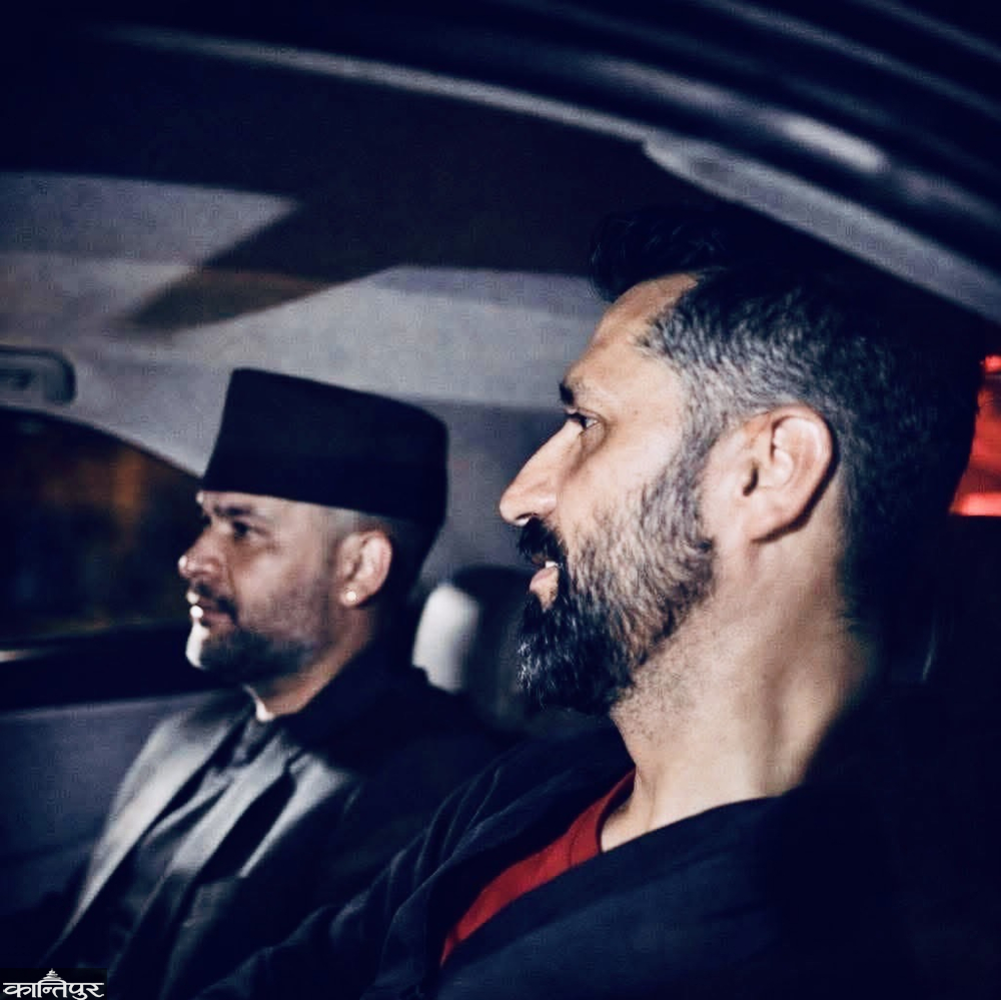
What will happen to the Madhesi people if Balen becomes the Prime Minister? Will internal colonization end? Will linguistic-cultural oppression of the Madhesi end? Will the extreme poverty of Madhesh, violence against women, and atrocities against Dalits end? Or will quality health and education be ensured?
We use Google Cloud Translation Services. Google requires we provide the following disclaimer relating to use of this service:
This service may contain translations powered by Google. Google disclaims all warranties related to the translations, expressed or implied, including any warranties of accuracy, reliability, and any implied warranties of merchantability, fitness for a particular purpose, and noninfringement.
The Nepali people are looking for a new life in the country. It is not unusual for a people who are tired of distorted politics to look for a new leadership. If we look at history around the world, leadership either develops through revolution, struggle or movement or from national political necessity! In some cases, national or international power centers also establish a person as a leader.
In the global capitalist system that makes certain individuals or groups the owners of most of the wealth, capital is creating powerful leadership. In Nepali politics, some leaderships have been established through major revolutions, struggles and movements for democracy, national independence and people's livelihood. Some leaderships are being established through economic power, capital, popular public image and social media.
Those who have reached leadership with the support of the people have forgotten the land and the people. On the other hand, people who are not very familiar with the concerns of the people are trying to establish themselves as the saviors of the people. In terms of leadership, Nepal seems to be going through this contradiction. With the elections, the dilemma of looking for a responsible and committed leadership with a theoretical-ideological perspective to solve the country's crisis or looking for a popular hero is also visible at the citizen level.
Hero Politics
In the 2014 elections, the Bharatiya Janata Party brought a strong slogan to the people by fielding Narendra Modi as the Prime Ministerial candidate. That slogan was - 'This time, Modi government'. With this slogan, Modi became the Prime Minister. He was not only made the Prime Minister, but was established as a hero. Banners that reflect the same are hung in the main cities of Madhesh. It reads, 'Abki Bar, Balen Sarkar'.
After the National Independent Party nominated Balen as the future Prime Minister along with the election, this slogan seems to have created a new political wave in Madhesh with the meeting held in Janakpur. The difference between Modi and Balen is that Modi is a populist leader who has emerged from a long political journey, while Balen is a populist character with little experience in political practice. It is clear that like Modi, Balen also has the ambition to become a hero.
Balen never wanted to associate himself with the Madheshi identity while working as the mayor of Kathmandu Metropolitan City. When he was the mayor, he brutally oppressed the Madheshi people who depended on bicycles and carts. He ignored the discrimination and violence against Madheshis at every step in Kathmandu. However, the same Balen reached Janakpur and presented himself as a Madhesi and gave a speech in Maithili.
Balen's speech, which was presented as the future Prime Minister, seems to have filled the Madhesh with enthusiasm, hoping that he would become a Madhesh Prime Minister. However, what will happen to the Madhesh people if Balen becomes the Prime Minister? Will internal colonization end? Will the linguistic-cultural oppression against the Madhesh end? Will the extreme poverty in Madhesh, the violence against women, and the atrocities against Dalits end? Or will quality health and education be ensured?
The basic basis of the tendency to become a hero in politics is populism. This tendency promotes extreme patriotism and nationalism, while transforming the feelings of the people into passion, hatred and malice. Neither Balen nor the party that nominated him as the Prime Minister's candidate, the Rashtriya Swayamsevak Sangh (RSS), have the answers to these basic questions of the Madhesh people. Therefore, the enthusiasm of some Madhesi people turned into disappointment in an instant because he did not meet the people of Madhesh informally, did not ask about their daily lives, and had no desire to understand the difficulties and crises. He reached Madhesh like a movie hero and disappeared elsewhere. Some analysts argue that this issue should be viewed as a 'political experiment of selfishness' to convert the Madhesh identity into a vote bank, which is true.
The basic basis of the trend of becoming a hero in politics is populism. This trend promotes extreme patriotism and nationalism, while transforming people's feelings into passion, hatred and malice. Emotional passion does not seek facts and logic. It only prioritizes devotional songs or glorification of the hero. This trend does not consider the ideological cause, result and solution of national problems necessary, which cannot solve the structural and objective problems of the country and the people.
The trend of developing a hero in politics deifies the individual. After the first Constituent Assembly elections, the deification of Prachanda gained popularity, while during the blockade, KP Sharma Oli was deified by a certain type of people. As the intensity of the Maoist 'people's war' waned, the deification of Prachanda began to crumble, while Oli's deification also weakened along with arrogance, arrogance and oppressive behavior. However, a strong desire for deification is seen in those who set out in search of heroism.
It is necessary to take seriously the reality that the deification of leadership creates anarchic, arrogant and conceited leadership. In a country with social diversity, all classes, genders, castes, religions and cultures should be respected. However, populist leadership makes the majority happy and oppresses minorities and marginalized communities. The extreme oppression that Modi is carrying out on India's Muslims, marginalized and minority communities is right before our eyes.
Populist and political heroes basically represent the interests of the dominant bourgeoisie. Therefore, such leadership is created as heroes by the bourgeoisie and interest groups. They do not know, are not interested in, and ignore the issues of the working class, laborers, farmers, oppressed classes, and communities. They are responsible to the class they represent. If we look at the political history of the world, there is no example of populist leadership bringing about any socio-economic transformation in the lives of the basic classes and communities. Despite some efforts to improve the country's economy, such work has been done to fulfill the interests of the capitalists and the upper class.
The rise of political populism is the result of the failure of political parties and leadership. When politics of deception and self-interest begin against the people, the people look for new heroes. However, heroes cannot change the political system and the condition of the people. It is necessary to be alert to the possibility that the tendency to look for heroes in politics can lead to chaos, autocracy, and despair among the people.
Political leadership
Nepal does not need a movie hero, but a committed leadership with ideas, visions, and plans to solve the country's multifaceted crisis. The federal democratic system established through revolution and struggle has not been implemented effectively. The state power dominated by a single class, caste and gender has not been transformed into a truly inclusive one. If the country's economy is in shambles due to foreign debt, the country is forced to live amidst poverty and economic crisis.
The economy has to be supported only by remittances received from immigration, foreign debt and people's taxes. Social justice is in slogans, not in practice. It is not possible to free the country from such a situation by the method of delaying solutions. The country wants a leadership that can provide an ideological perspective and plan for a long-term solution.
If a leadership that represents the real people and addresses the concerns of the people comes through elections, reform work can be done to some extent. However, elections alone cannot create such political leadership. Moreover, if after reaching power and authority, one becomes a political agent of vested interests, we have experienced time and again how much harm it can do to the people.
If a leadership that represents the real people and addresses the concerns of the people comes through elections, reform work can be done to some extent. However, elections alone cannot create such political leadership. Therefore, only an honest and committed leadership with ideas, visions and plans to solve the country's socio-economic problems can take the country forward. Elections can be won by emotionally influencing the people, sharing assurances and dreams, in some cases by tempting them or even through illegal economic manipulation. Such deceitful politics cannot play a role in fulfilling the needs of the people. Only a committed leadership can contribute to the people's welfare even after being elected or defeated. It can become a vehicle for the people's happiness and sorrow. It can contribute to social justice and socio-economic transformation.
If the people exercise discretion in elections, they can prevent evil from coming to power. The British election in 1945 gave an important message. Winston Churchill, who was established as a war leader, powerful, famous and had the dominant authority in the country, was defeated by the leader of the Labour Party, Clement Attlee. Attlee was not powerful, dominant or famous. However, he was connected to the daily lives of the people, he supported the people's happiness and sorrow.
That is why he succeeded in ousting the powerful Churchill from power. With the development of technology, the discussion created by social media in elections seems to be the decisive vote in the election. Fake propaganda on the Internet cannot establish the leadership of the people. Therefore, the people must make a wise decision to elect a leadership that can solve Nepal's national crisis, address the needs of the people, and have concrete ideas, perspectives, and plans for socio-economic transformation.
Even during this election period, those parties have not been able to bring forward an agenda for progressive economic and political transformation. Alarm bells
Nepal's political parties envisioned a socialist economic and political system. However, they did not take any initiative to build a socialist system for 20 years after the constitution was made. After the Gen-G rebellion, political parties went through a process of formation and dissolution. However, they were unable to strengthen Nepal's political system, address the people's dissatisfaction, and formulate a concrete plan for socio-economic transformation. Even during this election period, those parties have not been able to bring an agenda for progressive economic and political transformation. Even the newly formed political parties do not have any dynamic agenda to take the country forward. How can the country's crisis be resolved in such a situation?
After all, an election or the formation of a new government cannot radically change the country. However, the Nepali people expect transformation from the election. If the current political leadership cannot systematically resolve the people's frustration and anger, the situation of the rich getting richer and the poor having to wander around for a living, swimming in the sweat, blood and tears of the poor workers, will not end.
If the series of betrayals continues even after gaining power by sharing emotions with the people in the election, the country will naturally have to face another rebellion. The tsunami of that struggle will not be brought by any populist leader, but by the victims of metered rate fraud, victims of cooperative fraud, victims of microfinance, victims of foreign employment fraud and the oppressed classes, genders and communities who have been protesting for decades waiting for social justice.