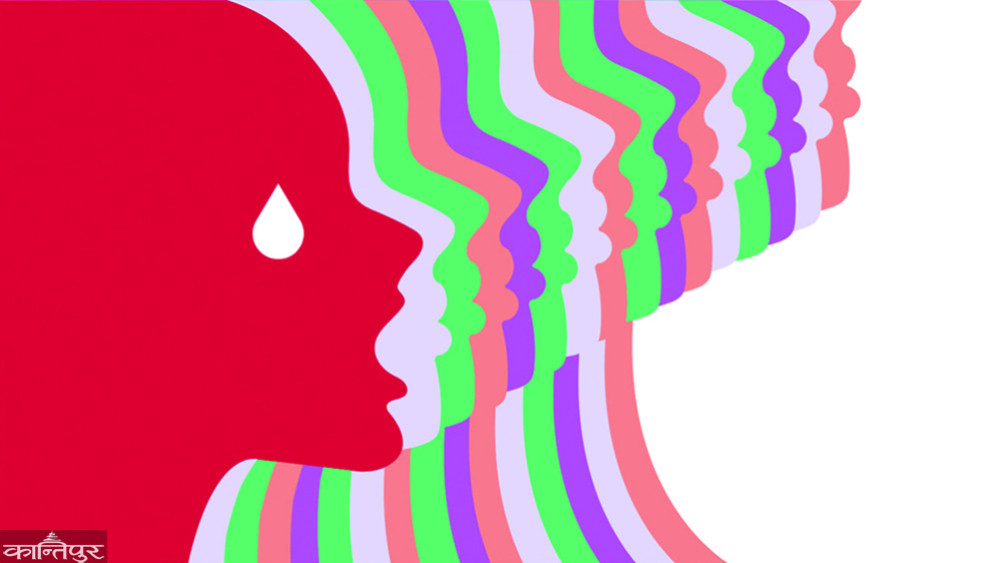
The social life of women affected by HIV is extremely challenging, with a series of discrimination and social exclusion.
We use Google Cloud Translation Services. Google requires we provide the following disclaimer relating to use of this service:
This service may contain translations powered by Google. Google disclaims all warranties related to the translations, expressed or implied, including any warranties of accuracy, reliability, and any implied warranties of merchantability, fitness for a particular purpose, and noninfringement.
The news of the cold wave hitting the Terai is making headlines in the media. Life has come to a standstill and news of death! The news brought to my mind scenes of villages defying the cold with the smoke of straw - from small children to the elderly, warming themselves in the courtyards by burning straw, thin clothes, black blankets, faces blackened by smoke... Women used to shiver more in the cold because for centuries, society has been chilling not only their bodies, but also their voices.
It is relatively warm in Hetauda. Even though Hetauda is covered with a thick layer of fog for a while in the morning, it slowly starts to clear up. My body, wrapped in the heat here, did not want to go down to the Terai. Where does the body give the freedom it wants in the cycle of permanent and recurring duties of life? It was time to go, to fulfill more duties!
We left Hetauda at 7 in the morning. We crossed the red clay and reached the temple of Churiyamai, but before we reached it, we found a foggy world, exactly like our society—covered with smoke, as if seen but not seen, as if never allowed to become clear.
After crossing the path, the fog thickened so that it was not visible from the road. We reached our destination late that day. Sometimes I thought— some women's lives are also like such fog—hidden, unseen, incomprehensible!
Even in the roadside food hotels, there are people standing by the stove and warming themselves, who would argue not only about the cold wave but also about the country's political, economic, religious, and cultural issues.
That day, our team had reached Chandranigahapur to conduct a sexual health service camp. Probably because of the extreme cold, there were few people. I found a woman sent to the HIV counseling room. She looked to be twenty-four to twenty-five years old and was wearing ordinary clothes. Her body was covered in scars, her eyes were swollen, but it seemed that she was trying unsuccessfully to hide the pain inside her heart. At first glance, I did not think that she was the target group designated by our organization, namely 'sex workers'. From my long experience working with sex workers, I had learned in many other ways—the identity, status, character, respect—of women are all shells created by society, and sometimes the reality is crying inside those shells.
‘I am your counselor, you can tell me your thoughts without any hesitation,’ I concluded my introduction. I kept looking at her, her face was downcast. After a long silence, she uttered her first sentence, ‘How long will my daughter live, miss?’
This was not just a mother’s question – it was the voice of a crime-ridden woman, a silent victim and a lone fighter.
The tolerance standards created by society call crying a weakness, but my consciousness says – crying is the first therapy of resistance. Even in counseling training, we were taught to ‘let her cry’. I too let her cry. I repeatedly handed her a ‘napkin’ to wipe her tears. I am also a mother of a child, the sole guardian of my child! At that time, I understood more – the love, religion and duty of being a mother are the greatest in society.
Her husband, who was working in the Nepali Army, forced the truth that he was HIV-infected on his wife the night he returned from a long leave. Escaping from his responsibilities, he returned to Kathmandu to stay with his family for a few days. The wife was neither aware nor prepared.
Some knowledge cannot be applied to a woman's life, unless the pain enters her own home. She was more worried about her daughter than herself - even when her own body is sick, women first worry about their children. They consider the lives of their children more important than their husband's interests, family prestige, and the respect of society. This is motherhood, which is the real power of women. No one at home knew about the infection. Her husband left home before his parents knew. They were afraid to inform the other three except for themselves. Because there was no sign of an end to the stigma greater than the disease, the social ostracism more deadly than the infection. Society fights women rather than diseases—it silences them, blames them, calls them sins. No matter how many mistakes a man makes, that blame is placed on women—on their bodies, on their character, on their honor.
Her life was stuck under two levels of pressure—on one hand, the expectation of motherhood set by society, on the other, invisible but constant fear. Her husband came and went at his own pace. She, on the other hand, was bound by constant testing, suspicion, and silence even while living in the same house. Growing up her daughter and even being free from HIV infection was like winning a big battle for her. One daughter was not enough for this society. Her femininity was considered incomplete until she gave birth to ‘another child’. Even though repeated tests had proven that she was not infected, the fear of the low probability was oppressing not only her body but also her consciousness. Because of this fear, she did not want to get pregnant again. This decision was not a weakness, but a conscious decision of self-defense. But to her family, relatives and neighbors, this decision seemed like an act of ‘arrogance’ or ‘evasion of duty’.
Her problem was not just HIV, but the unequal distribution of information and responsibility. She kept insisting that she should tell her family the truth about her infection, but her husband remained silent. The man’s silence stood as strength here and the woman’s desire to speak was seen as weakness. She had a faint hope that if the full knowledge was made public, the pressure would be reduced. She could not move forward on her own due to fear of punishment from society.
After meeting her, many questions kept arising in my mind. My first question was – why does a woman’s body become the place of decision for society? The right to become a mother or not belongs to the woman, not to society. Sometimes I also felt that she should explain everything that happened to her family in detail. But, this thought came to dominate me, ‘Breaking the silence is courage, but expecting that courage only from women is injustice.’
She kept coming to my counseling sessions. She kept getting regular check-ups. I felt that she felt some relief when she talked to me. Our dialogue turned into a sisterhood of women more than clinical counseling.
Even after I ended my collaboration with the organization I worked for, we continued to communicate. I still remember her today. She will always live in my memory. Truly, even harsher than that harsh weather of cold wave is the ‘cultural cold wave’ of silence, pain, and inequality that covers women, which does not heat up for years, is not visible for years.
This story is not her personal pain, but the collective living history of thousands of women. Women are forced to fight not only with the disease but also with society, silence, accusations, structures, patriarchy and stigma. She prioritized not only herself but also her children. She was living with a secret pain. Living with a secret pain like this is not a woman's duty, it is only the oppression imposed by society. It was not HIV, but this society that infected her life and confidence. For how many years to come, women must be victims of this infection? It is impossible to say for sure.
The social life of HIV-affected women is extremely challenging. There are – a series of discrimination and social exclusion and psychological pressure and financial difficulties. However, self-awakening helps them to understand the deeper meaning of life. Courage, treatment and awareness add new enthusiasm to them.
In a society that tells women to 'hide, submit, and be quiet,' we should not only teach our daughters that speaking out in protest is the beginning of a revolution, but we should also not shy away from speaking up ourselves.