Even among the new forces that have come forward with the slogan of 'inclusive politics', the same limited faces are starting to appear at the decision-making level. The trend of revolving around the accessible, well-known, and economically and socially powerful classes in the name of proportional representation is starting to repeat itself.
We use Google Cloud Translation Services. Google requires we provide the following disclaimer relating to use of this service:
This service may contain translations powered by Google. Google disclaims all warranties related to the translations, expressed or implied, including any warranties of accuracy, reliability, and any implied warranties of merchantability, fitness for a particular purpose, and noninfringement.
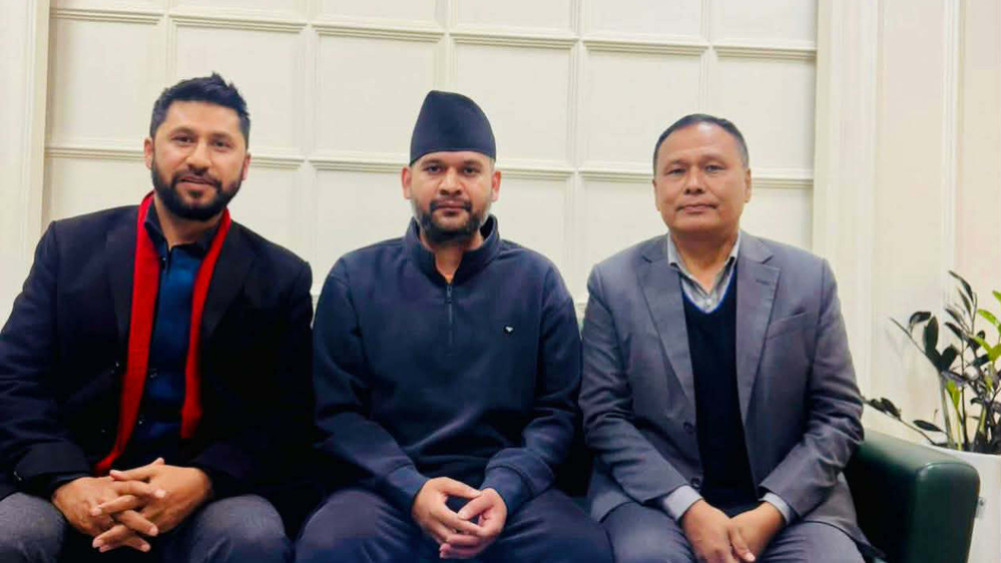
The unity between Rastriya Swatantra Party President Ravi Lamichhane, Kathmandu Metropolitan City Mayor Balendra Shah, and Ujjwal Nepal's Kulman Ghising has created a stir in political circles. Those who have been raising their voices for the need for alternative forces to join forces in the elections have become enthusiastic. There is widespread interaction on social media about this.
The word ‘new power’ holds great hope in Nepali politics. The voice is now being expressed that new powers should become strong as an alternative to the weaknesses, moral decline and abuse of power of the old parties.
The Gen-G rebellion took place on 23 and 24 Bhadra due to citizens angry with the old political parties, which toppled a strong government formed by major parties within 24 hours. Since then, the need for alternative powers has become more pronounced. This unity is a reflection of that.
But the question arises – who is at the center of the power of the so-called new ones? Aren’t the new powers also absorbing some of the basic problems of the old trend? Because, the influence of political leadership and those with access in the cities is becoming stronger. Their voices are loud on social media, digital media and public forums. But the reality in the villages is different.
Even today, many villages depend on the radio to understand the country’s politics and information. The slogan of ‘Digital Nepal’ has not reached the villages, which has deepened the gap between cities and villages. Again, the question arises in my mind – has the news of the unity of the so-called ‘new forces’ reached the villages of Nepal? Did they feel their representation or not?
Even in the new forces that have come forward with the slogan of ‘inclusive politics’, the same limited faces have started appearing at the decision-making level. In the name of proportional representation, the trend of revolving around the accessible, well-known and economically and socially powerful classes has started repeating itself. The common citizen, farmers, workers, Dalits, women and marginalized communities are not at the center of policy making. If the new forces follow the old path, won’t the word ‘new’ become just an election slogan?
While writing this article, I am reminded of a glimpse of the dissolved parliament. A member who went to parliament carrying a piece of paper finds it a bit difficult to read. She was criticized at that time. The question arises – is this country only for those who can read? For whom the proportional system was created, what was there to shout when their representatives reached there? The way Nepali society is moving forward today is giving rise to various new forms of discrimination. The culture that is in place of not considering those who are not popular on social media as people will also become its victims tomorrow.
Similarly, the question of morality is becoming more complex. Citizens who have taken to the streets in search of morality in the old parties will also have to monitor the activities of new forces. If there is a tendency to not tolerate criticism and dismiss voices of dissent as ‘old thinking’, it is fatal to democratic consciousness.
The real test of the new forces begins from how strong the culture of transparency, accountability and self-criticism remains after reaching the center of power. Those who are looking for morality in the old ones are now ministers in the government that has been given the responsibility of elections. Don’t they have to show morality? Even if they do not show morality, should the Nepali people bear witness to them?
If Nepali politics is to be truly transformed, unity should not be just about appearance, but also about ideas and structures. The journey of alternative forces remains incomplete without a clear strategy to take city-centered enthusiasm to the villages. If the unity of Ravi, Balen and Kulman can be connected to the daily lives, pain and hopes of the people, it can become a historic turning point.
Otherwise, the risk of the new power becoming a new version of the old power cannot be ruled out. Therefore, Ravi, Balen and Kulman should also understand that the agreement is just a sham, if the people who play it are not responsible. The way their theater of unity has been staged last week, time is watching somewhere in the background and tomorrow the same time will question them – which new one?
The faces that are seen today, there are rarely those who represent the marginalized. Let us ask questions so that alternative power is not made a prisoner of populism. Let us not measure candidates by likes on social media, nor by qualifications alone. It is a diverse country, let us ensure the representation of all communities and all ethnicities.
The youth who dream of a new Nepal out of love for the country, in the hope of development and who have the faith to realize it should not be afraid to question the leadership. The position is temporary, but the responsibility is as heavy as history. It is true that today is the time of the new, but one truth should not be forgotten here, every new power becomes old one day. Can the youth be patient even as those who are trusted today become old? Can they maintain new thinking, new courage, and new justice even after reaching the center of power? Can the new power itself continue to burn as a lamp of new hope even as it becomes old? This is the decisive question.
In a Nepali society where class discrimination is deepening, does our leadership truly speak our voice? Does it represent our pain, our dreams, and our struggle? Can the disadvantaged communities proudly say that this is my leadership? If the answer is 'yes', the path to a new Nepal is open. Otherwise, only the characters change in the name of change.