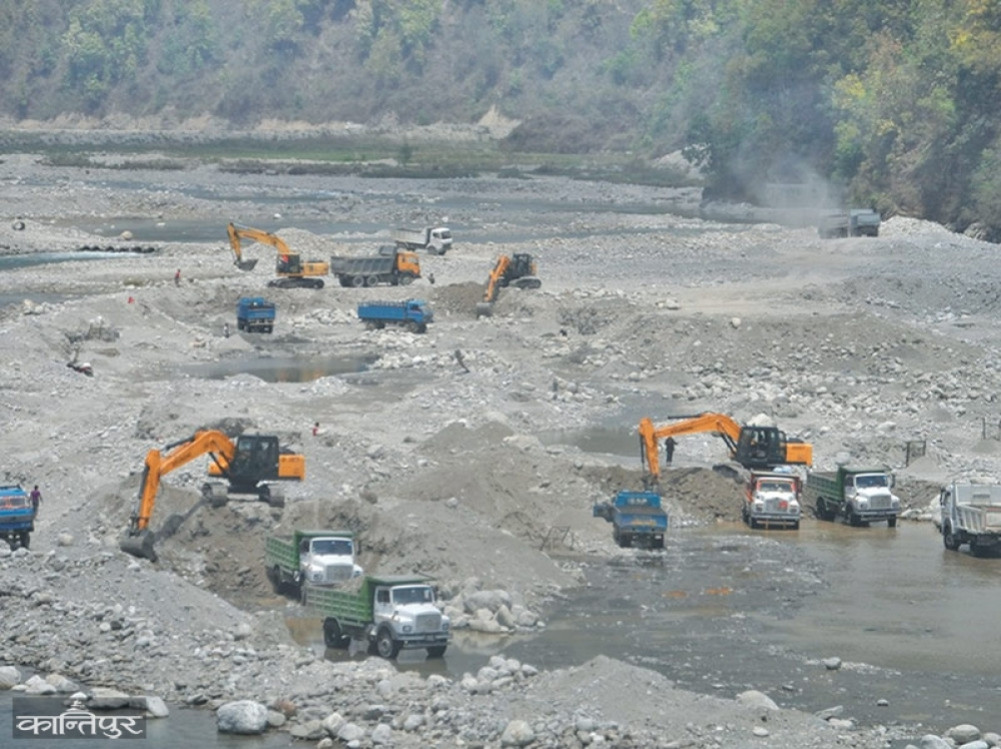
The value chain of development, construction and service delivery has transformed into a value chain of corruption.
We use Google Cloud Translation Services. Google requires we provide the following disclaimer relating to use of this service:
This service may contain translations powered by Google. Google disclaims all warranties related to the translations, expressed or implied, including any warranties of accuracy, reliability, and any implied warranties of merchantability, fitness for a particular purpose, and noninfringement.
Corruption in large-scale transactions such as natural resource extraction and utilization, public asset management, and revenue collection has created a major obstacle to inclusive development.
The OECD’s 2016 report on the corruption value chain shows that this trend is high in developing countries in Africa and Asia. The report highlights that the hierarchical network of corruption in large-scale transactions such as natural resource extraction and use, public asset management and revenue collection has created a major obstacle to inclusive development. The OECD’s own report on foreign bribery states that the corruption value chain increases the cost of foreign investment and results in a large loss of income. Such additional costs are known as ‘corruption taxes’ among foreign investors. According to the study, one in five corruption taxes occurs in the course of industrial transactions related to the use of water, forests, land and the atmosphere (permits, occupancy rights, royalties, etc.). In Nepal, too, the high investment in domestic or foreign industries in the field of natural resource use helps to confirm the assessment that corruption taxes are a factor in this.
Countries that attract or invite foreign investment not only lose revenue from natural resource exploitation. They also increase the risk of disasters caused by climate change. For example, in Nepal, natural resource exploitation is being carried out in collusion with political patronage and officials, which has led to disasters.
The OECD has documented 131 verified corruption cases that show corruption at every stage of service delivery and decision-making. Of these, 34 were in the allocation of mineral, oil and gas rights, 59 in the operation and regulation of government assets, and 26 in revenue collection (revenue contracting).
The main practices in these corruption cases were bribery of government officials and agents in the private sector, individual or group bribery, misuse of public property and funds through abuse of political office, tax and customs evasion, intimidation through nepotism, commissions and illegal fee collection. High-level government officials have been seen openly involved in contract distribution, extortion in the distribution of licenses and permits, unfair trade in the name of relatives, and vertical interference in revenue and public expenditure.
As a result, the value chain of development, construction, and service delivery has turned into a value chain of corruption. It is common for middle and lower-level employees to violate laws and regulations or collect bribes and commissions in the course of financial inducements and following the orders of higher-level officials.
In coordination with politicians, employees, and businessmen, 20 percent of the proceeds of corruption are linked to the production chain of the economy and spent on direct consumption or political and social activities. The remaining 30 percent of the proceeds are used as a source of long-term income by investing in relatives, activists, or private industrial enterprises that have earned political trust.
The remaining 50 percent of the illegal money is hidden through highly sensitive cell companies (companies opened under a pseudonym in tax-exempt countries, often for one dollar), offshore transactions, and intermediaries, passing through very complex structures to banks in countries where the source of income does not have to be disclosed (such as Swiss banks).
Politicians or government officials divert the money deposited in foreign banks to their friendly companies under the pretext of foreign investment, large contracts, and medical treatment, bring it to domestic accounts, and spend it again on illegal activities. Due to such embezzlement, irregularities, and illegal investments, the corruption value chain is often linked to money laundering and terrorist activities.
In most countries with a hierarchical governance structure, nepotism, clientelism, protectionism, and informal networks (leaders, business elites, and local employees) that are rooted at the provincial and local levels are considered the main reasons for the corruption value chain to become unsustainable. In countries like Nepal that have recently entered a tiered governance system, unscientific division of powers has also helped in expanding the value chain of corruption, according to the study.
The main essence of tiered federalism is to provide easy and transparent service delivery to the citizens, decentralize rights and responsibilities, and establish the foundation of good governance. By strengthening the local level through federalism, countries move towards federalism for transparency, accountability, public responsibility, equal access, and efficient service delivery by creating an environment where the people feel the government at their doorstep. People vote for federalism in the belief that they will not have to go to the center to receive basic services, that priority and public participation in development projects will be ensured, and that corruption will be reduced.
After about a decade of implementation of the tiered federalism structure in Nepal, the basic principles and values of good governance in it have been limited to paper only. On the contrary, the value chains of corruption have become more complex and multifaceted, resulting in the recent popular uprising called by the Gen-G generation. In principle, there should have been a balanced distribution of rights, responsibilities and resources between the federal, provincial and local levels.
It is a reality that all three levels should depend on the same source and the people are forced to knock on three doors for most of the work. Federal level ministers, MPs and high-level employees secure their share in the name of policy making and appropriation principles. In national level projects, commission bargaining has become common among the central level leaders of the parties.
Even though there is a government at the provincial level, the people are not directly responsible for service delivery and good governance, but corruption in the budget distribution and contract process has emerged as an additional layer of the value chain. This has further strengthened the triangular alliance of employees, politicians and contractors.
On the other hand, although the local level is called the government closest to the people, it has become common for people's representatives and employees to expect commissions and bribes to handle all small and big tasks. From citizenship, land survey, licenses to small consultations, everything is a game of money. In this way, all three levels of government have come together to form a complete value chain of corruption.
Looking at the data on irregularities and irregularities in expenditure pointed out in the annual reports of the Auditor General, the amount of irregularities has been increasing every year since the beginning of federalism. Some research reports on large projects and a superficial study of projects that have been abandoned due to regular cost increases, extension of time periods, and incomplete and substandard construction in other projects, it is estimated that about 30 percent of the total development expenditure in Nepal is corruption or leakage.
The real essence of federalism was good governance, equal rights, and fair service delivery. But now the question is being raised, is federalism needed only to burden the people with the ‘corruption value chain’? Federalism was brought for good governance and service delivery. This is also the main question of the recent Gen-G movement, why should the people continue to bear the burden of corrupt leaders and workers and to make a handful of employees billionaires? Therefore, now is the time to be honest with the real essence of federalism. To ruthlessly cut unnecessary processes and give the people a real sense of good governance and transparent service delivery.