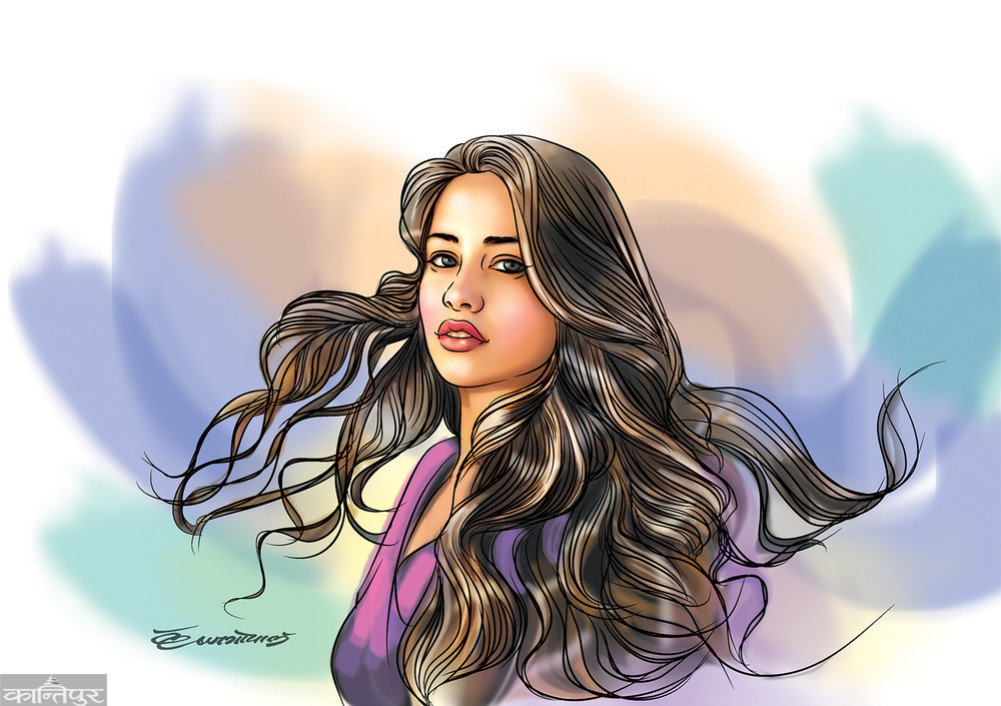
The existing gender discrimination in the society puts women's hair more than men's in terms of sexuality, decency and cultural discipline.
We use Google Cloud Translation Services. Google requires we provide the following disclaimer relating to use of this service:
This service may contain translations powered by Google. Google disclaims all warranties related to the translations, expressed or implied, including any warranties of accuracy, reliability, and any implied warranties of merchantability, fitness for a particular purpose, and noninfringement.
The body is not only a biological element but also a creation created by the relationship between man and his economic and political environment. Every society has its own cultural norms and beliefs about the body, which work to 'discipline' people. According to the philosopher Michel Foucault, the development of a very fine and sophisticated discipline directed at the body and physical components and the structures that enforce it, such as schools, offices, factories, prisons and the military, have created a new economic politics of the 'docile' (non-resistant) body.
The form and result of class division and power struggle prevalent in the society is clearly seen in the body . Physical dimensions such as skin color and weight indicate a person's social position . In some places dark skin is criminalized and people who are overweight are shamed . The bodies of women and minorities continue to be the target of gendered power struggles and symbolic cataclysms. Hair is relatively easier to manipulate than other parts of the body through personal choice guided by cultural norms . The existing gender discrimination in the society puts women's hair more in the realm of sexuality, decency and cultural discipline than men.
I recently read 'Fat Girls in Black Bodies' (2020) by Joey Cox and 'Hair Story' (2014) by Aina Bard and Lori Tharpser . Cox's book explains how racism and obesity lead to misogynistic body shaming aimed at Black women, while Bard and Tharpser's book explores the historical and anecdotal underbelly of African-American hair. Blacks' thick, curly hair protected their heads from the hot sun until they first came to North America as slaves from Africa in 1619. After straight and long European hair, which was considered 'silky', was considered the standard of beauty, African hair was even called 'wool' in mainstream 'white' society. In the 1700s, newspapers and slave advertisements often compared African hair to animals. Because they had to work in the heat all day in the cotton fields, lice and natural hair were looked down upon, blacks began using machine grease, fat, and a mixture of alkaline caustic soda and potatoes to straighten their hair . When the children of European origin men and African slave women gradually became lighter in skin color and lighter in hair. Then the hair of the slaves also started to be classified into good and bad . Slaves with pale skin and loose hair began to find work inside the home, while those with dark skin and curly hair had to work on the farm . Even among the first freed blacks, those with pale skin and loose hair were more likely to have dark skin and curly hair barred from their programs, organizations, or churches.
The rise of a socially networked self-centered culture puts the body under even more public scrutiny. And it basically forces women to spend time, attention, energy and money on beautifying their bodies and the main target is hair loss. Even after the emancipation of slaves in 1863, Africans were admitted to membership in many churches in the South only through a 'cane check' and a 'bag check'. If you could know how curly or loose the hair is by inserting a cotton ball into the hair, you would find out how pale the skin is by comparing it with a brown bag. If you look at the pictures of the first graduates of the prestigious Harvard University, which was opened for Africans in 1867, you will know that their skin and hair were examined for admission. When there was extreme discrimination on the basis of race, some children born from Africans and Europeans used to identify themselves as white on the basis of skin and hair, which was called 'passing'. Of the two female characters in Nella Larson's novel Passing (1929), mentioned in the Bard and Tharps books, Clara always identifies herself as white, while Irene only sometimes. Novelist Larsson herself was the child of a Danish mother and a Caribbean father, who saw first-hand the practice that was so prevalent in the 1920s. Africans who could not pass by skin color and hair type began to try various ways to straighten their hair . Meanwhile, the production and sale of black-targeted various cosmetic materials for skin whitening and hair straightening began. Born in Louisiana in 1867, Madam CJ Walker became the first black woman millionaire by producing and selling African-targeted hair and skin care products. After 300 years of attempts to make African hair long, straight and shiny failed, in the 1990s the trend of adding artificial hair to one's natural hair grew rapidly. Originally run by Jews, the artificial hair business is now run primarily by Koreans. South Korea is famous for the production and trade of expensive cosmetics.
Most of us women are made sensitive about our hair, skin and body from a young age. The negative comments made by the family, 'sir-miss', neighborhood and relatives towards your body during childhood continue till adulthood. I too had to endure insults from my childhood due to my hair texture and thickness . Until graduation, I stayed away from social activities because others would definitely have a negative opinion of my body . Then I woke up with a strong urge to get my body in shape . It took me a lot of time, effort and money to lose weight, fix my hair and take care of my skin . When I learned about patriarchy, racism, and capitalism controlling the bodies of women and minorities as a sociology student, I learned how my own body was controlled by social structures . Sociological-critical learning reduces the awkwardness of seeing others and the review of their own body in front of the mirror, but the emotional wounds caused while growing up are difficult to heal .
A common incident at school has always made me sensitive to my hair. One day the teacher pulled my curly hair and brought it to another friend and embarrassed me by showing her hair. It was because of this incident that I started to be aware of how to make my hair straight and long and what color to wear. While studying sociology, I learned how structures like patriarchy, colonialism and capitalism create standards of women's beauty and trade on them. After coming to America, I learned about the discrimination African American women face based on their hair and how the hair care products targeted at them further affect their hair . I found out about artificial hair from low-priced, low-quality cosmetic stores run by Korean-Americans targeting them.
When I first went to New York, I wore a small artificial 'bang' in the front of my head, i.e. a zulfi hanging down from the forehead . It carried my own upbringing, the standards of beautiful hair created by sexism and patriarchy, the capitalist trade in cosmetics based on those standards, the encroachment of racism on African American women's hair, and the medicalization of beauty in Korean society by military nationalism. The rise of a self-centered culture in today's social media environment puts the body under even more public scrutiny and forces women to spend time, attention, energy and money on beautifying their bodies, and the main target is hair loss. Reason - baldness is visible in front but can be fixed faster and easier than others.