We use Google Cloud Translation Services. Google requires we provide the following disclaimer relating to use of this service:
This service may contain translations powered by Google. Google disclaims all warranties related to the translations, expressed or implied, including any warranties of accuracy, reliability, and any implied warranties of merchantability, fitness for a particular purpose, and noninfringement.
Nepal is a free, sovereign, democratic republic, where every citizen is expected to feel equality. The constitution has ensured the right of all citizens to get justice without any discrimination.
However, on the ground of reality, all of us are directly or indirectly experiencing the fact that those constitutional guarantees are weakening day by day.
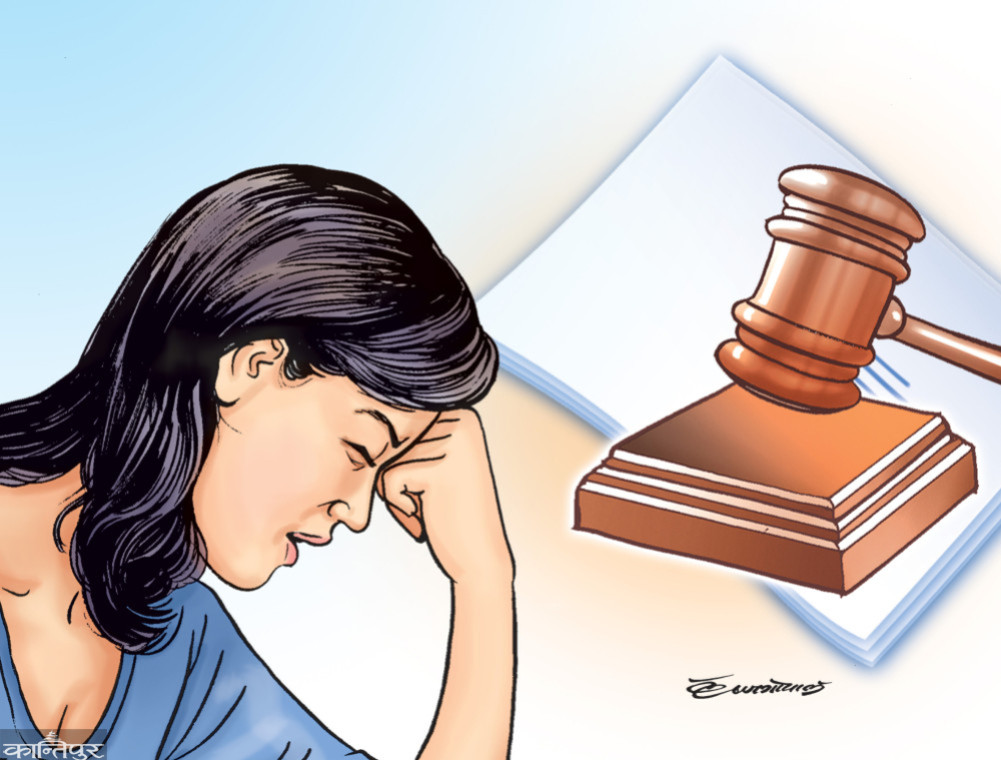
The increasing incidents of sexual violence, rape, abuse and judicial neglect especially against women, teenagers, girls and persons with disabilities have put our state mechanism, social structure and legal system into serious question . Even today, many victimized women and girls across the country are forced to stay locked in dark rooms in the hope of legal protection, facing physical, mental and social pain.
Accused involved in such heinous crimes are easily acquitted due to political access, protection of power or financial pressure. The interference in the investigation process, the strategy of not allowing the case to be registered, the trend of trying to settle the case by using threats or incitement on the victim has put our justice system in a serious crisis.
Instead of taking action against such powerful accused, when the police, the administration or the court start acting in their favor, the faith and trust of the people towards the constitution will not weaken. When the door of the court is open to criminals and closed to the victims, then the essence of democracy cannot remain true . The mentality of telling the
victim to 'compromise' is still alive today . Girls or women in rural areas who have been forced into slavery are silenced with the help of the family, society or even the state system.
Our constitution says that the victim and the accused should not be taken for investigation in the same vehicle. But in practice it seems the opposite. Instead of keeping the victim in a safe place, they are sent back to the victim's village. There is a provision to give psychosocial counseling before legal treatment, but that facility is limited to the paper . Such a system destroys the self-esteem of the victims and forces them to retreat from the path of justice .
The court is the last place of trust of the citizen . But today that trust is breaking . The fact that serious cases such as rape are entangled for years, delays in hearings, weak evidence and the inability of victims to fight the case due to procedural complications have also created a crack in the faith in justice.
Especially the suffering of girls with disabilities, women from Dalit or marginalized communities, teenagers living in remote villages is not within the reach of the state system . Lack of legal literacy, lack of language or access, and lack of safe housing and rehabilitation put them at greater risk. Lack of equal access to the justice system is the most serious social failure today. Political interference, judicial delay, silent support of the society and the weakness of the state mechanism are the main problems. It is essential to make the justice system transparent, speedy and victim-friendly in order to solve them. Use of digital technology in
courts, time-bound hearings and establishment of special assistance centers for victims should not be delayed any longer . An independent monitoring mechanism should be established to ensure that the police and judiciary are free from political pressure. To ensure the autonomy of judges and investigating officers, the interference of political parties should be controlled, free legal services, safe housing, psychosocial counseling, rehabilitation plans must be implemented. It is the responsibility of the state, not mercy. Awareness program should be conducted against gender violence and sexual crimes at school, campus and community level. The culture of sympathy and support for victims should be developed in the society.
Justice is not just a court verdict—it is also the basis for restoring the victim's life . Now the state should bear the responsibility and create an environment where the victims feel trust and not fear. Criminals should not be protected, but should become partners in the action . Justice should not buy and sell, morality should speak .