The ghosts of Hitler's Propaganda Minister Joseph Goewals, who pioneered the propaganda theory that even a lie is told a thousand times becomes the truth, have risen as the sons of populism, some parties, characters and tendencies that have cultivated despair and traded dreams are new but not alternative.
We use Google Cloud Translation Services. Google requires we provide the following disclaimer relating to use of this service:
This service may contain translations powered by Google. Google disclaims all warranties related to the translations, expressed or implied, including any warranties of accuracy, reliability, and any implied warranties of merchantability, fitness for a particular purpose, and noninfringement.
The new debate on alternative politics that has been going on for some time in Nepal, where genetic debates, controversies and laboratories have been going on, has created a powerful wave. From the streets to the parliament, from the media to social media, there has been intense discussion, debate and controversy about alternative politics, alternative parties, alternative leadership and alternative systems.
Analyzing on the basis of prevailing debates, it appears that the establishment, mainstream and established system, ideas, parties, policies, and leadership are becoming defensive, while alternative politics, ideas, parties, and leadership debates are gaining meaningful public support. It was not unusual to have such a debate in the background of the fact that the Federal Democratic Republic was established by the people's movement of 2062/63 and the new constitution was issued by the Constituent Assembly.
Critical thought (critical consciousness) and 'critical mass' (critical community) are increasing due to the development of information technology and social networks along with democratic system, pluralistic society, free press. Mainstream parties are rapidly becoming unpopular due to a series of scandals of misrule and corruption. In a democratic system, it is natural to raise questions, criticize, and debate. Through such questions, debates and criticisms, democratic systems, governments, political parties and leadership evolve, modify and respond. Four options in particular are being debated in contemporary politics.
first option
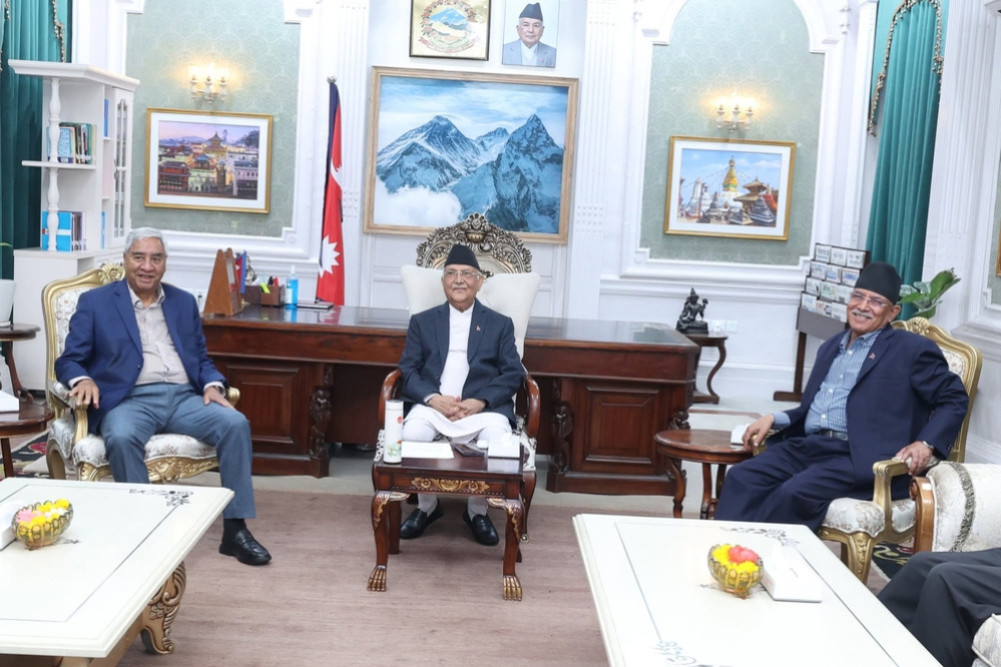
Top leadership options of mainstream parties including Congress, UML, Maoists. Leaders like Congress, UML, Maoist Sher Bahadur Deuba, KP Oli, Pushpa Kamal Dahal and others got the opportunity to run the state power many times and also got the opportunity to lead the party. But they could not deliver according to the needs of the country and the sentiments of the people. So they failed. Because of their failure, they became unpopular.
Proponents, spokespersons and advocates of this option argue that it is necessary to replace such failed and unpopular leadership and install new, visionary and popular leadership. They have been claiming that if the leadership is changed with generational change, then the mainstream party will be revived and able to solve the existing political, economic and social problems.
Congress leaders Gagan Thapa, Vishwaprakash Sharma, Pradeep Paudel have been the spokesmen of this ideological trend. Since the 14th Congress held in 2078, there has been a debate on leadership change and party transformation along with generational change in the Congress, which is positive from the point of view of party transformation and leadership development and change.
Even though such a debate has been going on latently in UML, it has not been able to rise strongly. It seems that a series of competition, recrimination and struggle for leadership has started between President Oli and former President Bidya Bhandari. But the debate of leadership transfer and party transformation with generational transfer has not been able to find a proper place. After the split, internal democracy in UML seems to be weak and the culture of debate and discussion is becoming forbidden.
When questioning the leadership, talking about democratic practices within the party and even raising the voice of the party's operation in a lawful manner, they are punished, suspended or expelled in the name of discipline. The split of UML on the one hand and the expulsion and suspension of Bhim Rawal, Binda Pandey and Ushakiran Timsina on the other has confirmed the same reality. Ghanshyam Bhusal, Yogesh Bhattarai, Ramkumari Jhankri kept raising questions about reform, transformation and leadership. But after the partition, Bhusal and Jhankri joined the Samajwadi Party, while Bhattarai surrendered, Oli's monopoly has been established in the UML.
Even though this debate has started in Maoist, the situation is similar to that of UML. Not only have questions been raised about Dahal, who has been in the party leadership for nearly 40 years, there has also been widespread criticism. Leaders such as Janardan Sharma, Varshman Pun and others have been challenging Dahal and suggesting a change in leadership. But the leaders-activists who raised questions about themselves were either sidelined or forced to leave the party. Mohan Vaidya, Baburam Bhattarai, Netravikram Chand were forced to leave the party after raising questions about Dahal, but now Janardhan Sharma is being sidelined in the party.
second option
is the second option - the option of mainstream parties like Congress, UML, Maoist etc. After the establishment of democracy in 2046, Congress, UML and Maoists have been in power continuously since 2063. But despite getting many opportunities, they could not deliver. Neither did economic development, nor the guarantee of good governance by controlling corruption. It is not only the leadership of Congress, UML, Maoists, but the failure of the party itself. Therefore, the proponents, spokespersons and advocates of this option have come to the conclusion that we should look for an alternative to this party. This narrative seems to have a meaningful political and psychological impact on the society.
Based on this narrative and slogans, the National Independent Party in the city and the Janmat Party in Madhesh got unexpected success in the last elections. Similarly, after Balen Shah, Harak Sampang, Gopi Hamal and other independent candidates were elected, the mainstream party became a powerful There was a
ing shock. Therefore, parties, tendencies and characters including RSVP, Janmat, Balen, Hark, Gopi and some independent intellectuals are in favor of this option. They are also taking maximum political advantage of this narrative. They are adding fuel to the fire of public discontent. If there is no reform, transformation and leadership change in the mainstream party, more negative narratives will be created in the future, which will directly benefit these supporters.
third option
is the third option – the option of republicanism, secularism and federalism and the constitution made through the people's elected Constituent Assembly. This is not just a failure of the mainstream party and the top leadership. The failure of the federal democratic republic and the secular system is the failure of the constitution.
Therefore, the proponents, spokespersons and supporters of this option claim that the republic, secularism and federalism should be abolished and the monarchy should be restored and Nepal should be declared a Hindu state. Monarchist and republican, secular, federalist and anti-constitutional forces, parties and trends favor this option. Such regressive forces, parties and tendencies have been raising their voices in opposition to the federal democratic republic and in favor of monarchy and Hinduism since the new constitution was issued by the Constituent Assembly in 2072.
fourth option
is the fourth option – alternative politics. Proponents, spokespersons and advocates of this alternative advocate an alternative politics, not just political systems, parties and leadership. Alternative politics is different from traditional and popular politics. Alternative politics means cultured politics. It is a democratic system of governance that is accountable to the people. A constitutional state and a constitutional party are operating systems.
is an inclusive democracy, a pluralistic nation-state, an egalitarian society that guarantees social justice, a transparent and participatory decision-making process. Controlling corruption is the guarantee of good governance. Providing services to the public in a simple and convenient manner. An end to the existing political distortions. These problems are interwoven with governance style and leadership style rather than systemic and party-based. Unfortunately the alternative debate has become an alternative debate. But the mainstream debate has not been done.
Which option is appropriate?
Which of the above four options is appropriate? It is natural to ask that question. But politics and political issues are not absolute but relative. The question is formulated on the basis of the national-international situation, the balance of power at the time, the base of the party and the leadership and the strategy of the authority. A fourth option i.e. alternative political agendas are appropriate, necessary and relevant. It is imperative that all parties embrace this agenda.
because today's complex problems are created due to lack of democratic culture, political instability, endless power games, corruption and misrule. Civilized politics are indispensable for political reform, purification and good governance. But there is no alternative power or party that can implement the said agenda and the possibility of establishing it immediately seems weak. Alternative politics has been limited to debate, discussion and campaigning.
The third option is not up for debate. No matter how much exaggerated propaganda is done about the natural processes and debates that are created during the transitional practice of democratic system development, the people have not looked for an alternative to democracy. Nepali citizens who have been granted sovereignty from the people and people are in favor of democracy, republic and constitution without saying, but, but, but. This is not a failure of democracy, republic or constitution.
The third alternative proposal is not change, but regression. People favor choice and change. But not in favor of regression. People have sought an alternative to misrule, corruption and unresponsive governance. But not of democracy, constitution and republic. Neither the need of the country nor the desire of the people. Such regressive ideas and agenda have been rejected by the people through the 2062/063 movement and the Constituent Assembly. Such a proposal is not only an attack on the democratic system and the constitution, but also an insult to the people's movement and public opinion.
No matter how many conspiracies and propaganda against democracy the sons of former kings, courtiers and retrogressors do, there is no chance of success. The alternative to democracy is liberal, progressive and people-oriented democracy. But not authoritarianism, despotism, monarchy, liberalism.
After a long time of homework and preparation, under the direct guidance and indirect leadership of former King Gyanendra, monarchists, supporters of Hindu state and anti-federalism and constitution also tried to 'move' in the capital. But when the people's support was not achieved and Durga Prasai's leadership led to murder-violence, vandalism and arson, the royalist 'movement' also failed. Perhaps such a 'movement' has come to an end forever.
But even though the 'movement' has failed, some agendas are still alive. Nepalese society is sharply divided, especially on secularism and federalism. The harsh reality is that the majority of people are against it. This reality requires serious introspection and self-evaluation by democrats, republicans, federalists and secularists.
mainstream party failure or top leadership?
Is the mainstream party a failure or only the top leadership? The question is serious. Not only in Nepal, such a debate is going on globally. It was not unusual for the partial influence of the anti-mainstream, anti-government, liberal, right-wing, populist wave spread globally to fall in Nepal as well. The mainstream parties and the top leadership are unpopular and there is widespread popular resentment, anger and disgust towards them.
It seems that especially the urban areas, intellectual and professional community, middle class, youth and the Nepalese community living abroad are more affected by such narrative. Nepali society seems to be mysteriously hypnotized towards alternative and new parties, narratives and leadership by labeling established and mainstream parties, leadership, media, intellectual community as 'elite' and 'elite'.
Now it seems that the cheap populist and stuntist tendency to be 'popular' and 'hero' by attacking the mainstream, the middle way and liberal values. The ghosts of Hitler's Propaganda Minister Joseph Goyewals, who pioneered the propaganda theory that even if a lie is told a thousand times it becomes true, have risen as the brainchild of populism. Some of the parties, characters, and tendencies brought about by the cultivation of despair and the trading of dreams are new but not alternative.
Their theoretical-ideological trends seem to be populist, right-wing and liberal. Such parties, characters and tendencies are conflicting on the one hand and on the other hand they have no political vision, ideas and policy except protest, anger and abuse. How can such conflicted and visionless parties, characters and trends be alternative, how can they do cultured politics?
Elections are not the only basis and criterion of success-failure or relevance-irrelevance of any party. Winston Churchill's Conservative Party, who defeated Hitler in World War II and became a world hero, was also defeated in the 1945 elections. So it is not absolutely the failure of all mainstream parties. It is a failure of the top leadership who are not able to deliver despite being given the opportunity many times. Due to such a leadership, that party has also become unpopular. So mainstream parties are unpopular but not failures. Faithful democracy, constitution and party should not be with the failure and absence of top leadership. & Nbsp;
but is not likely to restore the people without a failure and unpopular leadership change. The faster they get rid of the same leadership, the parties will be resurrected by those parties. So the popular leadership has a popular leadership of being clearly viewed, energetic, and cadres with vigilant, energy and cadres even in energetic, energy and cadres even faith. Correasonal, transformational leadership and alternative leadership falls with failure and unpopular leadership that lead to improvement and transformation? The future of the mainstream party is underway in their vigilance, role and capacity. & Nbsp;
but according to public relations, the leadership and converting party transforms will be seriously questioned in their future and justification. Assoly Dehytings, Deuba, Oli, Dahal should be handed out of Deuba, Oli, Dahind, despite his assumption of the party for the future of the party. This is the last 'contribution they to do in the name of the country and the people. If they did not take voluntary leave, the cadres will retire. So voluntary retirement is a respectful outgoing outgoing for them.
final option, final occasion & nbsp;
UML, UCPN (M), UCPN-M Socialist, the Nagar Convention, is likely to change the new leadership throughout the incentive convention. Congress seems to have a positive environment for the leadership of the leadership in Congress compared to other parties. A new leadership will be established by General convention in the next year. Because since the second tense of the chairperson will be the only ten tenage of the chairperson, Deuba will retire after the second tenant. Therefore, the rare gate of the lead and transfer of leadership in Congress has opened. & Nbsp; Shenkhakh Koirala-Gagan Thapa, including the main agenda of party transformation, and leadership in the 14th Convention, Shekhar Bagan Thapa was challenged. The General Mesicipant was elected by competiting a strong establishment aspects and programs based on alternative policy and program. The old generation and constellation, which has been becoming more inclined by analyzing events so far and unpopularity, seem to have gained more political and psychological forces by the analyzing of the central political convention. An analysis from this scenario seems to be prighted by the coming General Convention from the convertible and-changing popular and young generation. & Nbsp;
but is not the same meaning and justification do not mean to be used by the same fails and unpopular characters and generations technically transmitted leadership. So Gagan, World Prabus, Pradip Gyawalil, and Yoghan Prakani and Yoga Bhattaras in UML has come to struggle to struggle leading to leading roles and joints in UML. This is the final option and the final opportunity for those who claim the mainstream party and alternative leadership. So they are 'Do or Mar'. Even now the mainstream party did not show the decisive to the alternative leadership not to struggle to deal with the incidence. & Nbsp;