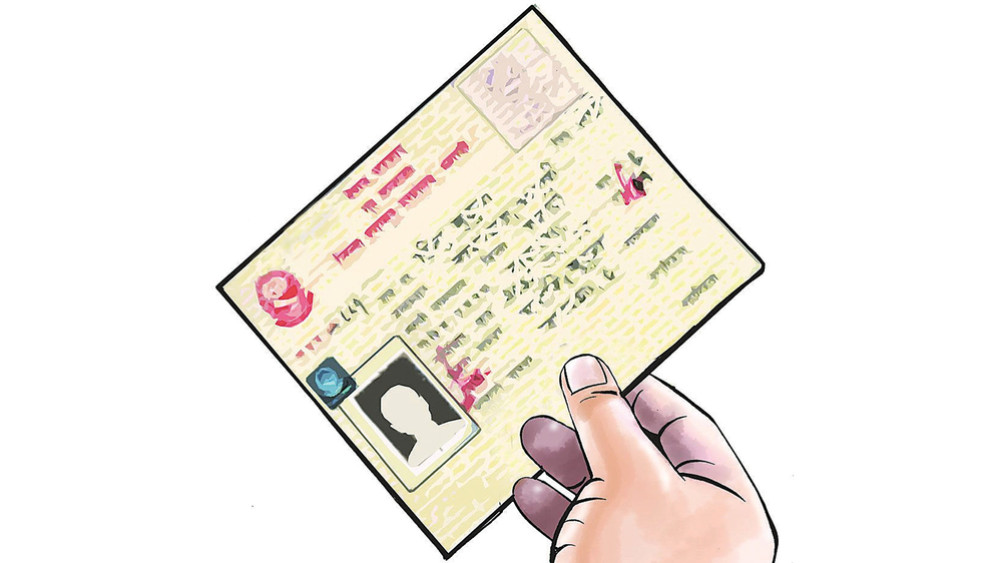
Surjas, who made the present day democratic republic possible by fighting with death in their hands, fought for one piece of citizenship, the war is fiercer than walking with a gun.
We use Google Cloud Translation Services. Google requires we provide the following disclaimer relating to use of this service:
This service may contain translations powered by Google. Google disclaims all warranties related to the translations, expressed or implied, including any warranties of accuracy, reliability, and any implied warranties of merchantability, fitness for a particular purpose, and noninfringement.
If one were to list the sufferings of those who were uncivilized in their own country, many painful stories are found. One of those stories is a 'case study' - Surja Deuba. Born in Bajura, she died in the People's War at the age of 12. Of the 10 villagers who died in the war, 5 were martyred. Luckily she survived.
In time, Surja Giri had a 'party marriage' with Krishna Deuba. However, the Maiti party, which is bound by the caste system, did not accept her marriage. Since 16-17 years, she has not been able to step into Maiti house. It has been 11 years since Surja's husband moved to Malaysia. Now he has not come in contact, nor is he alive or dead.
Surja, who got married at the age of 16, did not get the marriage registration and social approval until the age of 33 to get the identity of a Nepali citizen. The struggle is very painful. Getting the same citizenship is now the biggest achievement of the democratic republic for him.
Did Surja fight the people's war at the risk of her life? What will be the fate of thousands of other fighters who marched like Surja for change? When will the leadership who made this change possible by placing a gun on the shoulder of that warrior think about it? This is the current question.
In fact, the battle fought by the Surjas at the risk of their lives was not a small one. The war fought for one piece of citizenship by the Surjas, who made the current democratic republic possible because they fought with death in their palms, is fiercer than walking with a gun.
Surjas, carrying three not three rifles on his shoulders, mines in his waist and grenades in his hands, tried their best to lay the foundations of the glorious Democracy Day that we celebrate on Baisakh 11. He decided the puzzle of the Republic Day of May 15, which we are celebrating now, with the fear of immediate death. But are those who take the contract of democracy and republic ready to prepare a ledger account of the contribution of these powers? Another question now is this.
Thousands of people like Surja had nothing to achieve in their lives during the civil war. It was only a democratic republic. Among the thousands of warriors who fought on the battlefield to achieve that dream, Surja met fellow traveler Krishna Deuba. During the war, Surja and Krishna, who became fellow travelers, were married by the party leadership. But where is the leadership of the populist marriage now? This is the question that Krishna, who is missing in Malaysia, and Surja, who is working on a chicken farm, are asking now.
After the civil war ended, the country went to a new government system. The idea that they should speak against the injustice, inconsistency, injustice and atrocities in the country became dominant among the people. Surja and Krishna got two and a half lakh each. The two and a half lakh grant given by the state could have paid the price of Surja and Krishna's sacrifice! Where would their life be easy if the future has been misled by the grant of two and a half lakhs! As a result, the subsidy given by the state ended. Due to the compulsion to take care of the children and fulfill his duties, Krishna fled abroad. However, Krishna, who went abroad, became uncontactable.
Surja, who once carried a gun on her shoulder and a grenade in her hand, is now walking in Kokhila chopping grass and firewood. This is the bitter truth of his life. Who is the cause of another civil war that he fought to get the identity of a citizen? Maybe it's his leadership. But, at the same time, another question arises, who is able to be a citizen of this country? Does this system account for it or the consciousness of the common man?
In the local elections of 2074, the Maoist center won in his municipality Punarwas Municipality-9. Even though her party won, Surja could not get citizenship. There was only one reason for this, he was not accepted by the villagers.
Even Krishna's brothers and sisters-in-law did not support him. Children were growing up. She went to the ward office hundreds of times, but sometimes the marriage was not registered, and sometimes the administration did not give her citizenship. While his two children were not enough for a citizen to get citizenship and !
The Maoist Center won the 2079 local elections in that ward. Not only in the local government, the Prime Minister of this country became the 'Surjaka Supremo' i.e. Pushpa Kamal Dahal. After seeing Surja's continuous fight, the villagers also lost to Surja. He pressured the ward that citizenship had to be made.
Meanwhile, the villager asked Surja to come to the town-level meeting of the Maoist center and present his views. She stood on the rostrum and told her story with tears in her eyes. Surja's brother-in-law was also present in the meeting. As Surja's identity was revealed, the party asked his brother-in-law and ward president for an explanation. Then they were ready to get citizenship. She got Nepali citizenship after confirming that Surja was married to Krishna in Rohwar, a neighboring village.
History says - revolution is not easy. The struggle of Surja and Krishna says that no matter how big a revolution is made, nothing will change in the lives of ordinary people. In fact, Surja's struggle for a citizenship is no less painful and traumatic. How many Surjas are there, who are still living as non-citizens and are asking the leadership, 'How much more struggle do you have to do to get the recognition of being a Nepali citizen?'