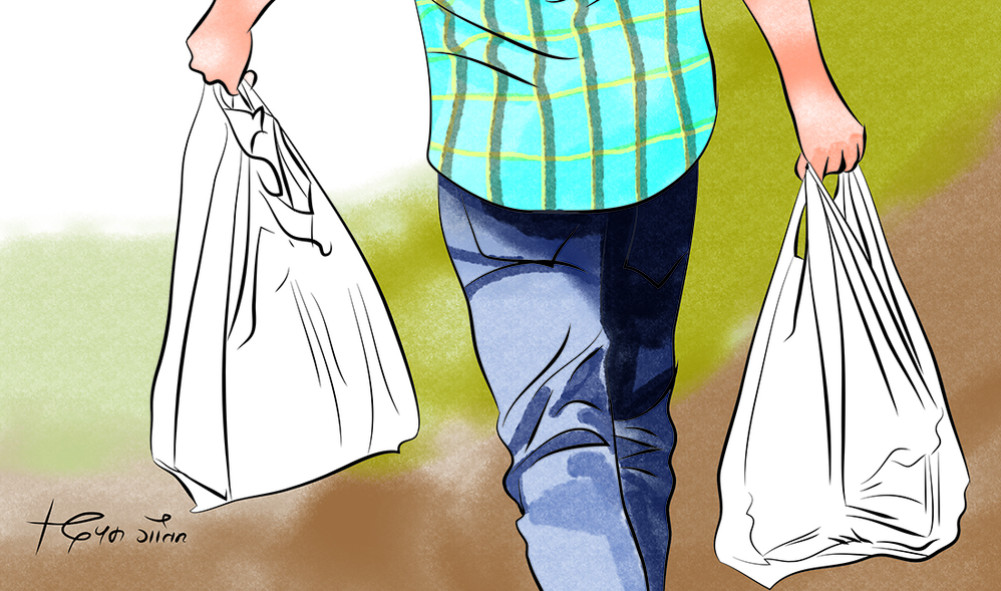
As plastic pollution is becoming a concern, the world community has been asked to unite against plastic pollution this year
We use Google Cloud Translation Services. Google requires we provide the following disclaimer relating to use of this service:
This service may contain translations powered by Google. Google disclaims all warranties related to the translations, expressed or implied, including any warranties of accuracy, reliability, and any implied warranties of merchantability, fitness for a particular purpose, and noninfringement.
Compared to other items, plastic goods are considered multi-purpose, cheap, easy and lightweight. The products made of it, including bags, can be folded into small sizes, it is also very easy to produce, store and transport, so it is in high demand. Nowadays, it seems that life cannot go on without plastic goods.
According to a study conducted in 2022, 400 million tons of plastic and about 270 million tons of plastic waste are produced annually in the world. Countries that produce the most plastic and plastic waste are followed by China, South Asian countries, followed by America and European countries.
Its management has now become a major challenge worldwide. A large part of plastic waste is mixed in public places, rivers, seas, landfill sites and open environment, which is also adversely affecting human health.
Even though Nepal itself does not produce raw materials for plastic production, it imports from other countries. Looking at the data for the year 2021-2022, it is seen that Nepal imported 380 thousand tons of plastic raw materials and plastic goods from other countries. This year, 20.7 kilo tons of plastic waste has been produced.
In the same way, around 165,000 tons have been recycled and new plastic materials have been manufactured by themselves. According to a data, Nepal has increased the purchase of plastic goods from October 2023 to September 2024. Compared to the previous year, this year it has increased by about 21 percent. There are indications that its volume will increase further in the coming year.
In this way, as the business of plastic is increasing, it has also created some jobs, but overall, the plastic we import has to be used once. Due to this, plastic waste is being produced in large quantities.
Due to lack of proper infrastructure to process it, lack of investment-friendly environment and lack of public awareness among people, a large amount of waste plastic is burned, buried, dumped in sewers, rivers, streams, lakes, etc.
This year's World Environment Day is being celebrated on June 5, 2025, i.e. today, with the slogan 'Let's take action against plastic pollution'. As plastic pollution is causing the world to suffer, the world community has been asked to unite against plastic pollution this year.
Since June 16, 1972, the United Nations has been organizing the World Environment Conference. According to the international solidarity to raise political and social awareness worldwide for the protection of the environment, this day is going to be celebrated together in the world from 5th June 1973 to institutionalize it. Nepal is also celebrating this day on this day.
There is a lack of detailed data and research on plastic waste generation and its impact in Nepal. In addition, the widespread use of single-use plastic bags and other items is increasing the production of waste, but due to the difficulty of managing it, the lack of necessary infrastructure, the lack of knowledge, it is thrown everywhere in urban areas, blown away, buried in the soil or ground, or washed away by drains, rivers, and finally goes to the sea and is eaten by the creatures living in the water. To reduce these and such damages, Nepal has no choice but to start immediately.
For this, first of all, Nepal government, state and local levels should ban the production, sale, distribution, storage and transportation of single-use plastic materials. In addition to this, it is also necessary to pay attention to the implementation of the rules of using and producing only recyclable plastics so that it is easy to ban the use of harmful plastics.
The import of non-reusable and non-reusable items and raw materials should be stopped. If it is imported, the importing company will have to keep its data and supervise and control it. Arrangements should be made to collect plastic waste in a clean and safe manner, to transport it safely to the processing center so that there is no pollution and leakage from the collected waste.
It should not be delayed now to create an investment-friendly environment that encourages the classification, storage and processing of different types of plastics, infrastructure development and management. It is important for the government to provide necessary training for the skills and knowledge of businesses, companies and workers working for plastic collection and processing, as well as providing encouragement and tax concessions.
Plastic companies and their related businesses should be given concessions and incentives by evaluating efforts to reduce the impact on the environment, bearing social responsibility, and maintaining good governance. It is now necessary to prepare and implement plastic waste management guidelines.
– Maharjan is the Executive Director of the Center for Integrated Urban Development.