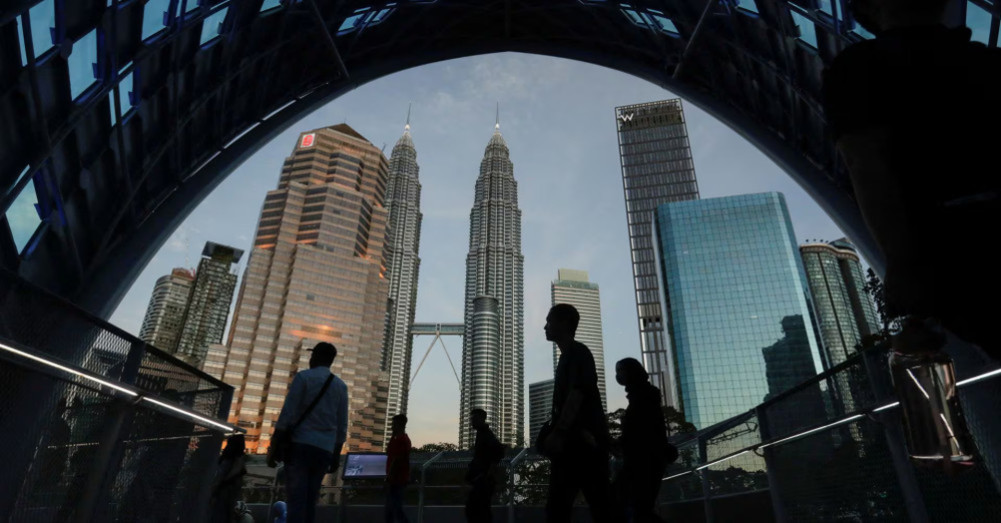
Foreign employment is not a wish of anyone, but an obligation of unemployed youth. This compulsion is caused by the absence of a political vision to mobilize manpower produced at the national level
We use Google Cloud Translation Services. Google requires we provide the following disclaimer relating to use of this service:
This service may contain translations powered by Google. Google disclaims all warranties related to the translations, expressed or implied, including any warranties of accuracy, reliability, and any implied warranties of merchantability, fitness for a particular purpose, and noninfringement.
A few weeks ago, there was news that a young Nepali migrant worker died inside the Nepali Embassy in Malaysia. It was only natural that the opinion of the government commentary about him and labor rights activists who lobbied in favor of overall social justice including the health of migrant workers differed, and that is what happened. The embassy did not accept the weakness in its institutional responsibility.
It has been evident for years that the credibility of the Nepali Embassy in Malaysia, a major labor destination country, is failing in terms of protecting workers and facilitating access to overall justice. The diplomatic credibility has been falling even more lately. Anyone who enters the embassy once feels how much the traffic of brokers is around the embassy.
According to Malaysian experts who research the network of Nepali migrant workers in Malaysia and immigration, the results could have been positive if the health problems of those workers had been addressed by the embassy on time. However, the embassy was not sensitive. Not only within the international definition of social justice that Nepal has agreed to, but also within the scope of fundamental rights of our own constitution, the right to health is a major part of comprehensive social justice.
In this sense, being ignored while begging for help in the Malaysian embassy is a serious violation of the right of access to social justice by the state, discrimination, and legal deprivation. But who will question the irresponsible leadership of the embassy? Neither the Ministry of Foreign Affairs without labor diplomacy thinks it necessary to ask questions, nor does the Ministry of Labor have the capacity to do so. Although the death of that young man does not affect the embassy, the state, the political party and the country, the family of the worker has lost their livelihood, trust and livelihood.
Although not inside the embassy, many such deaths are happening in the workplaces and streets of the destination labor market, which are not touched by the sensitivity of the state. In addition, rape, physical torture, economic exploitation, fraud, trafficking, psychological pressure, confinement in torture centers, etc., are the problems faced by migrant workers on a daily basis, which are the results of deprivation of social justice. But there are many examples that the state is not sensitive to this. It is not possible to analyze them all in detail here. But as a citizen of a country and a worker of the global labor market, how is the Nepali ruler ignoring the access to justice that an immigrant worker should have and institutionalizing a culture of injustice?
In the name of foreign employment business like ours, broker-controlled labor immigration process, in terms of social justice of migrant workers, some aspects are as important as they are complicated. Some of them are:
1.Starting point of fraud, deception, exploitation and abuse: This stage begins as soon as the individual decides to migrate for labor. Among them, recruitment process, misinformation, health examination, language, skill training, etc. in the process of meeting the minimum standards of labor immigration, including fraud and selling fake certificates. The more a foreign employment option emerges among the unemployed and economically, socially, culturally, sexually, racially and politically cheated by the state, the more the disguised brokers who cheat in the name of foreign employment business are in a hurry to exploit the workers economically and psychologically. And the deception begins with the distribution of false information. This is where the negative dimensions of human rights begin, such as human trafficking within labor migration as a result of unsafe workplaces, fraud and fraud.
2.Deprived of access to justice : Fraud, discrimination and exploitation started from the domestic environment. In some cases, workers have to take legal remedies for discrimination or many obstacles in the destination labor market, but embassies rarely help in this process. As the legal status of workers in foreign countries is weak, there should be provision for legal representation when necessary, which is within the international standards, but workers are also deprived of this rights-oriented facility and there are many examples of those who have to suffer temporary detention and prison sentences.
The workers and their support networks tell about the experience of not being able to implement the decisions made, including being disturbed by administrative hassles when making a request at the embassy. This position means direct deprivation of justice. How horrible this aspect is, it is clear when looking at the fate of the injured workers and the dead workers who come to the surface from time to time. If there is political and administrative access, resources and security funds determined under many pretexts try to address these and such problems, that too by spending months and years.
It seems that such a complicated situation is facilitated by the migrant workers' own labor networks and support groups established in the destination countries. And the ambassadors who can be counted on a few fingers are also found cooperating. However, the state has not been able to adopt it institutionally.
3.The recruitment process is not clean and fair: workers are financially cheated and psychologically pressured by creating unnecessary financial burden, the question of transparency and accountability is very complicated in this recruitment process. Foreign employment traders and their brokers collect money from workers without giving them accurate information about the cost of migration and add unnecessary debt burden. The workers are made so naive that they have no chance of escaping after the initial money is trapped and they are forced to pay whatever the broker of the business tells them. If anything is found during the investigation, after leaving the house, money is collected step by step under various pretexts, thus the workers are put in a cycle of unpayable debt. In this kind of fraud, there is collusion between the agency that manages labor migration and the Ministry of Labor and the immigration staff. How can there be access to justice when there is the involvement of the person from the agency that is supposed to monitor and control fraud?
These are just a few representative injustice series. Apart from these, the character of the labor market of the destination country, gender, age, literacy and other skills, skin color, caste and religious discrimination, the social-cultural identity discrimination of the workers, including the employees of the embassy, the labor market, the employers and the employers and their brokers are countless.
Foreign employment is not a wish of anyone, but an obligation of unemployed youth. This compulsion is caused by the lack of political vision to mobilize the manpower produced at the national level. It is not that the rulers of the state who led to restore the liberal capitalist system did not understand this, but even if they understand it, it is political dishonesty not to make the necessity of foreign employment easy, safe and dignified, as well as to ensure a labor-friendly management structure and sensitive leadership. The young working class is paying the price for this dishonesty of the leadership by being bound by discrimination and injustice through unequal contracts in the global labor market. How can this contradiction ensure social justice? This is what is bothering the migrant workers who are interested, researching and employed about foreign employment today.
Rather, the governments of the destination countries occasionally make arrangements to bring the migrant workers who are imprisoned in prisons, who do not have or have not received formal labor documents, who have been cheated by human traffickers and brokers in the foreign employment business, to the legal process of labor migration or to bring them back home safely, which is considered important from the point of view of social justice. But there was no reason to believe that the domestic Talukdar Ministries - Labor and Foreign Affairs would understand, research and address the issues related to social justice, and address them based on truth, neither yesterday nor today. Because these agencies are not labor friendly, they are friendly to employers and their brokers. Therefore, the basis is strong that it is not possible to address the current situation of immigration in a labor-friendly manner and to establish a social justice-friendly management without completely restructuring the current broker-friendly policy framework and institutions. At least the structure of the current parliament has not been able to provide the foundation that can be expected from the present people's representatives for this restructuring work.
On the other hand, instead of creating a labor-friendly environment that addresses the growing toxicity of the global labor market and the character of the domestic labor market by seriously analyzing the list of discrimination and injustice in foreign employment, sometimes the rulers are spreading confusion by doing 'stunts' such as labor fairs, labor portals, and labor and employment conferences. The adult unemployed youth who are ready for the labor market are getting confused by this. It does not matter that the 'stunt' started by the minister who has been a minister for one and a half dozen times and in his own words, the 'lucky labor minister' a few days ago by forcing the Prime Minister to press the button of the labor portal on the occasion of the International Labor Day, is the latest link in this deceptive cultivation.
Also, that 'stunt' on Labor Day was not the first. These series seem to be more active for some time. At the end of last February, while pressing the button to open the National Labor and Employment Conference 2081, the Prime Minister announced the transformative 'Internal Employment Promotion Decade - 2082-2092'. These 'stunts' are the latest chapter of the Shramadahan Rojgar Mela staged last year - families of workers and networks of migrant workers.
Apart from these internal activities, the visits of the Labor Minister and his staff to the labor destination countries have also increased recently. At the end of last January, a jumbo team led by the Minister of Labor went on a visit to Saudi Arabia. Similarly, foreign minister level visits have also increased recently. It is not unusual for such tours to happen and be conducted, but the commentary used in arranging and returning from all these tours is unique. Proper management of foreign employment, promotion of labor rights, labor contract renewal process, search for new destinations, skill development of workers, fair wages, facilitation of health treatment, empowering the Nepali embassy to renew labor contracts, acceptance letters and passports, arranging employment for more youth, etc.
Not only local talukdars go to the destination country, local talukdars have also been coming here recently, whether it was the rare official visit of the emir of Qatar last year or the Saudi foreign minister and royal prince who came to Nepal about 3 years ago.
In these visits that are made under many names and pretexts, a part of the remittances obtained through the exploitative labor contracts of migrant workers are naturally spent. Migrant workers, their families and ordinary taxpayers should raise the question, why is it that various meaningless and impractical assurances are scattered around the destination country at the expense of remittance of workers? Why are the labor contracts that have not been renewed for years unable to be renewed on time? Why are workers forced to go through human traffickers and trafficking brokers informally to new destinations at higher prices and higher risks? Why do the minister and his staff deceive the workers and the common people at the airport when returning from a trip to the destination country that a labor agreement is about to be signed with a certain country? Is the answer to these questions with the Ministry of Labor and its 'lucky' leadership?
These are such questions that our rulers are not capable of creating a policy blueprint for labor-friendly immigration with access to social justice for workers, and they do not have the ability to debate with their counterparts in the destination countries about the discrimination that is clearly happening to their citizens. The confirmation of which is also evident from the "royal request" made by the rulers of Qatar and Saudi Arabia to "take as many Nepali youth as possible". The basis of social justice was not included in the negotiations and diplomatic pleas of such power imbalance.
While saying this, what we should not ignore is that as the Ministry of Labor of Nepal and its agencies are influenced by foreign employment traders, in the same way their brokers also influence the embassies of most of the destination countries. However, there are labor-friendly embassies as a few exceptions led by non-political national servants, but their single efforts have not and cannot address the issue of social justice for the workers as a whole. Because, the Ainjeru of Bethiti has been institutionalized in the Lion Palace of Kathmandu, but the branches of Bethiti have spread elsewhere.