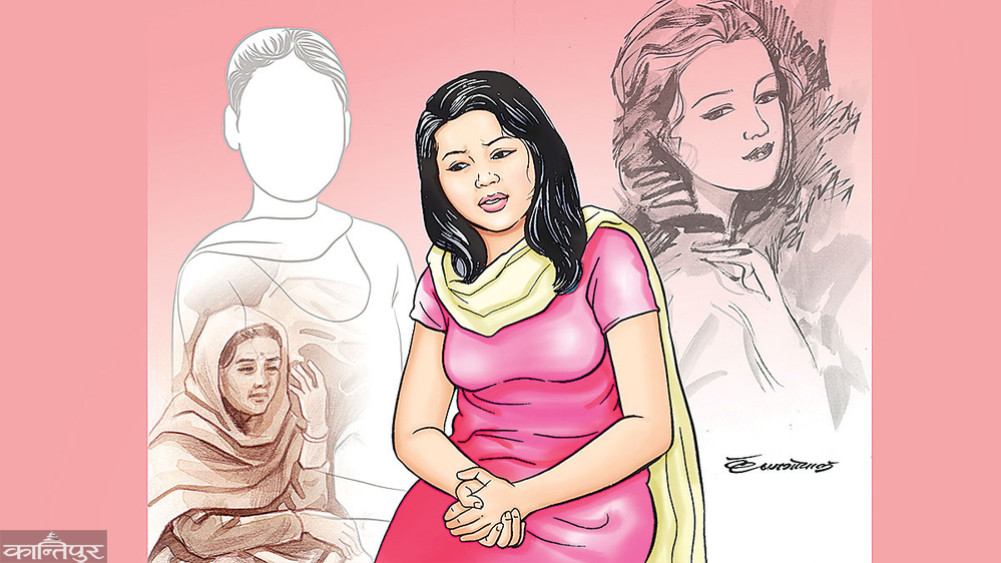
As soon as you know Nepali in a foreign land, the word Chhaupadi is pronounced before Mount Everest and Lumbini, which Nepalis are proud of.
We use Google Cloud Translation Services. Google requires we provide the following disclaimer relating to use of this service:
This service may contain translations powered by Google. Google disclaims all warranties related to the translations, expressed or implied, including any warranties of accuracy, reliability, and any implied warranties of merchantability, fitness for a particular purpose, and noninfringement.
8th Chait will be recorded as a historical day in the history of Nepal. On the same day, the National Assembly has unanimously passed the Resolution of Respectful Menstruation on the proposal of MP Garima Shah, ending the discrimination of menstruation.
The National Assembly has also directed the government to prepare legal provisions covering discrimination related to menstruation. Among the various dimensions covered by the resolution, it is mentioned that the word Chhaupadi should be prohibited.
is actually a Chhaupadi Achhami language word. Which is used only in some places of western Nepal. 'Chhau' and 'Padi' refer to blood and condition. In the Achhami language, the word 'Chaupadi' is used to describe the state of menstruation. If you understand it in a simple way, chhaupadi is menstruation.
In some parts of western Nepal, Chhaupadi has been brought to the world by explaining the place or goth where menstruation is kept as 'isolation', 'dirty' and 'unsafe' conditions. Media, government and non-government are all responsible for this.
The practice of ``isolation'' or ``keeping apart'' during menstruation has different names and forms all over Ilam, Solukhumbu, Mahottari, Kathmandu, Chitwan, Rasuwa or Karnali. But sometimes it is visible, sometimes it is not visible. That's all the difference.
Not only living separately like this, in some communities, directly or indirectly, working 24 hours a day during non-menstrual periods is now considered as a taboo. Such as not touching fruit plants, not participating in cultural events, not touching water sources, not touching seeds, etc. Because, menstrual blood has been considered as 'dirty', 'impure' and 'impure'. Although the exact date of when the practice of keeping separate during menstruation has not been found, menstruation has existed for about 300,000 years, along with differentiated thoughts and practices. There is a legend that one should not look at a menstruating friend or wife before going hunting or fishing.
Actually menstrual blood is 'pure', 'clean' and 'holy' blood. For about 300,000 years this menstruation has existed, this universe has been moving.
In particular, the word Chhaupdi was symbolically institutionalized nationally and internationally by indicating a 'form' of 'visible Chhaupdi Goth' or 'visible menstrual discrimination'.
When the word Chhaupadi is used without a deep and multi-faceted analysis, discrimination is being made against the entire Western Nepal within Nepal and the entire Nepal outside Nepal. As soon as you know Nepali in a foreign land, the word Chhaupadi is pronounced before Mount Everest and Lumbini, which Nepalis are proud of.
, especially in UN-related documents such as SID (Convention against all forms of discrimination against women and girls) sent from Nepal or in the UN's recommendation report for Nepal, Chhaupadi is defined within the 'traditional harmful practices' that create 'isolation', 'dirty' and 'unsafe' conditions. It was taught by the Nepalese, but the discussion held in Geneva on February 5, 2025 is enough to confirm that those who work closely with the United Nations have established it. In 2017, the Coordinating Ministry of National Modest Menstruation Policy, co-organizer of the Second International Modest Menstruation Day or the three-day International Workshop on Modest Menstruation, tabled the Modem Menstruation Guidelines in the Cabinet in 2021, and included Modem Menstruation in the Gender Equality Policy in 2021, the Ministry of Women organized a question and answer program with the United Nations in Geneva. Also, it is not difficult for anyone to understand how serious and sensitive the ministry is with menstruation discrimination from the presentation made by the Ministry of Women during the discussion on the resolution proposal.
Menstrual discrimination is a state of silence, prohibition, abuse, restriction, shame, deprivation of resources and resources associated with menstruation throughout the life cycle, which is depicted as about 50 names in Nepal (used when moving from the west to the east) Chhaupadi, Chhau, Chui, Pakha Sare, Pacha Sare, Pacha Sare, Pacha Sare, Panditni, Maharani. In some places, the terminology that reflects caste discrimination is also used. Thus, it should not be delayed for the concerned bodies to understand that menstrual discrimination is practiced in various forms. Menstruation
Domestic violence according to the definition of Domestic Violence Offenses Act (2066), violation of human rights according to the basic principles of human rights, violation of constitutional rights according to the Constitution of Nepal. Even if only four days are separated during menstruation, at least a dozen fundamental rights of the constitution have been violated hundreds of times.
In fact, the jurisdiction of the Ministry of Women is related to children, adolescents, women, disabled, sexual minorities, senior citizens, and because the number of those born with uterus is high in all groups, it seems that it should be more serious and responsible.
experiences, researches become words, concepts, theories, change with time. Today the word 'Mahila' used to mean 'woman' about a decade and a half ago. Therefore, in today's era, it is natural to use Chhaupdi in the records made in Achhami language, but if the word Chhaupdi is used in Nepali or other languages, it is a different situation. We, wherever we are, appeal and urge to use the word chhaupadi as 'menstruation' and the discrimination associated with menstruation as 'menstruation discrimination'. Likewise, we would also like to remind that every 'minsurator' or person born with a uterus or 51 percent of the population has the right to live as a human being, and it is the responsibility of all of us who are born from the blood of menstruation to make menstruation worthy as it is their human right and constitutional right.