The current Ordinance has also made it easier for companies that have occupied land for commercial purposes or have taken/occupied land in the past for commercial purposes in excess of the limit and for the sale and distribution of land.
We use Google Cloud Translation Services. Google requires we provide the following disclaimer relating to use of this service:
This service may contain translations powered by Google. Google disclaims all warranties related to the translations, expressed or implied, including any warranties of accuracy, reliability, and any implied warranties of merchantability, fitness for a particular purpose, and noninfringement.
On the recommendation of the Council of Ministers, the President approved some Nepal Act Amendment Ordinance on January 2, in which some provisions of the 'Land Act', 'Forest Act' and 'National Parks Act' have been amended. The Ordinance, which came when the Parliament was closed, has become the 'agenda' of the opposition after the Parliament opened. Rather than considering the merits and demerits of the Ordinance, the government has come under criticism for deceiving the Parliament.
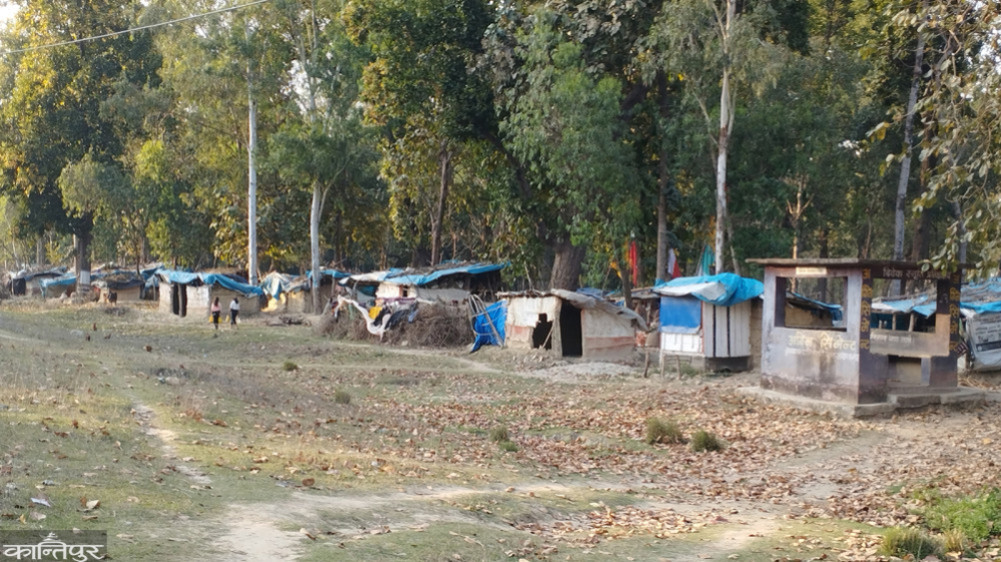
Some provisions focused on solving the problems of landless Dalits, landless squatters and unorganized residents are included in the ordinance. It is well known that the recent land commissions have not been able to advance the work to solve the problems of landless Dalits, landless squatters and unorganized residents. The reason for this was - obstruction of forest and park i.e. non-cooperation and some legal hurdles. The place of residence of the landless is the public land, the open land of the forest area, the central area of the park. Although the government has initiated the process of solving the problem of the landless by revising the land law in 2076, it has not been able to work due to non-cooperation from the forest and park side.
Now the ordinance mentions 'public land, river, river or canal bank land, inhabited land in dangerous places, national park or reserve land, land in the intermediate zone, forest land covered with trees and land within the road boundary, but at the time of initial surveying, the land mentioned in the regional survey book or the land mentioned in the regional survey book or in the Lagat will be closed before the time period specified in section 52 (c) Bani Abad has been working and if such land is not currently in use as mentioned in the Virah Mahal of the regional surveyor's book at the time of surveying, or if the land is not currently in use as mentioned in the annex, there will be no hindrance to provide such land to landless Dalits, landless squatters or unorganized residents.'' Where, it is mentioned that 'the unorganized residents who have been resettled since at least ten years ago, the government of Nepal will be able to provide land not exceeding the specified area in the place where they are resettled'.
Earlier laws did not have the phrase national park or reserve land, land in the intermediate zone. Previously, only the word 'forest area' was mentioned in the record, now the word 'forest area or intermediate zone' has been added to the record.
Similarly, by amending the National Parks Act 2029, it has been added that 'there will be no hindrance to remapping the land designated as forest, forest area or Bhutan area in the records without affecting the land ownership of the local people and separating it from the forest area and maintaining it in the name of the Government of Nepal'. The Forest Act 2076 has also been amended. Where, it is said that 'there will be no hindrance to re-mapping the land designated as forest, forest area or Bhutan area in the records and separating it from the forest area and maintaining it in the name of the Government of Nepal'. This can be understood in the sense that such land can be brought under the name of Nepal government and managed by the landless.
The current Ordinance has made it easier for companies that have occupied land or have taken/occupied land for commercial purposes beyond the limit and are doing commercial business for land sale and distribution. This would have happened if it had not been brought at once. It is likely to benefit those who occupy large land in the name of landless.
What was added to the previous amendment?
The seventh amendment of the Land Act, 2021 was passed on October 2, 2075. In which 52 'A' was added to landless Dalits as specified for one time and provision was made to 'provide land within three years'. Similarly, the eighth amendment of the Act dated 28th January 2076 added 52 'B' and it was provided that 'the government of Nepal will provide land to the landless squatters once in the place where they are depopulating or in any other government land in such a way that it does not exceed the specified area'.
In the 18th Amendment, in 41 'B', landless Dalits and landless squatters were asked to give 130 square meters in the urban areas of Kathmandu Valley and Metropolitan City, sub-metropolitan city, 340 square meters outside the city for the purpose of housing or agriculture. If for agriculture, 2000 square meters in Terai and inner Madhesh and 3000 square meters in mountains and hills were arranged. There is no provision of agricultural land in urban areas.
Provisions for Unorganized Residents to Register Land 41 "C" of the Land Regulations provides that landless Dalits and squatters can be provided or registered land in the same way as for housing. There is a provision to provide 130 square meters of land in the mentioned area except in urban areas. Similarly, in the case of unorganized residents, there is a provision to register up to 10,000 square meters of land for agricultural purposes. However, it has been arranged that the unorganized resident can register the land only after submitting the prescribed fee as revenue.
No law of any country should be created or amended to apply only to some individual, limited cadres or government leadership party's cadres. The opposition to the Land Ordinance is only an allegation made and made to further weaken the landless, unsettled population and keep them in trouble. The thing to be understood is that the landless across the country do not belong to the same party and they do not. Most of them are proletarians. Those who do not have the leisure to walk around as party workers. They are busy working and working to fill their stomachs in the morning and evening. The landless have definitely given their valuable vote/vote to everyone at different stages in the name of land reform, in the gulia speeches and sweet assurances of the leaders. But, until today, they have only received injuries, pain and abuse.
Some complications of ending landlessness
Nepal's landlessness has become more political than it should be. More assurances are given than should be given. Many names have been spent. Land commissions/committees have been formed for the 19th time under this name.
The lack of clear and effective laws is the main reason for the increasing problem of the landless. Not all laws are landless friendly. Even those that are not in effective implementation. It is clear that other classes are benefiting more than the landless when the law is made or amended. Looking at the Eighth Amendment of the Land Act, if a landless Dalit or squatter family gets a total of 130 square meters of land (2,000 square meters in the plains and 3,000 square meters in the hills and mountains in the case of agricultural work as well), it is arranged that unorganized residents will get 10,000 square meters. Not all squatters are landless. At present, when the landless people living in forest and intermediate areas can register land, the law has been amended to allow those who have land in the name of the company to earn income through plotting and selling land. This is a kind of injustice. What about the
controversy?
Article 52 of the Land Act states that Article 52 "A" deals with landless Dalits, Article 52 "B" deals with landless squatters and Article 52 "C" deals with unorganized residents. Article 52 'B' provided by the Eighth Amendment states that the landless will be provided in the place where the population is settling or in any other government land deemed appropriate by the Government of Nepal.
However, in sub-section 4 (c), it is said that public land, river, stream or canal bank land, land in risky places, land in national park or protected area, forest land currently covered with trees and land within the road boundary cannot be given. In point 1 of the same law, it is said that it can be given where they are depopulating, but in point 4, it is mentioned that it cannot be given. Explaining this point in their own way, Forest and Parks said that they will not give land to landless people living within their boundaries. He did not cooperate in the management of the landless that the state was going to do.
According to Section 7 (1) of the Forest Act, 2076, no one should register or register the land within the National Forest. In (2), it is mentioned that if someone has registered the land within the National Forest, no claim will be made on such land on the basis of such registration and such registration shall automatically be considered void. (3) It is said that if such land is registered, it will automatically be canceled after the commencement of the Act. Section 12 states that no forest area containing trees shall be used for settlement or resettlement.
Section 5 (b) of the Fifth Amendment of the National Parks and Wildlife Protection Act, 2029 (2073 Chait 17) states that no person shall build or occupy a house, hut, shelter or any other structure within the National Park and Reserve. In (c) it is written that no land shall be occupied, cleared, cultivated, cultivated or any crop shall be grown and harvested. When trying to implement these rules according to their own, the laws seem to be conflicting. It seems that this ordinance is trying to give a way to manage the landless and unorganized residents who have been living in such places by loosening the restrictive regime and bringing the land in the forest area in their own name.
Efforts to end landlessness
The government has not made various efforts in the past to solve the problem of landless and unorganized residents. For the 19th time since 2046, various commissions, committees and working groups have been formed for land problems. Similarly, since 2051, 3 scientific land reform commissions have been formed. This commission has made various recommendations to solve the problem of the landless. Among them, if only the recommendations suggested by the commission led by Keshav Badal had been implemented in the year 2051, the landless and farmers would not have been agitating till today.
In the year 2076, before the dissolution of the Devi Gyawali-led Land Commission (July 19, 2078), 11 lakh 80 thousand 761 families (landless Dalits, landless squatters and unorganized residents) submitted applications through the local level. In August 2078, the National Land Commission was formed under the chairmanship of Keshav Niraula and before that commission was dissolved (2080 Chait 8), 4 thousand 586 families had also received Lalpurja. Until that period, the number of applications submitted to the Commission increased and reached 13 lakh 50 thousand families through 727 local levels. Recently, the government has formed a commission and the commission has also formed district committees in all districts.
Land conflicts and solutions
Nepal Living Standards Survey 2079/080 released data that more than 20.27 percent of people are directly below the poverty line. Nearly 6 million people are still struggling to live a normal life due to poverty. A large number of them are landless.
The issue of ending landlessness is a provision made by the fundamental rights of the Constitution of Nepal. Article 40 of the Fundamental Rights of the Constitution guarantees land to landless Dalits once. It is something that we have seen and experienced, even though various commissions and committees have been formed for the 19th time since 2004, the problems of the landless in the country have not been resolved. This Ordinance seems to be trying to solve the problems of landless Dalits, landless squatters and unorganized settlements and to give some relief to the recently formed Land Problem Solution Commission for distribution of red parts.
Now there is no situation to remove the settlement and move it elsewhere. Removal of settled settlements may increase conflict. There is no situation that can be given elsewhere, because large structures have been built and people have been living there for years. Livelihood and life are connected there. Therefore, it is inevitable for the government to manage the suitable land for those families who are at high risk of having insufficient land, by making standards and managing them in the same place. This requires a committed government, a strategic plan and an empowered commission. A strong law is necessary for this. Not only opposition from all parties and related stakeholders, but also interest and reflection is necessary.
– Nepalese land-agricultural rights activists.