The basic character of all mainstream political parties is towards brokering. Leaders and workers who work responsibly and honestly in the party rarely get an opportunity. Capitalists, traders, profiteers, contractors and brokers are easily climbing the ladder of state power.
We use Google Cloud Translation Services. Google requires we provide the following disclaimer relating to use of this service:
This service may contain translations powered by Google. Google disclaims all warranties related to the translations, expressed or implied, including any warranties of accuracy, reliability, and any implied warranties of merchantability, fitness for a particular purpose, and noninfringement.
Politics is the process of organizing the political, socio-cultural, economic system. If the political system is not operated according to the interests of the country and the people, the people rebel or resist through the political process and develop a governance system or an economic-political and social system according to their expectations.
Therefore, if a political culture that contributes to the welfare of the people and the positive transformation of the country is developed, the country and the people will progress. If the distorted culture that promotes hatred, insult, malice, discrimination and tyranny dominates politics, it will neither benefit the people nor advance the country. The political character of a democratic country is revealed by the political party, its leadership and behavior. Let's discuss some things that depict the political character of Nepal:
One, political principles, ideals and ideas are the basis of a political party. A political party should have a certain theoretical-ideological approach on how to establish a financial-political system in the country, how to address the concerns, expectations and desires of the people and achieve the goal of prosperity of the country and the people as a whole. All the political parties in Nepal were established with certain theoretical-ideological approaches and ideals.
However, most of the mainstream political parties in Nepal do not have any solid political ideas and vision to ensure national independence, build a self-sufficient independent economy, identify and solve socio-cultural contradictions by analyzing the developed politics of the world, regional power-balance and the internal situation of the country. Not being able to assimilate and respect one's own political ideas, principles and ideals or being deviated means that the political party and leadership deviate from the basic political character. In terms of political ideas and perspectives, most of the political parties in Nepal are isolated from the ideological and cultural character.
two, irresponsible leadership. Party leadership is a collective reflection of ideas, policies and organization, ie party leadership should be responsible for all these issues. Such leadership should be equally responsible not only to the party, but also to the people and the country as a whole. The party and its leadership should also be responsible for the shortcomings of any responsible official of the party. Only then will the party's internal democracy become stronger. However, some responsible officials or leaders-activists of all mainstream parties are involved in various scandals like corruption, irregularity, and smuggling. Neither that party investigates the person involved in the crime, nor does it help the state to create an environment for investigation. The party and its leadership have become protectors of the leadership involved in corruption and irregularities. This is another extreme distorted political-culture prevalent in politics.
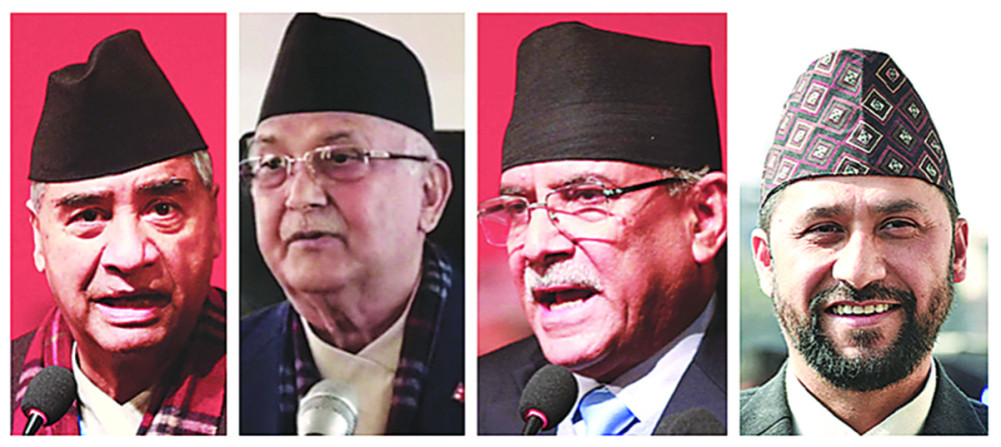
three, the deification of leadership and the congregation. After the then CPN (Maoist) came into open politics, party leaders-activists deified Prachanda. Prachanda was deified as the king was above the constitution in an autocratic monarchy, which did not last very long. CPN (UML) Chairman KP Sharma Oli has been deified by a group of the party for a long time. This made Oli so totalitarian that there is no situation where the leader-activists within the party can register different opinions. The disease of leadership deification is also seen in the National Independent Party.
Citizenship, Passport Scandal, Ravi Lamichhane's colleague, Chitwan journalist Shalikram Pudasaini's suicide and driver Dil Bahadur Thapa's death during the election, no leader-activist of RSVP could raise the issue of investigation. Not only this, the party could have conducted an internal investigation regarding Lamichhane's participation in the judicial case raised by the cooperative victim. The report given by the parliamentary inquiry committee could be discussed within the party. When the co-operative victim filed a complaint with an appeal for justice and Lamichhane was arrested for investigation, the ridiculous slogan of 'conspiracy' would not have been raised on the streets. However, the 'deification and devotional political-culture' within the RSVP has been scattered in the cooperative case.
four, brokerage. After the political party ceases to follow the method, system and culture, it turns into brokering. The basic character of all mainstream political parties is towards brokering. Leaders and workers who work responsibly and honestly in the party rarely get an opportunity. Capitalists, traders, profiteers, contractors and brokers are easily climbing the ladder of state power. Vinod Choudhary, Motilal Dugad, Larkyal Lama, Umesh Shrestha and many others have given positions of benefit based on leadership brokering.
Meen Bahadur Gurung, the owner of Bhatbhateni supermarket, giving land worth billions to CPN (UML) is not only good faith and support towards the party. It is a selfish investment. This is the latest example of brokering. On the other hand, in a party operating in the system, the leader-activists automatically reach positions of benefit based on their contribution, ability and potential. However, for the mainstream party, there is a situation where only the most servile, swindling and brokering of the leadership will get an opportunity. The political culture of such brokering has increased the possibility of doing a lot of damage to honest leaders-activists and people.
five, status quo character. People always want socio-political progress. People want rapid transformation to compete with the changing world. It is the responsibility of the political party to speed up socio-political transformation. However, Nepal's political parties are not ready to protect the system obtained through struggle, agitation and sacrifice and transform it according to the people's wishes.
Not to institutionalize the federal system, but to centralize power and power is seen in political parties. From the formation of the state government to the formation of the cabinet, the center of the political party is the center. This is against the spirit of federalism. Nepal is a secular state. However, when the prime minister is installed or when the foundation stone of a building is laid, whether it is buffalo worship or when the Ram temple is being built in Ayodhya in Chitwan, there are acts contrary to the spirit of secularism. Not only this, the parliamentarians who sign that Nepal should be made a Hindu state are also in the parliament. However, when there is a complicated debate about secularism, no political party makes a solid opinion.
Not only this, politically and constitutionally proportional inclusion principle has been adopted. Political parties form the government in the union or state but not the Dalits and marginalized communities. The party holds big conferences. Its stage is full of men and Khas-Aryas. However, the top leadership of that party does not feel uncomfortable, there is no sense of inferiority.
The government appoints ambassadors, recommends appointments to constitutional bodies and delegations. There are no Dalits, no women or marginalized communities. The leadership of the party opposes the constitutionally and politically accepted inclusiveness established by the Nepali people through struggle or fight, but there is no debate and discussion within the party on such serious issues. This means that the status quo backward thinking developed in the parties cannot become a seeker of political transformation. Therefore, this identification process is the result of a distorted political character that prevents transformation. The
is the political character of hatred and humiliation. Politics of Hate Former US President Donald Trump seemed to exhibit a variety of political traits during his previous presidency. On the one hand, apartheid or white supremacy arrogance was manifested in them, and on the other hand, intense contempt and hatred towards immigrants. He sometimes opposed abortion and sometimes stood in favor of the right to own a gun. Trump used to be accused of failing to demonstrate political character because he weaponized hatred, insults and oppression. Hatred and insults are effective weapons of populist political parties.
The politics of rejecting different opinions, insulting individuals and communities, hatred and insults is also developing as the basic political culture of Nepal. Naturally, critical thinking, argumentation, debate and discussion should all be in question, this alone helps in finding solutions to problems, generating new ideas and perspectives. However, only insults, hatred and insults are not the character of a good political party and leadership. Nelson Mandela said, 'The most dangerous to you will be those whom you have insulted and hated.' However, converting yourself is not so easy. The state power has been transformed by major revolutions or rebellions, the party and the leadership have fought a great deal to bring about the socio-cultural transformation that has become a root. The struggle of transformation of state power is with the acquisition of power, but the transformation of culture ends up being against one's beliefs and essence. Therefore, people are not easily prepared for cultural transformation. Due to the dominance of male power, caste power and traditional glory in the leadership of the political movement, it will be very difficult for the agenda of the liberation of women and the oppressed to become the agenda of that party and leadership.
Mainstream political parties in Nepal are based on power, strength and glory. The monopolistic supremacy and deification created by the leader-activists, the magnificence and power frenzy provided by the capitalists and brokers, the Party and its leadership do not want to challenge themselves or be transformed. This trend is dominant in all parties, old or newly established. If the political power and the party leading the state power are not transformed, the common people will continue to be victims of distorted politics.
If people's expectations, desires and needs are on one side, political parties and leadership are on the other side, naturally it will give birth to another struggle and rebellion. Rebellion itself can open the door to a new economic-political system and socio-cultural transformation.