In the action plan submitted to the Parliamentary Hearing Committee, Chief Justice Manoj Kumar Sharma pledged to immediately implement a mechanism similar to 'Hello Sarkar' to hear complaints related to the courts.
We use Google Cloud Translation Services. Google requires we provide the following disclaimer relating to use of this service:
This service may contain translations powered by Google. Google disclaims all warranties related to the translations, expressed or implied, including any warranties of accuracy, reliability, and any implied warranties of merchantability, fitness for a particular purpose, and noninfringement.
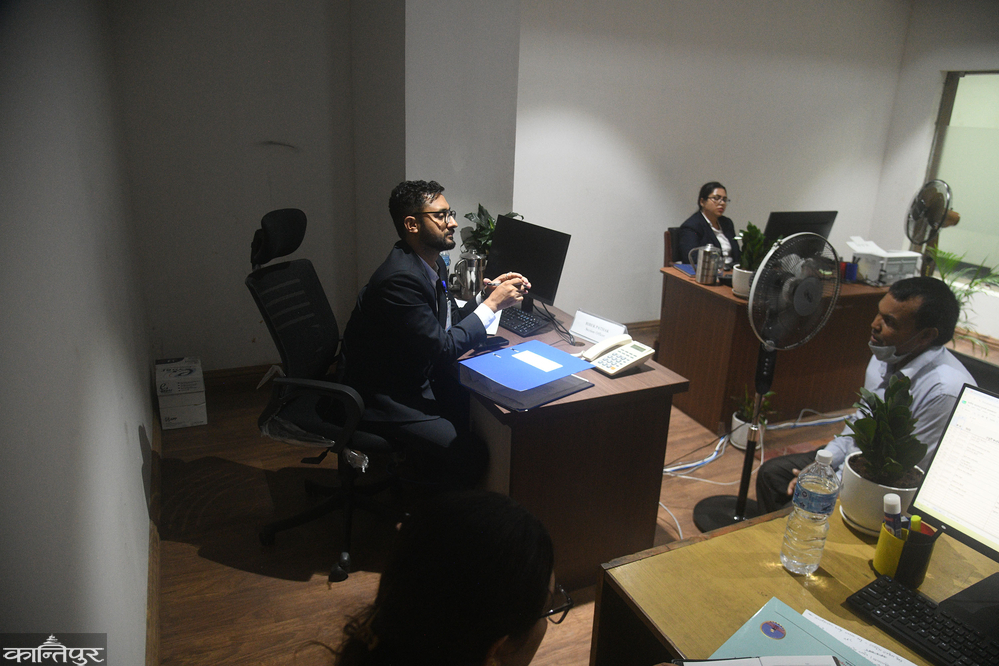
If there is any complaint in courts across the country, it can now be filed directly at the Supreme Court's Judicial Good Governance Center. Chief Justice Manoj Kumar Sharma, in the action plan he submitted to the Parliamentary Hearing Committee, had pledged to immediately operate a mechanism similar to 'Hello Sarkar' to hear court-related complaints. In line with that commitment, such a center has been formally operational at the Supreme Court since Asar 32.
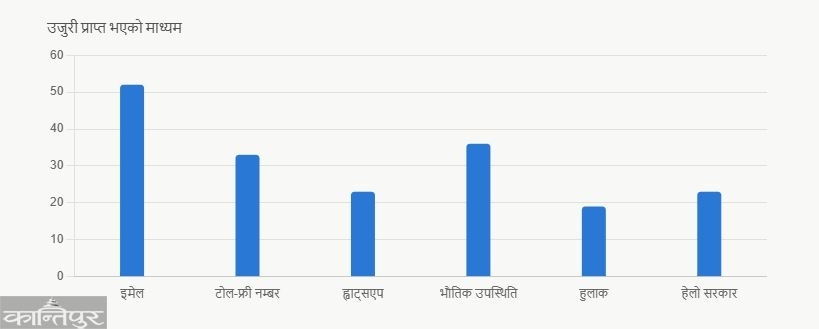
This center had been operating informally since Jestha 20. After its formal inauguration on Asar 32, the center has been providing regular services, according to Branch Officer Vivek Pathak. So far, 186 complaints have been filed at the center. Of these, 57 percent have already been addressed, he said.
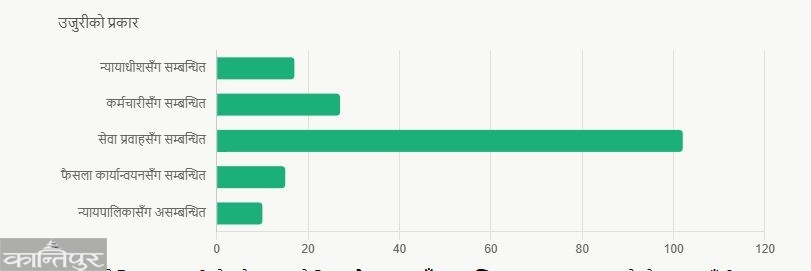
Among the complaints received, those related to service delivery are the most common, accounting for 55 percent of the total. Complaints include delays in case registration, failure to deliver verdicts on time, long waits for full-text judgments even after decisions are made, adjournments, cases being marked as 'not seen' or 'cannot be seen,' long delays in scheduling hearings, lengthy transfers of case files between courts, missing files, hearings scheduled on holidays, reluctance of staff to assign dates, and requests for legal advice when dissatisfied with verdicts.
Similarly, a complaint was filed at the Kathmandu District Court regarding a case that had not progressed for a long time. After receiving the complaint, the center coordinated with Section No. 21 of the Kathmandu District Court and found that although the case had been registered, it was not scheduled for hearing due to an oversight. The necessary procedures were then completed and the hearing was scheduled immediately.
Likewise, a complaint was registered at the Mahottari District Court's revenue section regarding a missing case file. After the center repeatedly coordinated with the court's record keeper and persuaded the complainant to agree to create a new file, the case proceeded. Additionally, the record keeper sought an explanation from the concerned staff regarding the inconvenience caused to the service recipient.
Another complaint was filed against a Supreme Court judge. The complaint alleged that the same bench repeatedly scheduled hearings and ultimately delivered a verdict against the complainant. However, since the center cannot intervene in matters of verdicts or orders, the service recipient was advised to consult a legal professional for further legal action if necessary.
These are representative examples of complaints received in recent days. According to Chief Justice Sharma, this shows that continuous improvement is necessary to make judicial service delivery more efficient, service recipient-friendly, and effective, and that the center is an initial step in that direction.
"There used to be many complaints within the courts, but there was nowhere to voice them. We have established this center for the service recipients themselves," Sharma told Kantipur. "Whatever the complaint regarding the courts, speak up without hesitation. We will try to resolve it."
Arrangements have been made to maintain the confidentiality of complainants. Four staff members have been assigned to address complaints immediately at the center. In addition, the Chief Justice's Secretariat and the Chief Registrar's Secretariat receive daily briefings.
During this period, 27 complaints related to court staff have been received. After complaints were filed regarding poor behavior, demanding money for work, not assigning dates, and causing inconvenience to service recipients, action has been initiated against those involved, according to the Chief Justice's Secretariat.
Seventeen complaints have been filed against judges. These complaints include allegations of delivering verdicts without proper evaluation of evidence, colluding with the opposing party, and being biased.
Of the 15 complaints related to verdict implementation, issues include not assigning bailiffs, delays in executing orders, and only assigning dates.
Ten complaints unrelated to the judiciary concern agencies such as the Land Revenue Office, police, and municipalities. Similarly, among 15 complaints lacking clear details, the complainant's phone number or case number was not provided.
President of the Nepal Bar Association, Vijay Prasad Mishra, said that establishing the 'Judicial Good Governance Center' is a positive and welcome step toward institutionally strengthening good governance, transparency, and service recipient-friendly service delivery in the judiciary.
"While debates on judicial reform are often limited to structural changes and appointment processes, establishing a mechanism to hear and resolve complaints based on the daily problems faced by service recipients is in itself an important initiative," Mishra said. "But this should not be just for show; there must be real action and strict punishment for those who do wrong and cause hardship to service recipients."
He said the Bar welcomes all steps taken for judicial reform but does not support the tendency to protect one's own and blame only others.
Delays in case management, problems in hearing management, unnecessary delays in writing judgments, complexities in case registration, and issues related to the implementation of orders and verdicts have long caused difficulties for service recipients. Legal professionals and service recipients expect that if effective coordination can be achieved with relevant agencies for complaint registration, study, analysis, and resolution through a one-stop system, there will be significant improvement in the judiciary's service delivery.
"Establishing the center alone is not enough. Its success depends on how quickly and effectively it addresses the complaints received," Mishra said. "Not just collecting complaints, but also setting clear timelines for resolution, regularly publishing reports, and making necessary policy recommendations for improvement are essential to justify its existence. Otherwise, there is a risk it will remain just a formality."
The Supreme Court has launched a toll-free number 1660-01-333-55 to hear complaints. Service recipients can also file complaints via email. In addition, the Supreme Court has stated that complaints can be sent via WhatsApp and Viber to 9768570055.

