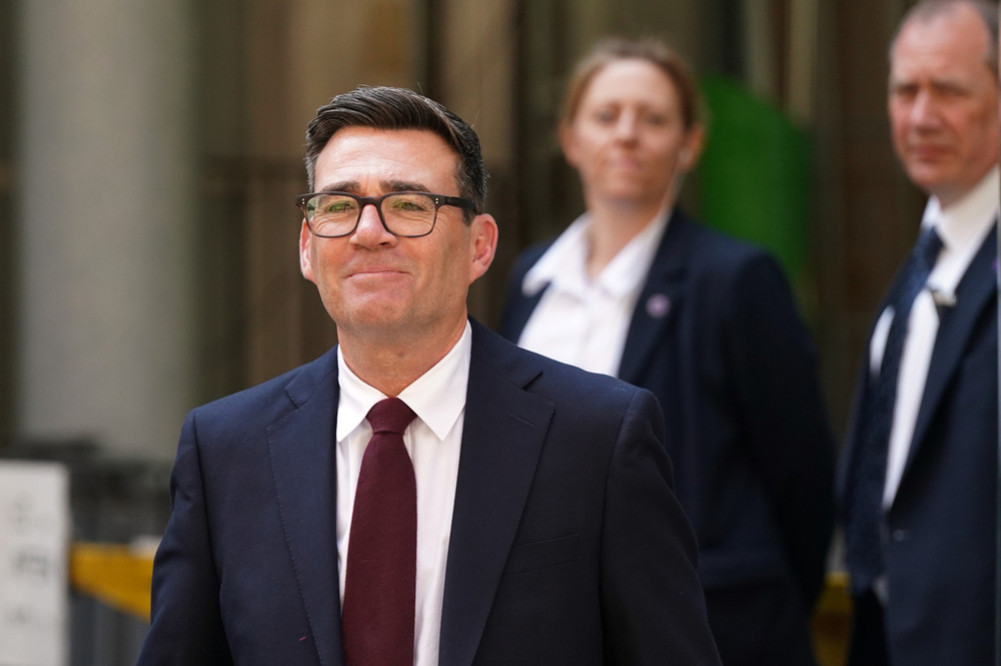
As the new Prime Minister, Burnham will face challenges ranging from reforming the UK economy to managing public services and balancing international relations.
We use Google Cloud Translation Services. Google requires we provide the following disclaimer relating to use of this service:
This service may contain translations powered by Google. Google disclaims all warranties related to the translations, expressed or implied, including any warranties of accuracy, reliability, and any implied warranties of merchantability, fitness for a particular purpose, and noninfringement.
Andy Burnham is entering Ten Downing Street as Britain's prime minister on Monday. Burnham, who is set to take office amid excitement, faces challenges ranging from economic reform to public service management and balancing international relations.
Burnham, who returned to parliament through a special election last month, had previously spent most of his time leading the Greater Manchester region in north-west England. He will now have to run a country of about 70 million people.
Burnham's tenure is expected to be short or challenging, as he will have to solve the problems faced by his predecessor Keir Starmer, including a cost of living crisis, a strained public service and weak economic growth.
As prime minister, Burnham has pledged to boost the sluggish economy, improve public services and raise people's living standards. After being elected leader of the Labour Party on Friday, he said that change is needed in British politics, and that his goal is to make life easier and develop all sectors.
However, the uncertainty in the global economy and rising inflation due to the Iran war have put pressure on Britain's economic growth. Burnham has put forward a plan to transfer government powers to local levels, provide more resources to local governments and increase public-private investment in transport, housing and infrastructure.
The concept of 'Manchesterism' he has put forward aims to achieve regional development through collaboration between the private and public sectors. But analysts say it will take time to fully implement it. Due to the constraints of public finances, Burnham will have limited opportunities to expand government spending. He has indicated that additional contributions from the wealthy could be taken if necessary.
Despite limited experience in foreign policy, Burnham has said that he will maintain his commitment to NATO and the UK's nuclear deterrent. He has made it clear that the UK will remain a strong supporter of Ukraine and a close ally of the US. However, it is said that managing relations with US President Donald Trump could be challenging for him.
Although Trump has previously praised Starmer, they have had differences over Britain's role in the Iran war. Burnham has criticized Trump in the past, but has said that he will maintain a respectful relationship despite disagreements on essential issues. Trump, who has been pressuring NATO member states to increase defense spending, is likely to put more pressure on Britain to spend more on defense.
Burnham's views on the Gaza war could also be a sensitive issue. He condemned Hamas's attack on Israel on October 7, 2023, and criticized the British government's delay in calling for a ceasefire in the ongoing war in Gaza. He has also discussed the possibility of imposing further sanctions on Israelis involved in violence and illegal settlement construction in Gaza.
This issue is considered sensitive for the Labour Party because the party needs to maintain relations with the Jewish community on the one hand, and the support of the large Muslim community on the other. Immigration to the UK will also be a major challenge for Burnham. Anti-immigration sentiment has been growing in recent elections. In particular, the issue of immigrants coming across the English Channel has influenced the political debate.
Burnham has said he will continue the Labour Party's current policy of controlling immigration, reducing illegal entry and prioritising safe and legal routes. He has backed a policy of reducing net immigration to the UK and controlling irregular entry. Thus, Burnham will face urgent decisions on complex issues such as domestic economic problems, public service reform, international relations and immigration management as he assumes the role of Prime Minister.