The government is also preparing to address in writing for the first time the demands of the agitating parties for the 'revocation of fake land deeds' and 'return of land', which have been raised for years.
We use Google Cloud Translation Services. Google requires we provide the following disclaimer relating to use of this service:
This service may contain translations powered by Google. Google disclaims all warranties related to the translations, expressed or implied, including any warranties of accuracy, reliability, and any implied warranties of merchantability, fitness for a particular purpose, and noninfringement.
After years of protests by farmers and workers who have been affected by metered rates, the government has declared metered rates a 'serious economic crime' for the first time and is preparing to create a separate legal structure against it.
According to the five-point agreement reached between the government and the farmers and workers' movement against metered rates on Thursday, it has been agreed to declare metered rates as institutional economic exploitation, abolish fake and fraudulent documents, and prepare a draft of a special act within three months.
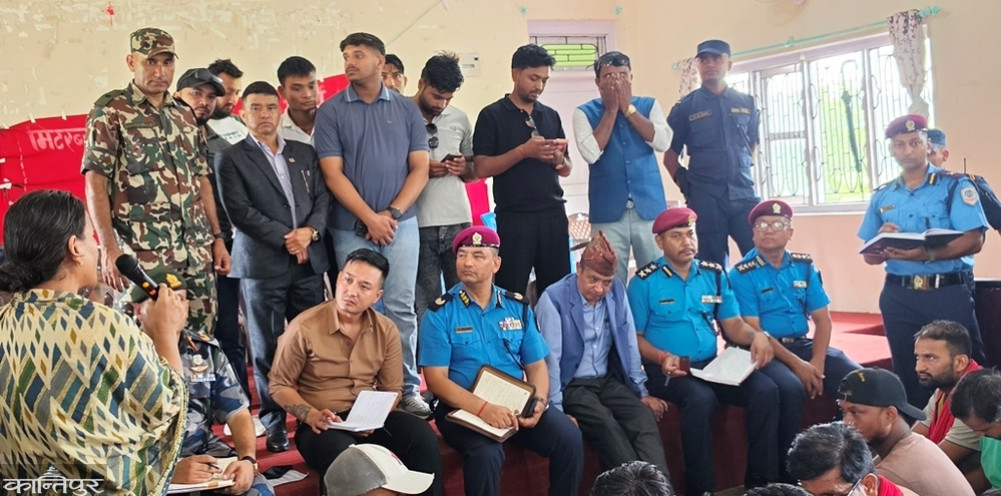
Today The government has also formed a team to negotiate with those affected by metered rates. The cabinet meeting held on Thursday decided to form a negotiation team under the coordination of Pushkar Sapkota, Secretary to the Office of the Prime Minister and Council of Ministers, to address the demands of those affected by unfair transactions (metered rates) and to move the negotiations forward. The negotiation team will include joint secretaries of the Ministries of Finance, Home, Land Management, and Federal Affairs and General Administration. Home Minister Sudhan Gurung has been holding talks with the victims who are coming to Kathmandu for justice since Tuesday after reaching Nijgadh in Bara. After reaching an agreement with Minister Gurung on Thursday, the agitating party has postponed the walking justice march from Janakpur to Kathmandu. The government has already formed a commission, task force and consensus to resolve the meter badge issue, but this time it has put forward a long-term solution, admitting that it has not been implemented. The preamble to the consensus itself states that the rights to social justice, equality and anti-exploitation guaranteed by the constitution have not been ensured in practice, and that poor farmers and workers who are out of formal banking access are falling into the trap of moneylenders. The document also concludes that the problem has become more complicated due to the failure to implement the reports of previous commissions and task forces.
According to the agreement, after the Council of Ministers declares meter-badge a serious economic crime, the process of declaring fraudulent deeds, sight bonds, compulsory checks, and forcibly obtained land passes related to it illegal will begin. The government has said that it will bring a 'Special Act on the Control of Meter-badge Crimes' to provide a legal basis for this.
The act, which is said to be prepared within three months, is prepared to provide a clear definition of meter-badge-related transactions, identification of victims, compensation, return of seized land, expansion of easy access to institutional credit, and bringing the private lender lending system within the legal scope. The government is also preparing to address in writing for the first time the demands of the agitating parties for 'abolition of fake deeds' and 'return of land' that have been raised for years.
A detailed list of meter-badge crimes has also been proposed in the agreement. It has been proposed to define the following acts as metered loan crimes: making a non-existent loan, showing a higher amount than the actual amount, preparing a new metered loan by adding interest to the principal, charging more interest than the law prescribes, using threats or violence to collect loans, seizing the movable and immovable property of the debtor, having blank checks or checks for an excessive amount drawn, preparing unnecessary documents in a single transaction, and having documents certified without proof of banking transactions.
It is believed that the upcoming agreement will also pave the way for the formation of a separate tribunal to hear metered loan cases. The proposed mechanism is said to be able to make necessary legal arrangements for forensic examination of fake documents, examination of bank statements and source of assets, money laundering investigation of suspicious assets, and review of cases that have been decided or are pending in the court. This indicates that metered loan will be moved from a general transaction dispute to the criminal justice system.
A high-level negotiation and dialogue committee comprising the government, independent experts and representatives of the movement has been formed by the decision of the Council of Ministers for the implementation of the agreement. The committee has formed a special task force within seven days to prepare a draft law and an action plan. The task force is proposed to include representatives from the Ministries of Home Affairs, Finance, Law, Land Management, the Attorney General's Office, Nepal Police and representatives of the movement.
After the government committed to implementing the agreement, the agitating parties have temporarily postponed the Janakpur-Kathmandu foot justice march. Leaders participating in the movement have been saying that they will resume the movement if the points of the agreement are not implemented.