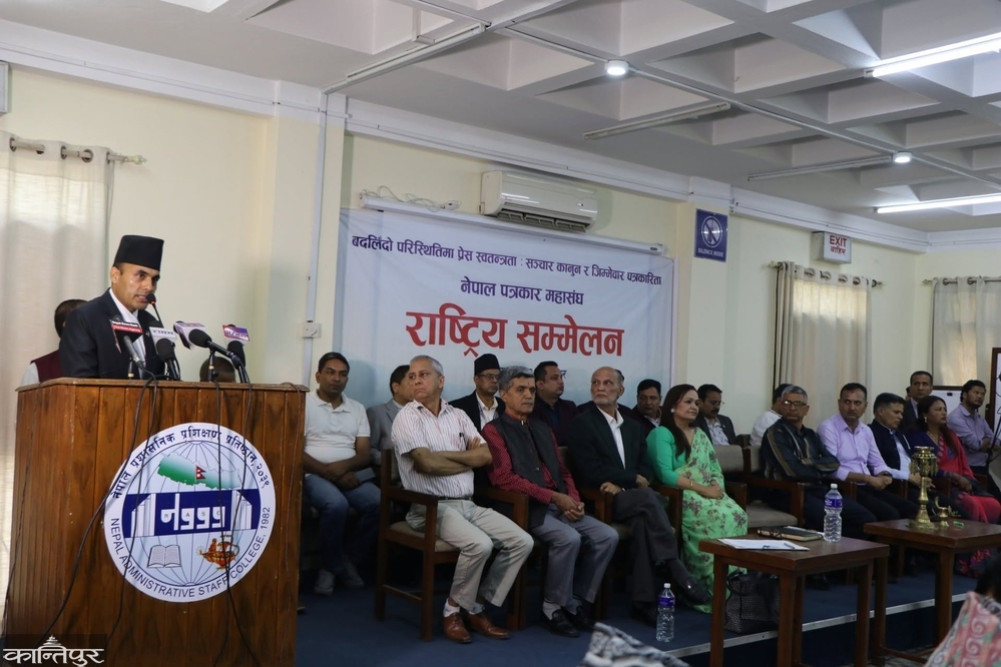
Minister Timilsina, who took the stage to respond to the questions and doubts of the Federation's president and former president, defended the government not only defensively but also aggressively. He claimed that the government has not and will not interfere in any way with press freedom, but instead raised questions about the foundation of journalism, its responsibility, and the legitimacy of the Federation's movement.
We use Google Cloud Translation Services. Google requires we provide the following disclaimer relating to use of this service:
This service may contain translations powered by Google. Google disclaims all warranties related to the translations, expressed or implied, including any warranties of accuracy, reliability, and any implied warranties of merchantability, fitness for a particular purpose, and noninfringement.
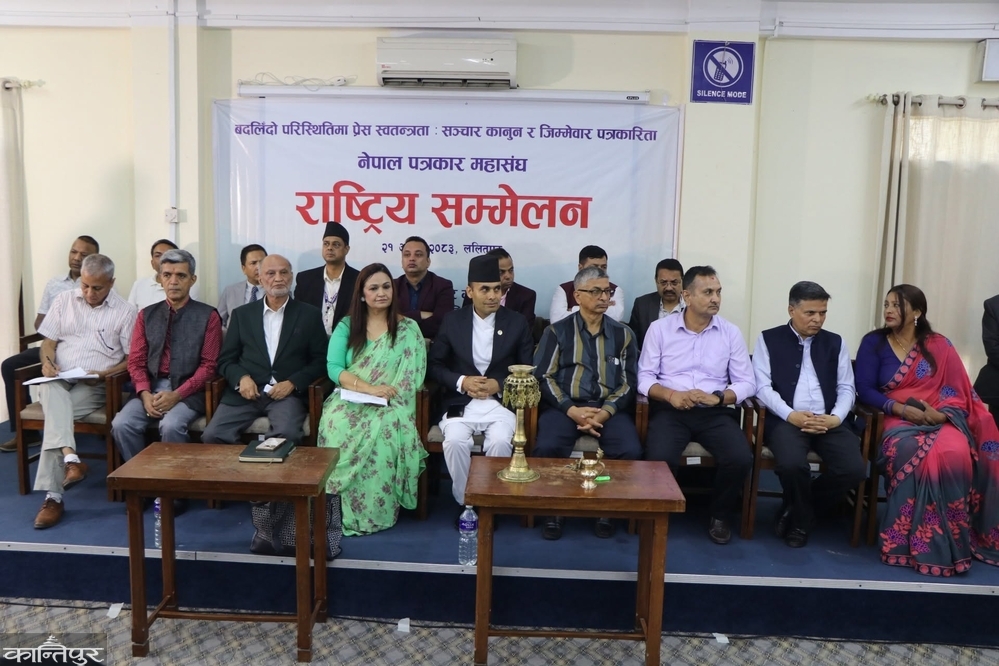
The national gathering organized by the Federation of Nepali Journalists on the theme of ‘Press Freedom, Media Law and Responsible Journalism in Changing Circumstances’ has become a platform for expressing dissatisfaction between the Federation of Nepali Journalists and the government. The gathering, which focused on the economic crisis facing the media and the overall state of press freedom, saw accusations and counter-accusations between the Minister of Communications and the leadership of the Federation of Nepali Journalists.
The Federation of Nepali Journalists is on a nationwide protest alleging that the government’s recent policies, especially the advertising policy and media law, have neglected stakeholders. Minister for Communications and Information Technology Bikram Timilsina was invited as the chief guest at the conference organized to review the same movement, decide on future strategies and open the door to formal dialogue with the government. However, the questions raised by journalists at the program and the minister’s answers have shown the distance between the government and the media sector.
At the gathering, the Federation leadership criticized the government’s approach towards the media for becoming more liberal. Addressing the gathering, Federation of Nepali Journalists President Nirmala Sharma said that the media sector has not felt any relief even after the current government's 'honeymoon period' ended, but has instead faced a contraction. Targeting the Minister of Communications, who was seated on the stage, President Sharma said, 'The Minister will definitely tell us here what achievements have been made in the media now that he has completed 100 days, but we have felt that the government's approach towards the media has become more constricted during these 100 days.'
The Federation has concluded that the circular on advertising issued by the government on Chaitra 18 has pushed the private sector media industry into a financial crisis. Regarding the same issue, President Sharma said that the government is trying to intimidate the media financially. She said, 'The current circular on advertising issued by the government is in crisis due to the unclear advertising policy.'
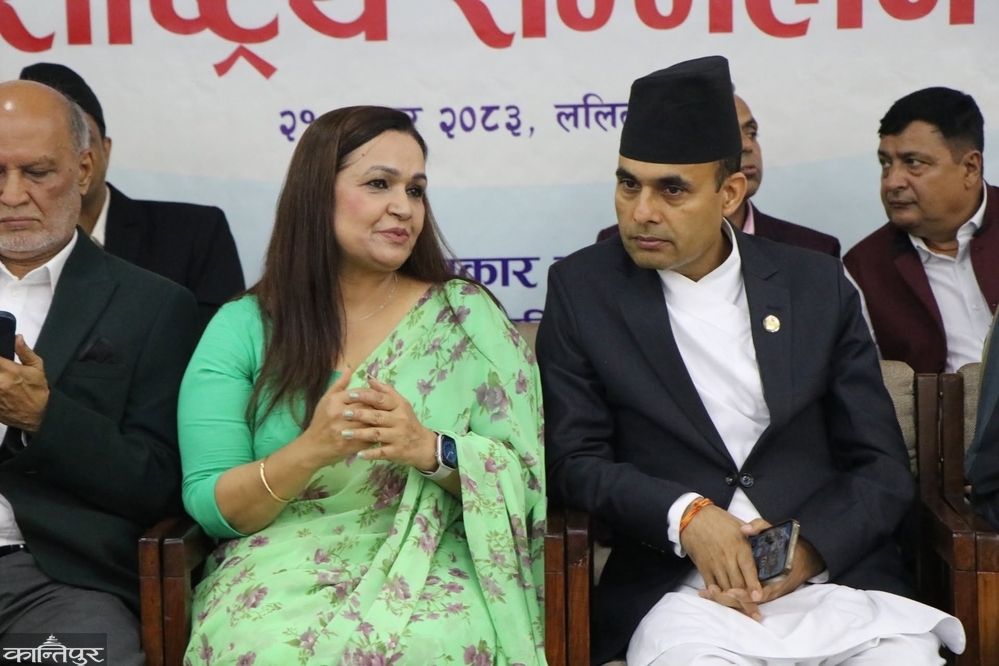
Similarly, President Sharma also questioned the proposal to abolish the Minimum Wage Determination Committee. Sharma said, 'Most journalists are not getting paid at all. The Minimum Wage Determination Committee itself has been proposed for abolition.' Similarly, presenting an example of journalists' rights to receive information on matters of public interest being curtailed, she expressed her anger over the restriction of journalists' access to the Prime Minister's Office and parliamentary committees. 'We can go to the Minister, but journalists are not able to go to the gate of the Prime Minister's Office. Similarly, they are not able to go to the parliamentary committees,' she said.
Supporting Chairman Sharma, former president of the Federation of Nepali Journalists Harihar Birhi expressed concern over the growing distrust between the government and the media sector at the program. He said, 'Earlier, when such gatherings were organized, the Prime Minister or the President would also be present. This made me feel that the relationship between the Federation of Nepali Journalists and the government had weakened a bit.' Warning the government not to ignore the power of the press, former president Birhi said, 'The truth that if the press world changes, not only the government but also the system will change is a truth that we, the journalists of Nepal, have established.'
Minister Timilsina, who reached the stage to answer the questions and doubts of the president and former president of the Federation, defended the government not only defensively, but also aggressively. He claimed that the government has not interfered in press freedom and will not do so, but instead questioned the foundation, responsibility and justification of the Federation's movement. He said, 'We are fully aware that the foundation and pillar of democracy is press freedom. Today, the main question is not whether there will be press freedom or not. No one can violate press freedom.'
Minister Timilsina pointed out the need for purification within the media sector. Responding to the issues raised by the Federation regarding how responsible journalism is, he said, 'The government must be questioned.' But the main question today is what is the basis of that question. We should be firm on what is news. Accusing the Federation of Nepali Journalists of remaining silent when the state's advertising market was being exploited by middlemen and the state treasury was being exploited, the Minister said, 'When the news broke that more than 50/60 percent of the money spent on advertising was misused and went into the pockets of middlemen, did the Federation of Nepali Journalists declare a protest or not?'
Minister Timilsina also questioned the distortions in the media sector and past appointments. 'You talk about the rights of journalism based on some illegal appointments and yesterday's recruitments, and how will the journalism sector rise?' he said.
Similarly, he said that the street protests being carried out by the Federation were not justified and urged the Federation leadership to find a solution through talks and dialogue. 'Please do not hold a street protest, the government is concerned about the rights and interests of the media sector and all journalists. "Please leave this movement and talk, let's solve the problem through constructive engagement," he said.