32,000 applications for recalculation of Class 12 results, more than 5 percent change in results in SEE recalculation.
We use Google Cloud Translation Services. Google requires we provide the following disclaimer relating to use of this service:
This service may contain translations powered by Google. Google disclaims all warranties related to the translations, expressed or implied, including any warranties of accuracy, reliability, and any implied warranties of merchantability, fitness for a particular purpose, and noninfringement.
Although the government and the National Examination Board have been praised for publishing the results of SEE and Class 12 quickly, questions have been raised about the credibility of the exams. The board had released the results of Class 12 and SEE on the 40th day after the exam. Earlier, it used to take 70 to 90 days to publish the results.
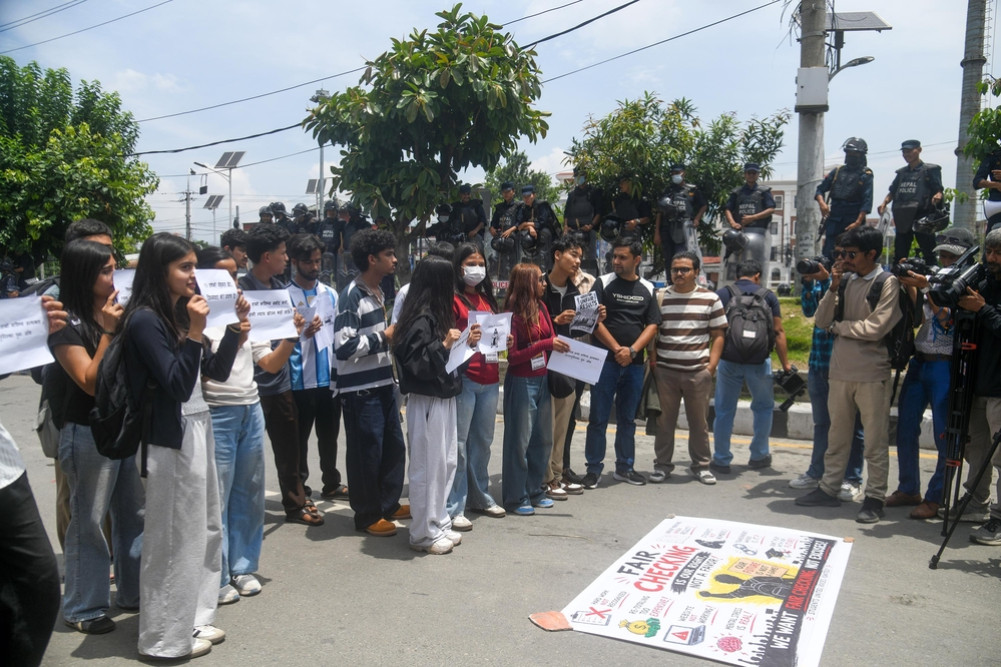
However, last week, Class 12 examinees protested at Maitighar in Kathmandu, saying they were not satisfied with the results. They even demanded the resignation of Education and Sports Minister Sasmit Pokharel. 32,800 students of Class 12 who were not satisfied with the results applied for re-examination, said Examination Controller Krishna Prasad Sharma.
32,200 students who were not satisfied with the results of SEE also applied. Of these, 1,879 students had their results changed, according to the Office of the Controller of Examinations for Class 10. The results of 5.81 percent of the students who applied were changed. Last year, when 26,300 students applied, there was a change in the results of 890, or 3.32 percent. Sharma said that in class 12, only a few people applied for re-examination compared to last year. Last year, when 42,200 students applied for re-examination, there was a change in the results of about 3 percent. The results of the students who applied for re-examination this year have not yet come.
After students protested in Kathmandu, doubting the results, Education Minister Pokharel has formed a study committee with representatives from the Ministry and the Curriculum Development Center. The committee will work on sample testing of answer sheets, verification of test scores and data entry and submit a report, the ministry has said.
After allegations were made that errors increased in the hasty publication of the results, Minister Pokharel clarified that arrangements have been made to publish the results quickly by adding manpower and shortening administrative procedures. The board had also increased the fee by making it possible to apply for re-examination online since last year. A fee of Rs 500 has been made for SEE re-examination and Rs 1,000 for each subject of class 12 re-examination. Students and parents have protested against the fee increase, and they complain that the system of having students pay fees when the results change due to the board's mistakes is even more unfair.
Gaurav Raj Bista has suggested to the Education Minister to change the rule on social media that the system of having to pay fees even when the student is not at fault is unfair. He wrote, 'If the student's results differ during the re-examination, the fee should be refunded to the student.'
In last year's re-examination results of Class 12, errors were found when the teacher added marks, posted them, and when the board entered the marks on the computer. Similar errors were found in the SEE results this year. Only 7 marks were entered for a student who scored 70 marks, and it was found that the examiner made a mistake while adding the marks, said Tukraj Adhikari, the examination controller for SEE.
This time, about 1,000 answer sheets of SEE were lost. Some answer sheets were found missing at the test centers. Students, teachers, and schools have been suffering from missing results every year due to errors in symbol numbers, names, surnames, and dates of birth.
Himanshu Poudel has suggested that the Ministry of Education focus on the quality of answer sheet testing rather than publishing results quickly. ‘Many students have experienced scores that are much lower than they expected. This has raised questions about the testing process. A student’s future is not determined by just one statistic or passing percentage. Even a small negligence in checking answer sheets can affect the future, confidence, and opportunities of thousands of students,’ he wrote. ‘Therefore, releasing results quickly is not the only achievement. Ensuring fair, accurate, and reliable evaluation is equally important.’
Examination Controller Sharma said that despite questions being raised about the results on social media, fewer people have applied for re-testing than last year. ‘Since last year, an online application system has been set up and a fee of Rs. 1,000 has been set. Before that, you had to pay a fee of Rs 500 and apply at the board office,' he said. 'Since the online application can be submitted, the number of students who want re-examination has increased.' He said that the fee for re-examination and other fees has been increased to increase the remuneration of teachers who check the answer sheets. Earlier, teachers used to get Rs 40 for checking each answer sheet, but now they get Rs 45.
The board was instructed to publish the results within 30 to 45 days after the formation of the government led by Balendra Shah on 13 Chaitra. The number of centers for checking the answer sheets of Class 12 was also increased from 28 to 42. However, board officials say that errors have increased because teachers have not been trained in the process of checking the answer sheets. They also said that suspicion and mistrust have increased because the teachers who checked the SEE answer sheets have not been kept confidential. In previous years, after coding the answer sheets, the tests were started only after orientation training for expert teachers. This time, online training was conducted.
Board member Professor Prakash Man Shrestha claimed that there is no need to doubt the reliability of the results as the process of publishing the results has been made fast. ‘Human error happens every year. Only if the results change unnaturally during re-examination, questions can be raised,’ he said. He pointed out that the issue of charging students for re-examination should be reconsidered. There is a provision for students who are not satisfied with the re-examination to pay a fee and even have their answer sheets viewed and re-tested.