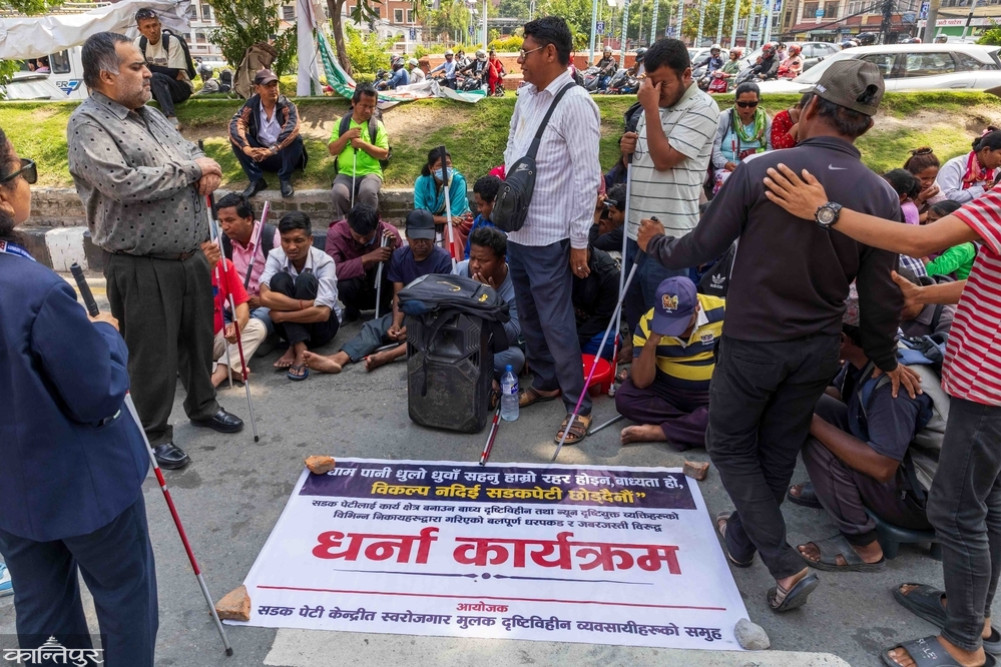
There are currently 61 visually impaired participants in the protest led by the 'Unemployed Visually Impaired Musical Group'.
We use Google Cloud Translation Services. Google requires we provide the following disclaimer relating to use of this service:
This service may contain translations powered by Google. Google disclaims all warranties related to the translations, expressed or implied, including any warranties of accuracy, reliability, and any implied warranties of merchantability, fitness for a particular purpose, and noninfringement.
Blind citizens from different districts of the country are protesting at Maitighar Mandal in Kathmandu, demanding employment, education, health and basic livelihood. The protest program has reached three days as of Wednesday.
61 blind people are currently participating in the protest led by the 'Unemployed Blind Music Group'. The group has stated that most of the participants are between the ages of 40 and 50. The protest is being held from 9 am to 1 pm every day. They have also warned that they will start a 24-hour protest after a week if their demands are not addressed.
According to the group's chairman, Sudip Oli, blind citizens from east to west are participating in the protest. They have drawn the attention of the government and Kathmandu Metropolitan City to ensure the rights to education, health, employment and food, shelter and clothing. 'Opportunities should be given based on merit and ability,' said Chairman Oli.

The visually impaired have alleged that they were arrested in the Pashupati area about seven days ago in coordination with the city police and Nepal Police. According to them, they were taken into custody in the morning and released only in the evening. Chairman Oli said that they were not allowed to stay in the Buddhist area and are currently staying in the Pashupati area during the day to collect donations. He demanded action against those who assaulted the visually impaired. He expressed dissatisfaction with the recent political situation and urged the government to solve the serious problem of the livelihood and employment of visually impaired citizens.
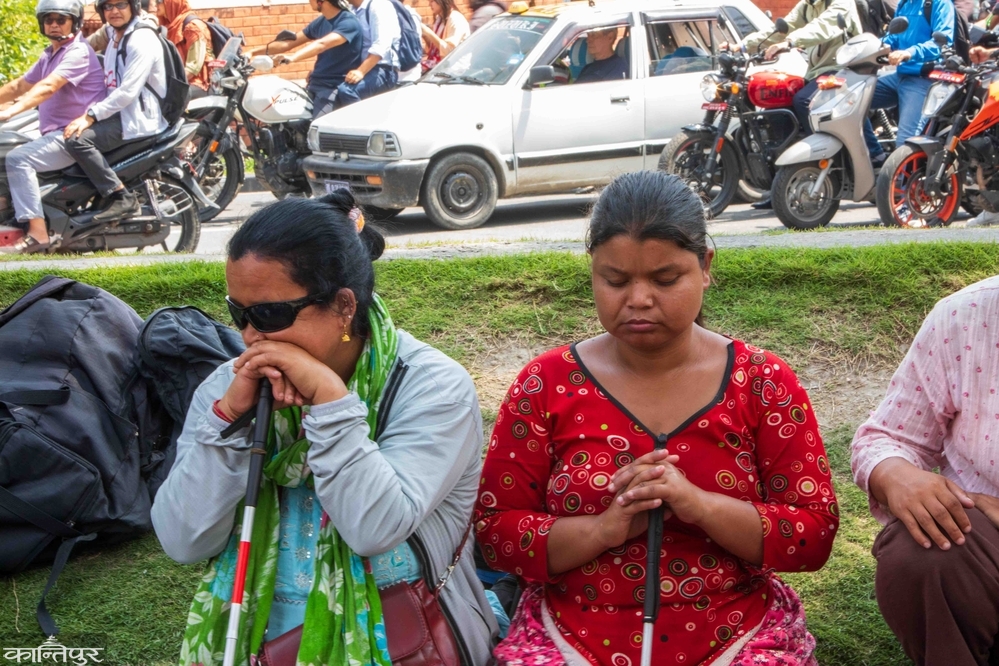
According to the group, there are about 575,000 visually impaired citizens across Nepal. Of them, only a very small number are engaged in regular employment. Although some are working in the teaching profession and government services, they claim that most of the visually impaired citizens are unemployed.
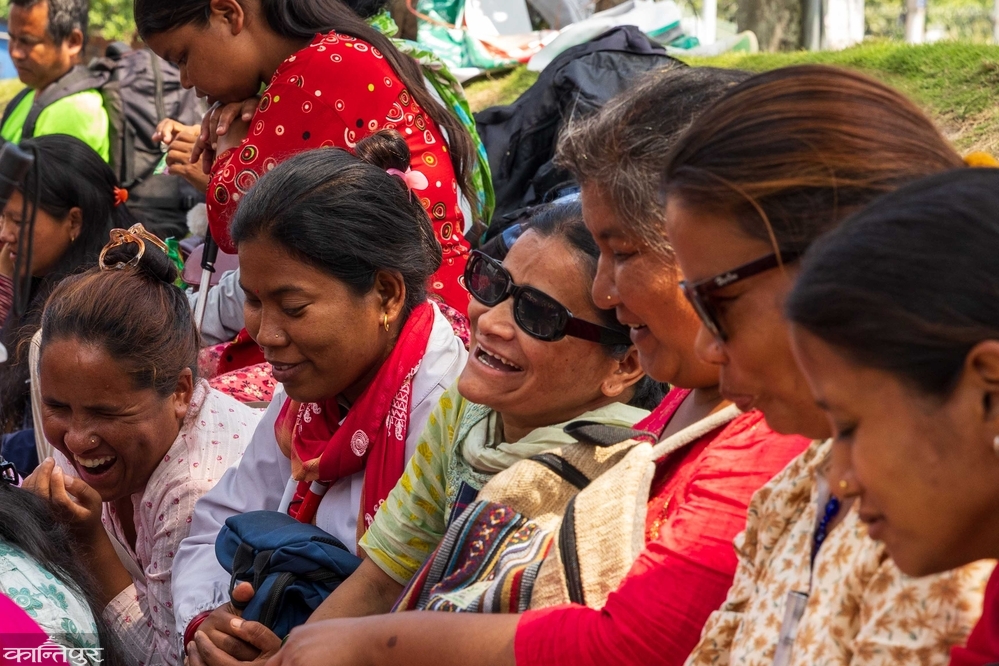
The participants in the protest said that their financial situation is very weak. 'There is only enough rice for two-three days at home, we have small children, and a situation of starvation is approaching,' complained Oli. The visually impaired community has warned that the movement will be further strengthened if the state does not take their demands seriously.