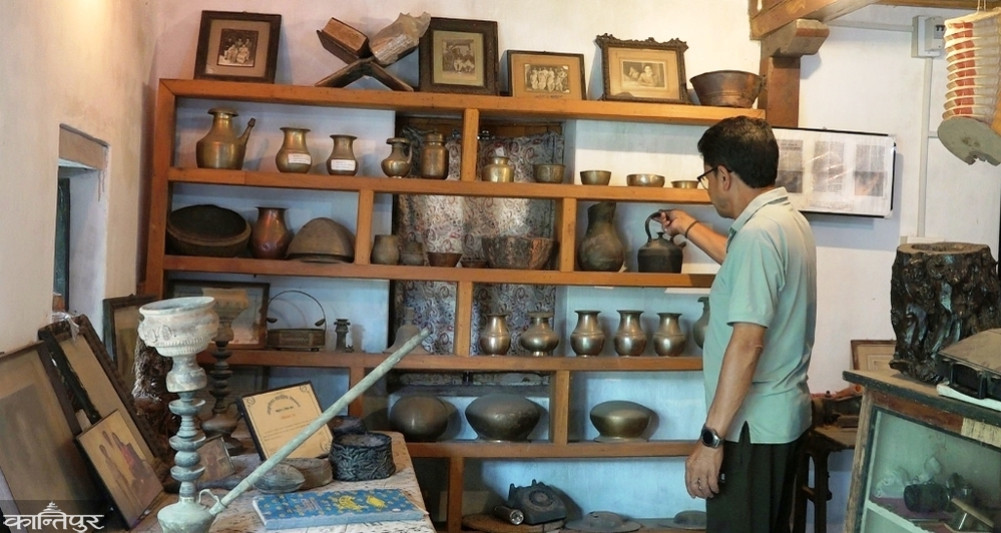
Manoj Narayan Shrestha of Dhankuta is preserving local memory and identity by turning his home into a museum filled with rare artifacts, old photographs, and historical documents.
We use Google Cloud Translation Services. Google requires we provide the following disclaimer relating to use of this service:
This service may contain translations powered by Google. Google disclaims all warranties related to the translations, expressed or implied, including any warranties of accuracy, reliability, and any implied warranties of merchantability, fitness for a particular purpose, and noninfringement.
Old items may be useless to many. Some people keep them in the corner of their homes, while others throw them away. But for Manoj Narayan Shrestha of Siran Bazaar, Dhankuta Municipality-6, these old items have become living documents of history.
That is why he has been collecting rare items, documents and memories for more than three decades and has transformed his own house into a small but historical museum.
The museum established by Manoj Narayan, the eldest son of martyr Bhim Narayan Shrestha, is not just a collection of old items but is also transforming into a living record of Dhankuta's social, cultural, political and historical journey. Anyone who visits here has been experiencing the lifestyle, technology, movements and development of society of past generations up close.
Manoj's thinking changed by the stone road
Manoj Narayan got the inspiration to collect old items from a small incident. According to him, around 2051, he worked with Japanese citizens. One day, while traveling up the Char Chautara pass through Hulakatol in Dhankuta Bazaar with a Japanese team, as they approached the present-day District Police Office, the Japanese members of the team saw a stone road laid on the road. They immediately stopped the vehicle and started asking about the stones laid on the road. 'I asked them through an interpreter why they had got out of the vehicle,' Manoj Narayan recalls. 'They said, 'This stone road is an archaeological heritage. The stones can break when a vehicle drives over it, so we are careful to protect it.' He was impressed by the sensitivity of the Japanese. The respect shown by outsiders towards the heritage of their own place shocked him. 'Dhankuta is ours, the road is ours, the stones are also ours, but will foreigners love it?' He says, 'From that day on, I vowed to preserve and collect old objects.' His collection campaign that began after that continues to this day.
In his three-decade journey, he has collected and displayed more than 200 important archaeological documents and materials. More than 200 rare materials are preserved in the museum.
From clay pipes to documents of the democratic movement, the museum preserves everything from clay pipes used to bring drinking water from Hile to Dhankuta headquarters during the Rana regime to bricks from the Chandrashamsher era. Similarly, important documents related to the democratic movement of 2007 BS are also preserved in the collection.
In particular, the gun refill provided by his grandfather to the then Political Commissioner Girija Prasad Koirala on 25 Poush 2007 BS during the armed movement conducted by the Nepali Congress against the Rana regime is also preserved in the museum.
At that time, the then Political Commissioner of the Nepali Congress, Girija Prasad Koirala, had taken a refilled gun and its bullets from Manoj Narayan's grandfather on the condition that they be returned after the revolution. Even after the revolution, Shrestha's family did not get the gun back.
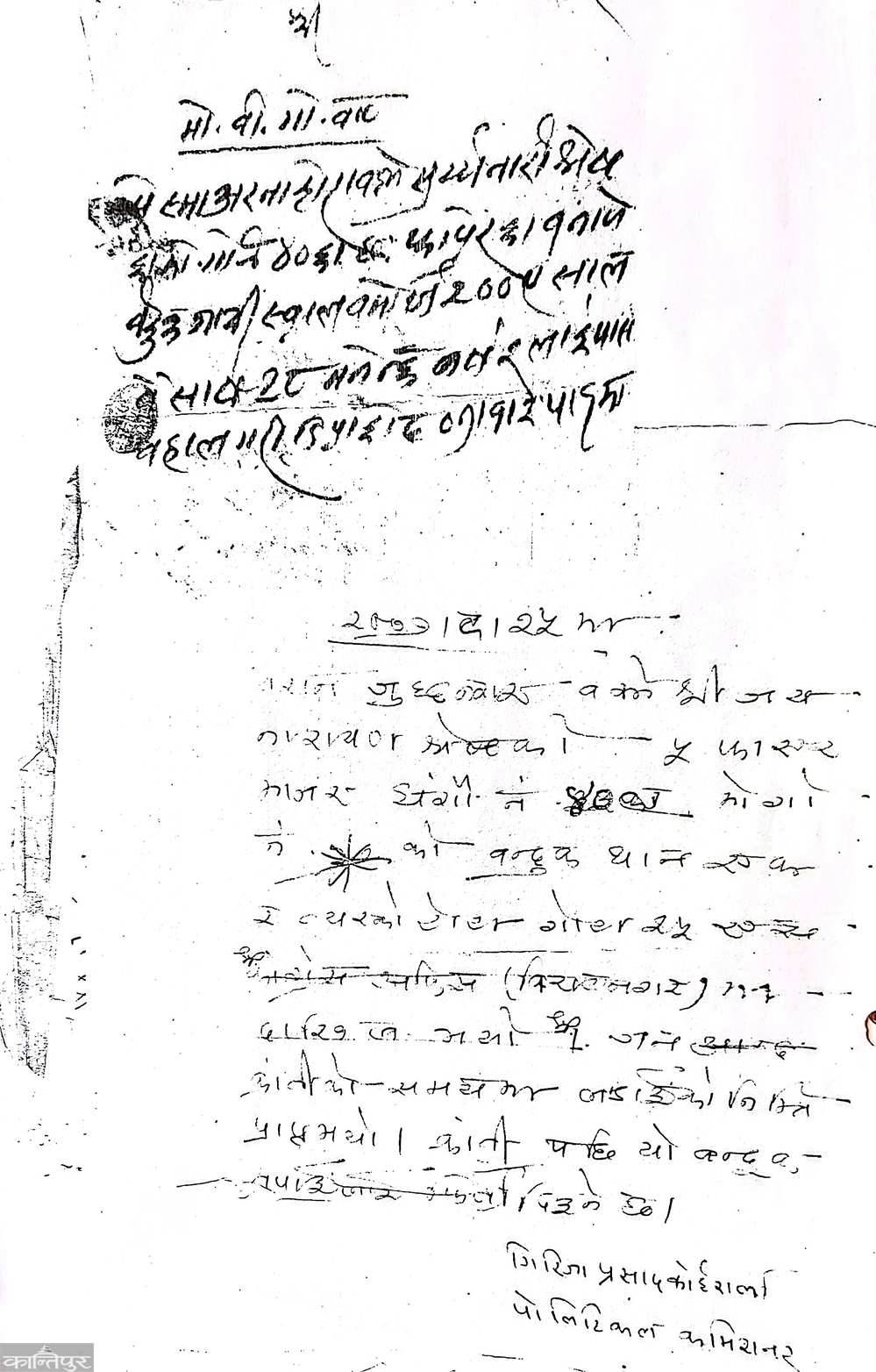
Rajeshwar Shrestha of Siran Bazaar, Dhankuta, says that such materials directly remind us of important chapters in Nepal's political history. According to him, this museum, established and run by Manoj Narayan, is becoming a study center for students, researchers, and history students.
He says that as the new generation gradually replaces the objects that are disappearing from the culture, the opportunity to understand their importance is also decreasing. He said that this effort of Manoj is not only a personal interest but also an important documentation for the community and the country.
Many household items have also become attractions of the museum. Old gramophones, telephones, radios, utensils, wooden and earthenware, agricultural tools, and many items used in daily life are systematically kept here. Rajeshwar says that the museum provides an opportunity for the new generation to directly see and understand some of the materials that they only read in books.
Transforming Father's Memory into History
For Manoj Narayan, this museum is not only the result of his love of history, but also a symbol of respect and devotion to his father. He has carefully preserved the clothes, watches, letters, personal belongings and other mementos related to martyr Bhim Narayan Shrestha. Manoj says that these materials tell the story of the political struggle of the time, the pain experienced by the family and a historical period.
Nepali Congress leaders and workers also come here to view documents and materials related to martyr Bhim Narayan. Congress President Gagan Thapa, leaders Prakash Man Singh, Minendra Rijal and others have visited the museum.
The struggle of martyr Bhim Narayan Shrestha
Bhim Narayan Shrestha was arrested on Chaitra 3, 2030, after the bomb attack incident at a program attended by the then King Birendra in Biratnagar. He was charged with activities against the state and bombing the king.
A special court sentenced him to death. In Magh 2035, Koshi Tappu Bhim Narayan was sentenced to death by burning Holi. According to Manoj Narayan, preserving materials related to his father is not only a family responsibility but also a responsibility towards history. 'Preserving personal memories means preserving an era,' he says.
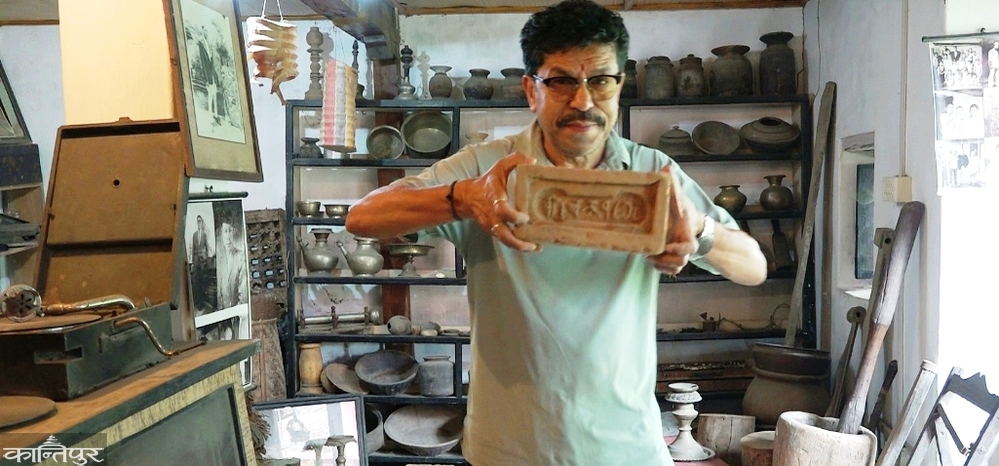
Another important aspect of the museum, a destination for those seeking the history of Dhankuta
Another important aspect of the museum is the collection of documents related to Dhankuta. Manoj Narayan has been collecting books, newspapers, articles, research materials and historical documents published about Dhankuta for years. 'I have preserved all the materials so that future generations can use them,' he says.
For this reason, the museum is now becoming a study center for students, researchers and history lovers. Students of Dharan Engineering Campus come here to study old architectural models. People who do research on history and culture also visit the museum to find necessary materials.
According to Manoj Narayan, many students have commented that after visiting the museum, they have learned many things from here that they had not seen or heard before.
The museum also preserves rare photographs of various places in Dhankuta taken 60-70 years ago. These photographs give a glimpse of the appearance, streets, settlements and life of old Dhankuta. These photographs have become an important source for understanding the history of the city that has changed over time. Some scenes have completely changed now, but they are still alive on the walls of the museum.
Rajeshwar says that this effort by Manoj Narayan has also preserved the collective memory, identity and history of Dhankuta. He said that it is not normal for an individual to continue preserving history by investing his own money, time and effort without the support of the state.