This circular will remain in effect until the Department of Hydrology and Meteorology declares the monsoon to be over.
We use Google Cloud Translation Services. Google requires we provide the following disclaimer relating to use of this service:
This service may contain translations powered by Google. Google disclaims all warranties related to the translations, expressed or implied, including any warranties of accuracy, reliability, and any implied warranties of merchantability, fitness for a particular purpose, and noninfringement.
The Flight Safety Standards Department under the Civil Aviation Authority of Nepal has issued a special aviation safety directive (Monsoon Circular 2026) keeping in mind the monsoon season of 2026.
This circular, approved by the Director General of the Authority on 20 Jestha, will come into effect from 1 Ashar. It has been made mandatory for all airlines and aviation personnel.
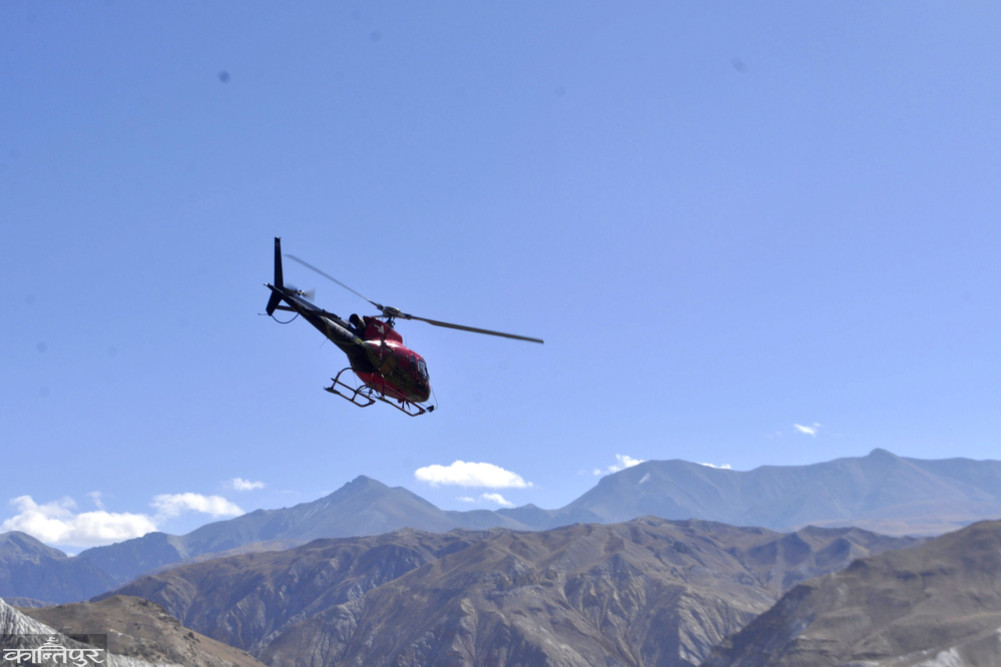
According to the circular issued, during this period, pilots and dispatchers must mandatorily check the technical condition and Minimum Equipment List (MEL) of the aircraft before flying. Complete information about the flight route, destination and weather at alternate airports must be obtained. Helicopters must identify the weather of hilly areas and gorges and alternative places for safe landing. All helicopter flights in Nepal during the monsoon period must be operated by two pilots only (dual pilot operation). However, this rule will not apply to medical rescue (stretcher case) flights.
During the monsoon season, important systems of the aircraft such as anti-skid, windshield wiper, weather radar, slats-flaps, engine reverse thrust and ground proximity warning system (GPWS) must be fully functional. The authority has stated that flights will not be permitted if these are damaged.
If bad weather or strong thunderclouds are seen, the aircraft will have to turn back at least 20 nautical miles away. The pilot has been given the right to return the flight (air turn-back) or divert to another airport as needed.
During landing, the visual approach should be abandoned and an instrument-based approach should be adopted. If the flight is not stable, an immediate go-around should be made.
It has been said that night flight schedules should be arranged only by keeping in mind the mental and physical fatigue (fatigue) of the pilot. If the weather during the flight is different from the forecast or worse, the pilot must immediately inform the Air Traffic Control (ATC) through a pilot report.
Joint Spokesperson Bhul said that the main objective of this circular is to reduce human error in hazardous weather. Many air accidents in Nepal have been caused by continuing to fly in bad weather or skidding on the runway. The authority expects this rule to provide a legal and practical basis to prioritize the safety of passengers and aircraft.
Air travel in Nepal is very challenging during the monsoon and pre-monsoon periods. During this time, problems such as heavy rain, lightning, cloud penetration, rapid wind changes (windshear), low visibility, and icing at high altitude increase flight risks. Especially in helicopter flights, there is a risk of pilots losing direction and crashing into the mountains while controlling the aircraft (CIFIT).
The circular has been brought with the aim of improving safe decision-making (aeronautical decision-making) to reduce all these risks, said Gyanendra Bhul, deputy spokesperson of the Authority.
This rule will be mandatory for all airline companies (Nepal Airlines, Himalaya, Buddha Air, Yeti Airlines, Shree Airlines, Sita Air, Saurya, Summit Air and helicopter companies (Fistel, Mountain, Prabhu, Altitude, Heli Everest, Simrik, Mustang, Kailash, Basecamp, Annapurna and Air Dynasty). Similarly, pilots and flight dispatchers, air traffic controllers and operations staff of these companies will have to comply with it.
This circular will remain in effect until the Department of Hydrology and Meteorology declares the end of the monsoon. In addition, the Authority has also directed to make monsoon safety, diversion handling and threat management training mandatory for the crew.