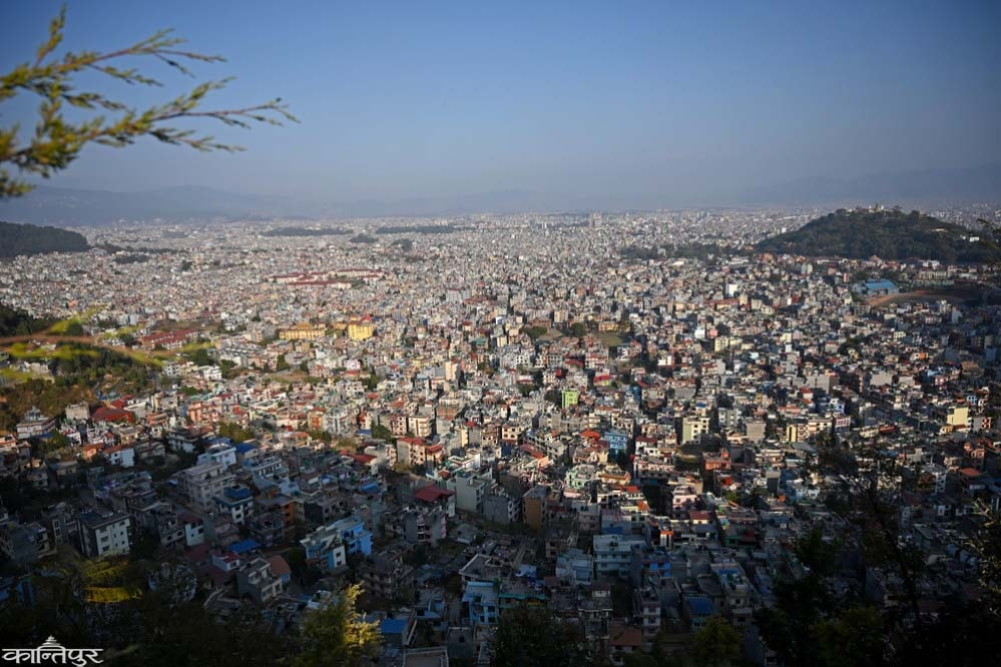
Pollution, which had increased due to dry weather and forest fires, has gradually started to decrease with the rains.
We use Google Cloud Translation Services. Google requires we provide the following disclaimer relating to use of this service:
This service may contain translations powered by Google. Google disclaims all warranties related to the translations, expressed or implied, including any warranties of accuracy, reliability, and any implied warranties of merchantability, fitness for a particular purpose, and noninfringement.
The air quality in the Kathmandu Valley, which had increased sharply last week, has improved. The pollution that had increased due to dry weather and forest fires has gradually decreased with the rains. According to the
Air Quality Index (AQI), the air quality index had increased to 247 last week. Experts had expressed concern that the level would seriously affect the health of the general public as it fell into the 'very unhealthy' category. Today, however, the pollution has decreased to AQI 79. Which falls into the 'unhealthy' category. Last week, Kathmandu was listed as the world's first polluted city, but today it is listed in 26th place, according to the AQI data.
According to the AQI criteria, 0-50 is considered 'good', 51-100 'moderate', 101-150 'unhealthy', 151-200 'unhealthy for everyone', 201-300 'very unhealthy' and above 300 'extremely hazardous' . Director General of the Department of Environment Gyanraj Subedi said that air pollution has been controlled due to the recent rains accompanied by strong winds .
'Due to prolonged lack of rain, dust and smoke accumulate in the atmosphere, forest fires increase and the smoke from them accumulates in the valley, which leads to high pollution,' he said. 'Polluted air coming from neighboring India has also been affecting Kathmandu's air quality .'
He stressed that the relevant bodies should effectively implement sustainable and environmentally friendly development measures to control pollution .