The lack of agricultural scientists has also affected the work of bringing new technologies to farmers. The distance between the center and farmers is increasing, and the expected coordination between the Agricultural Knowledge Center and the local level agricultural branches has not been achieved.
We use Google Cloud Translation Services. Google requires we provide the following disclaimer relating to use of this service:
This service may contain translations powered by Google. Google disclaims all warranties related to the translations, expressed or implied, including any warranties of accuracy, reliability, and any implied warranties of merchantability, fitness for a particular purpose, and noninfringement.
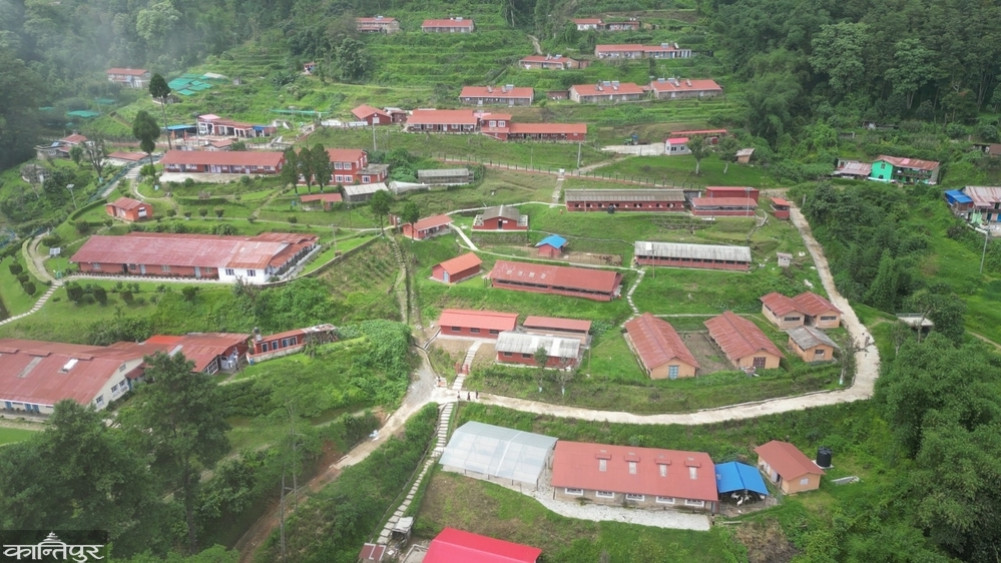
The Pakhribas Agricultural Research Center, established in 2028 BS with the aim of providing agricultural training to retired British Army soldiers, has now reached a state where it is unable to function due to lack of manpower and resources. Once known as a major center for agricultural technology development, research and improving the living standards of farmers in the eastern hilly region, this institution has fallen into a state of scientific and technical shortage.
According to the head of the center, Senior Scientist Prenil KC, the center's work has not been effective due to the lack of staff as per the post. 'We have a lot of structure and potential, but due to lack of manpower, we have not been able to work as per the purpose,' he said.
The center has a Chief Scientist (S5) one, Senior Scientist, S1, S3 and S4 levels 18 posts. Similarly, there are 6 Senior Technical Officers, 3 Level 7, 17 Technical Officers, 15 JT/JTA/Overseers, 13 Technical Assistants and a total of 85 posts including other administration and drivers. However, currently, only 12 people are working, including the main scientist.
The most worrying situation is that of the scientist post. The post of chief scientist has been vacant for decades, and out of 18 scientific posts, only one senior scientist is currently working. The center is being run by one scientist, five technical officers, and four technical assistants.
The lack of scientists has directly affected research and technology development work. Essential laboratories such as soil testing, crop disease identification, pest control, horticulture, and breeding have been closed for years. Chief KC says that even the equipment in the laboratory is deteriorating due to lack of use. 'There is no manpower to run the laboratory, there is equipment, but due to the lack of manpower to use it, all of it has become inactive,' he said.
The main objective of the center, established with the help of the British government, was to increase production and productivity by providing agricultural training to citizens who returned from the British army. At that time, the center, which was established with the aim of preparing the basis for agricultural modernization in the eastern hilly region, had important responsibilities such as developing appropriate agricultural, livestock and agroforestry system technologies for the high, middle and lower hilly regions, improving the economic condition of farmers through advanced farming systems, conducting socio-economic studies, identifying appropriate technologies according to geography, and providing training to agricultural technicians.
The center was also carrying out research on vegetables, fruits, animal husbandry, cardamom, tea and other crops and non-woody plants, producing and distributing source seeds, soil testing, identifying crop diseases and pests, research on parasites in livestock and birds, and producing seedlings through tissue propagation. In addition, the center was also responsible for research and seed production on maize, rice, wheat, millet, pulses, and research and seed production on vegetables including rye, cauliflower, cabbage, carrots, radishes, Akbar peppers, potatoes, onions, and others.
The objective was to conduct research, plant production and distribution of fruits such as pear, peach, kiwi, pomegranate, etc., as well as develop technology in cash crops such as cardamom, tea, and coffee. Although this center, spread over an area of about 1,840 ropanis, has sufficient land for research and technology development, it has not been utilized due to lack of manpower.
Lack of technical and support staff makes it difficult to maintain the structure
Cleaning and maintenance of more than 90 buildings, residences, sheds, and laboratories in the center has also become a challenge. Lack of necessary technical and support staff makes it difficult to maintain the structure. This has increased the risk of damaging the physical infrastructure of the center in the long term.
As research and technology development programs are decreasing, the budget is also being cut every year. This center, which once employed up to 250 workers daily, now only 55 to 60 people work part-time. This has also had a negative impact on rural employment. 'The farmers working here not only provided labor to the center, but also took their skills to the villages,' says Chief KC, 'but now that situation is decreasing, which has also affected the rural economy.'
The lack of agricultural scientists has also affected the work of bringing new technology to farmers. The distance between the center and farmers is increasing, and the expected coordination between the Agricultural Knowledge Center and the local level agricultural branches has not been achieved. This has weakened the relationship between agricultural research, extension and production.
The center's contribution to maize seed production is considered important. The center, which has been developing suitable varieties in mid-hill areas like Manakamana-1 and Manakamana-2 and providing them to farmers, is currently unable to meet the growing demand. 'The demand for maize seeds has increased significantly after the local level became active, but we do not have the capacity to produce them,' said KC.
However, despite limited manpower, the center has continued some research. Screening, collection and technology development of 12 varieties of Akbar pepper are underway. 12 varieties of Dhankute cucumber are being collected and studied, while research is also ongoing in Skuse. The Giriraja chicken research center, which was started in 1991, is a successful example. Farmers have been helped to increase production by crossing it with local chickens. 'Giriraja chicken is our successful research, farmers are getting good income,' said KC.
However, apart from such limited achievements, the overall efficiency of the center is decreasing. Due to the lack of scientists, technical officers and manpower involved in research, long-term agricultural technology development, new variety release, and disease control technology development have almost come to a standstill. The center is hoping to fill some positions after Ashar. 'Some advertising processes have progressed, we expect some improvement in work if manpower is added,' said Chief KC. To revive an agricultural research center of historical and strategic importance like Pakhribas, immediate scientific and technical manpower replenishment, laboratory re-operation, budget increase, and effective coordination with the local level are necessary.