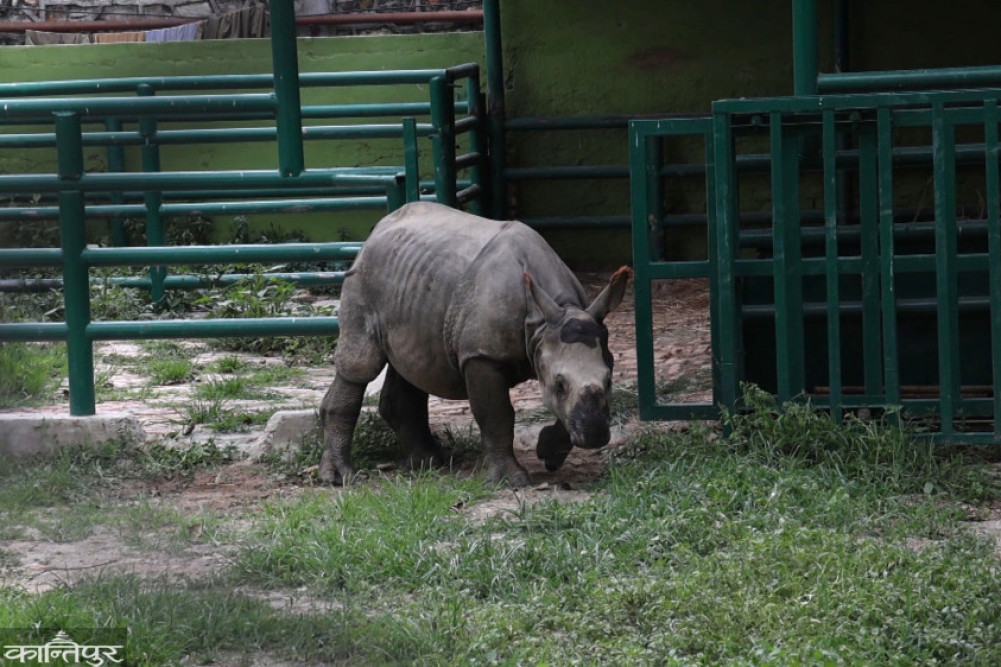
The proposed draft has classified zoos as 'large zoos or zoological gardens', 'medium zoos' and 'small zoos'.
We use Google Cloud Translation Services. Google requires we provide the following disclaimer relating to use of this service:
This service may contain translations powered by Google. Google disclaims all warranties related to the translations, expressed or implied, including any warranties of accuracy, reliability, and any implied warranties of merchantability, fitness for a particular purpose, and noninfringement.
The government is now going to classify zoos. The Ministry of Forests and Environment has initiated a legal process to classify zoos based on the area of the zoo, the number of wild animals and other service facilities.
The ministry has sought opinions and suggestions on the ‘Draft of Standards for Establishment and Operation of Zoos, Wildlife Rescue Centers and Wildlife Hospitals, 2082’. The ministry has requested opinions/suggestions to be provided within 15 days on the draft as per the secretary-level decision of Chaitra 24.
The standards are being prepared to facilitate and manage the ex situ conservation of wildlife, conservation of genetic resources, study, research, conservation education, entertainment, breeding, wildlife rescue, conservation and rehabilitation of rescued wild animals and treatment of wild animals.
According to the proposed draft, three types of zoos have been classified. Zoos or zoological parks with an area of at least 50 hectares and at least 100 species of wild animals are classified as 'large zoos or zoological parks'.
Similarly, zoos or zoological parks with an area of at least 20 hectares and at least 40 species of wild animals are classified as 'medium zoos', while zoos or zoological parks with an area of at least five hectares and at least 10 species of wild animals are classified as 'small zoos'.
Similarly, it has been proposed to classify zoos into two types based on management: those managed by the government and those managed by institutions or other bodies. Zoos or zoological parks established and operated by federal bodies, provincial bodies and local bodies will be classified as those managed by the government, and zoos or zoological parks established and operated by institutions or bodies established in accordance with law will be classified as those managed by institutions or other bodies.
The draft standard states that ‘zoo’ means a place where animals are kept and managed for conservation, education, entertainment, reproduction, conservation of genetic resources, study and research.
Similarly, the term will also refer to a zoological garden established in accordance with international practice.
According to the draft standard to maintain the five freedoms for wildlife, when constructing a habitat for wildlife or arranging a group section, wildlife should be provided with appropriate food, nutrition and water availability, freedom from pain and disease, necessary medical treatment, an environment where they can express their natural nature and an environment free from unnecessary fear and anxiety.
When kept in a ‘section’ of a zoo, pairs of males and females should be kept according to the behavior of the species. Similarly, species living in a group should be kept in the required number of male-female ratios in the group. The draft states that injured, sick and immediately rescued wild animals should not be kept on display, and that the distance from the habitat of the wild animal to the place where visitors can observe them should be at least one and a half meters. For that, a safety barrier should be placed at a distance of one and a half meters from the outer perimeter of the habitat of the wild animal.
According to the standards, in the course of rescuing wild animals, during their transportation/handling, while they are being rescued or at a rescue center or zoo, or if they die during treatment, a post-mortem should be conducted by a veterinarian, and in the case of wild animals listed in the Schedule of the Convention on International Trade in Endangered Species of Wild Fauna and Flora of Nepal, a document should be prepared and kept in the presence of the employees of the concerned protected area office or division forest office.
After the postmortem, the body should be cremated with proper rituals within the premises of the zoo, rescue center, or division forest office or protected area office and buried in a deep pit so that it cannot be retrieved.