Everyone has been evacuated to safety after Saturday's attack. This is the second attack targeting the embassy in a week.
We use Google Cloud Translation Services. Google requires we provide the following disclaimer relating to use of this service:
This service may contain translations powered by Google. Google disclaims all warranties related to the translations, expressed or implied, including any warranties of accuracy, reliability, and any implied warranties of merchantability, fitness for a particular purpose, and noninfringement.
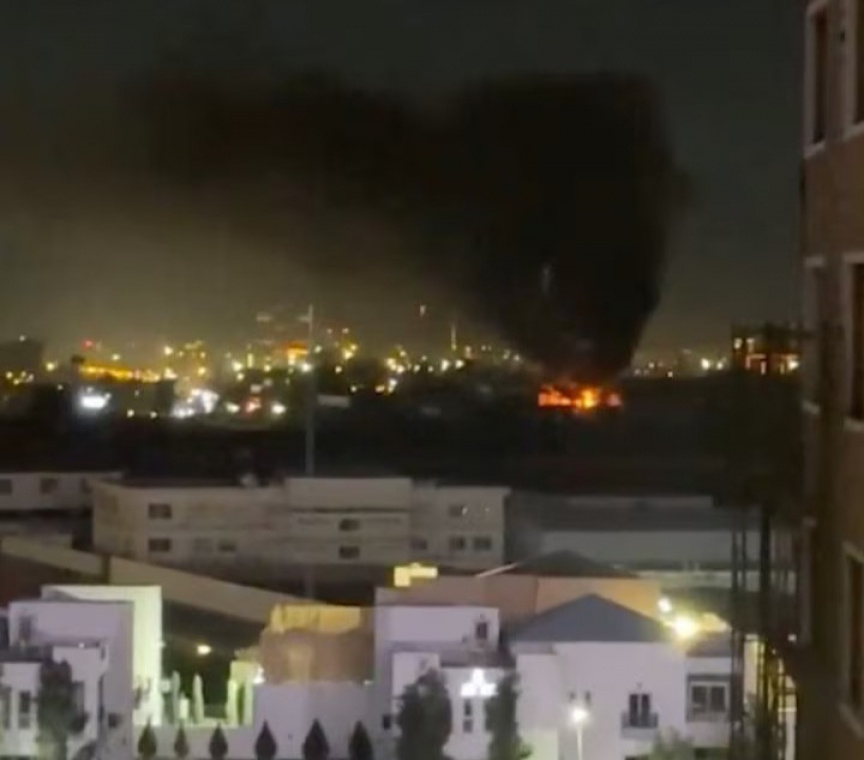
Two Nepali security guards have been injured in a drone attack targeting the United Arab Emirates (UAE) Consulate General in Erbil, Iraq. Similarly, 120 Nepalis working at a nearby US military camp have been shifted to a hotel after continuous drone attacks at the airport. Some Nepalis have already left Iraq as a safety precaution.
One of the two Nepalis injured in the attack on the UAE Consulate General is being treated at a local hospital. His hand and face were burned. The other Nepali suffered minor injuries to his hand.
‘We were eating. Suddenly the drone exploded. My hand and face were engulfed in flames,’ the security guard who was receiving treatment told Kantipur over the phone, ‘The other friend had minor injuries to his hand.’
There are 13 Nepali security guards and two Nepali female employees working at the Consulate General. All have been shifted to a safe place after Saturday’s attack. This is the second attack targeting the embassy in a week. The latest attack injured two security personnel and damaged the consulate building. The UAE strongly condemned the drone attack, saying that targeting diplomatic missions and premises is a clear violation of international rules and laws.
‘In particular, the Vienna Convention on Diplomatic Relations provides for the inviolability of diplomatic premises and the safety of diplomatic personnel,’ the statement issued by the UAE Ministry of Foreign Affairs said, ‘Such actions constitute a dangerous provocation and a serious challenge to regional security and stability.’ The UAE also called on the Iraqi government and the Kurdistan Regional Government to take all necessary steps to investigate the attack, identify those responsible, and bring the perpetrators to justice.
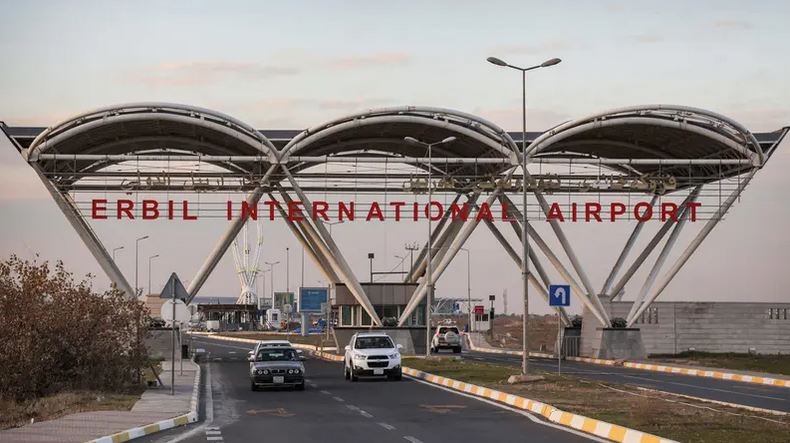
According to the Ministry of Foreign Affairs, there are about 30,000 Nepalis working in Iraq. Earlier, 120 Nepalis working at the international airport in Erbil, the capital of the autonomous state of Kurdistan in Iraq, have also been kept in a safe place after a drone attack. On February 16, Indra Gurung from Gorkha was working at the Erbil airport. Suddenly, drones began to appear in the sky around 1 pm. The drones were heading towards the Erbil airport. The American base camp is also located within the Erbil airport. After the drone attack began, a stampede began in the airport premises. They were not allowed to carry anything except their clothes from their camp.
‘We were inside the airport. Some flights were being canceled. Suddenly, drones started flying in the sky of the airport. There was no information that the airport would be attacked. The camp where they were staying was also inside the airport,’ Indra told Kantipur over the phone. ‘However, after the attack started, a stampede began inside the terminal. At that time, there were more than 400 workers, including 120 Nepalis. Everyone was taken to the airport terminal. The company immediately started evacuating all the workers from the airport,' he said. Indra, who has been working at Erbil Airport for five years, said, 'Thankfully the drone did not land nearby,' he said, 'The biggest issue for us was to stay safe.'
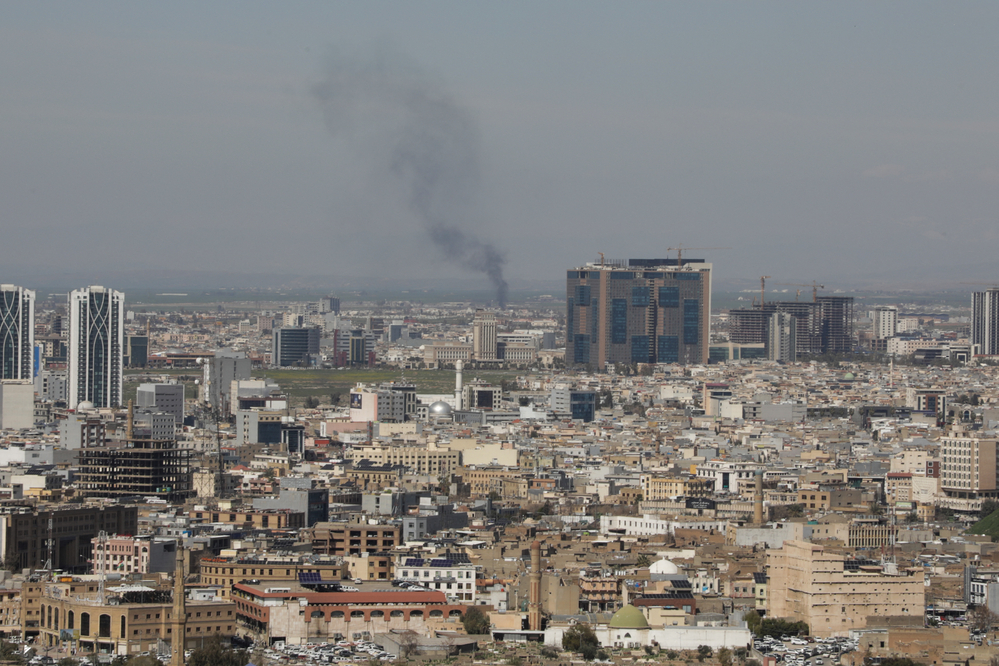
According to Mukesh Gurung of Pyuthan, another Nepali worker working in Erbil, all those rescued from the airport have been accommodated in a hotel in Erbil. 'We used to work at the airport through different companies. There are 20 Nepali sisters. They have been taken to separate villas. We are all in the hotel,' he said. Since work is closed, their current daily routine is just to survive.
Some of the Nepali workers want to return to work when the situation normalizes, while others plan to return home. Mukesh, however, has no immediate plans to return to Nepal. He said that the company has assured that it will take them to work when the situation normalizes and will send them to Nepal if they want to go/return. ‘The company has said that they will send us on duty only when the situation normalizes,’ said Mukesh, ‘They have said that they will send us to Nepal only when there is a need to go.’
Tal Bahadur Ale Magar of Udayapur also said that he is not interested in returning home immediately as there is no possibility of getting employment in Nepal. ‘I do not want to leave my job here and return to Nepal. I want to work for another year and a half,’ he said, ‘I will return home only if the situation becomes critical.’
Similarly, Shishir Gurung of Gorkha says that although they are safe, their family in Nepal is worried. ‘What will happen to us? People from home are always concerned about the security guarantee,’ says Gurung, ‘We are safe now. I am also reassuring my family.’
More than 150 Nepalis working at the American base camp inside the Erbil airport have already returned to Nepal. ‘More than 150 Nepalis used to work inside the American base camp. They were sent to Nepal before the war started,' said Ram Bahadur Thapa of Arghakhanchi, who works at a restaurant inside the American base camp. 'The restaurant is now closed. Three Nepalis used to work there. Two have gone to work at another restaurant. I am returning to Nepal.'
Thapa, who has been working in Erbil for seven years, said he is returning to Nepal after the insecurity in Iraq increased. 'The first week was very tense. It is not just Iran that is being attacked here. It is being attacked by an Iran-backed group in Iraq,' he said. 'I will probably return only if the situation is favorable.' Thapa has already reached Istanbul, the capital of Turkey, via land from Iraq to come to Nepal. 'I got a transit visa from the Turkish Consulate General's office. After having an Iraqi residence ID card and a ticket, they are issuing a five-day visa. I came to Istanbul, the capital of Turkey, by bus,' he told Kantipur over the phone. 'There was no problem on the way. It took eight hours to cross the border. However, the goods that were being taken to Nepal were stopped by the police at the border.'
According to Binod Shrestha, president of the Non-Resident Nepali Association Iraq, all Nepalis in the American base camp have left Iraq.