The list also includes 612 prisoners who escaped from prisons, detention centers, and police custody cells during the protests on Bhadra 24.
We use Google Cloud Translation Services. Google requires we provide the following disclaimer relating to use of this service:
This service may contain translations powered by Google. Google disclaims all warranties related to the translations, expressed or implied, including any warranties of accuracy, reliability, and any implied warranties of merchantability, fitness for a particular purpose, and noninfringement.
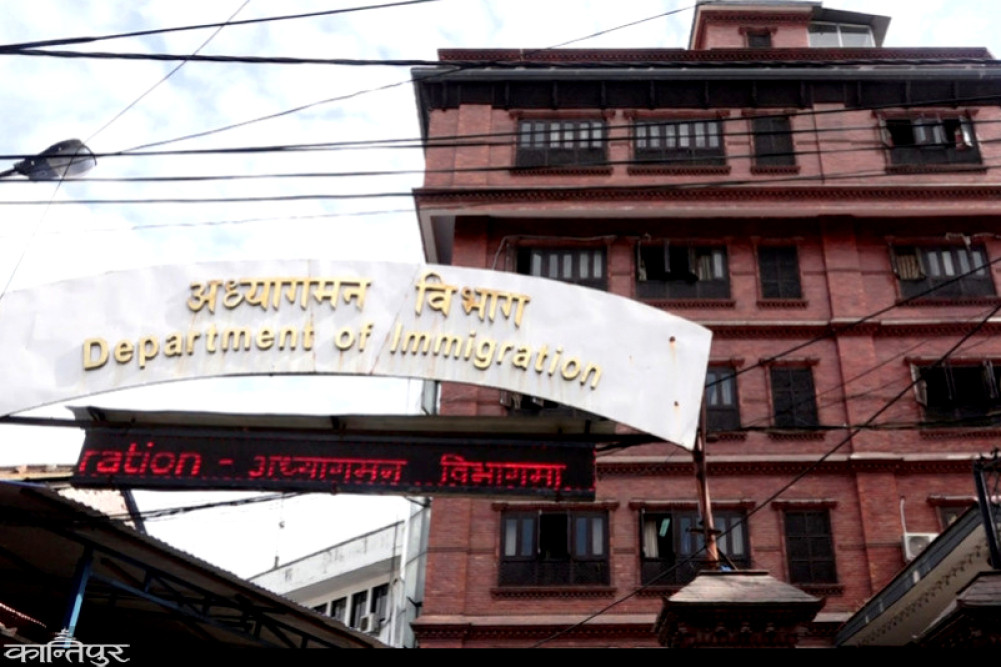
Nepal's immigration administration has blacklisted about 13,000 people accused of various crimes. Those who have committed crimes in Nepal and fled abroad, entered Nepal after committing crimes abroad, and are serving sentences after various court decisions have been included in the immigration blacklist.
Those on the list include about 8,000 Nepalis and about 5,000 foreign nationals. These people are not allowed to cross the border through immigration checkpoints at international airports and land borders. Similarly, 612 prisoners who escaped from prisons, jails, and police custody cells during the protest on Bhadra 24 have also been included in this list. Among those who escaped from prisons, about 500 Indians and more than 100 people from third countries have not been arrested.
As there is a possibility that they may escape to a third country by air, surveillance has been increased at Tribhuvan International Airport, Pokhara, and Gautam Buddha Regional International Airport since last Ashoja, according to department officials. In addition, surveillance of them is also being continued by the Immigration and Border Administration Office on the land route.
The Director of the Immigration Department, Tikaram Dhakal, informed that the monitoring has been increased by including prisoners and detainees who have escaped from prisons and escape from international departure points on land and air routes. ‘The blacklist has been put on to prevent the possibility of people committing crimes in one country and fleeing to another country, in addition to this, it is to control the risk of escaping by evading the judgments, orders and decisions made by the investigation, prosecution and adjudication bodies,’ said Dhakal, Director of the Immigration Department, ‘So far, about 13,000 Nepalis and foreigners have been included in the immigration blacklist in Nepal, and this number is increasing every day.’
Foreigners who have been deported from Nepal for committing crimes and are not allowed to return are also on the blacklist. In the fiscal year 2081/82, 501 citizens of various countries including the US, China, Canada, and the UK were deported from Nepal for three years and a maximum of 10 years. In the last 7 months alone, more than 450 foreigners have been 'deported' from Nepal. They have also been included in the immigration blacklist.
The government has not taken effective initiatives to return those included in the blacklist but who have fled abroad. As a result, action has not been taken against those who have been found guilty by the court and have not come under the scope of investigation. Nepal has also sought the help of Interpol to arrest some of the accused and culprits included in the blacklist. However, the concerned countries have ignored this, making it difficult to return.
Former Director General and Secretary of the Immigration Department Kedar Neupane says that there is no effective coordination and exchange of information between the internal mechanisms and internal bodies within the country. "The immigration administration is the face of the country. If there is a stain on the face, the same results will come. The government has not taken proper initiatives to bring back Nepalis who have fled abroad after committing crimes. A strong system has not been developed to monitor those who have committed crimes and are seeking shelter from abroad," says Neupane. "For this, the Advance Passenger Information System had to be strengthened. Those coming from abroad should be checked, while those going out of the country are checked. This is the problem."
He comments that despite the lack of integrated development of the Integrated Crime Records System, those involved in crimes are traveling from one country to another through international channels, taking undue advantage. Former Secretary Neupane said that some countries have not returned Nepalis who have fled from crimes, and diplomatic initiatives should be strengthened in this regard.