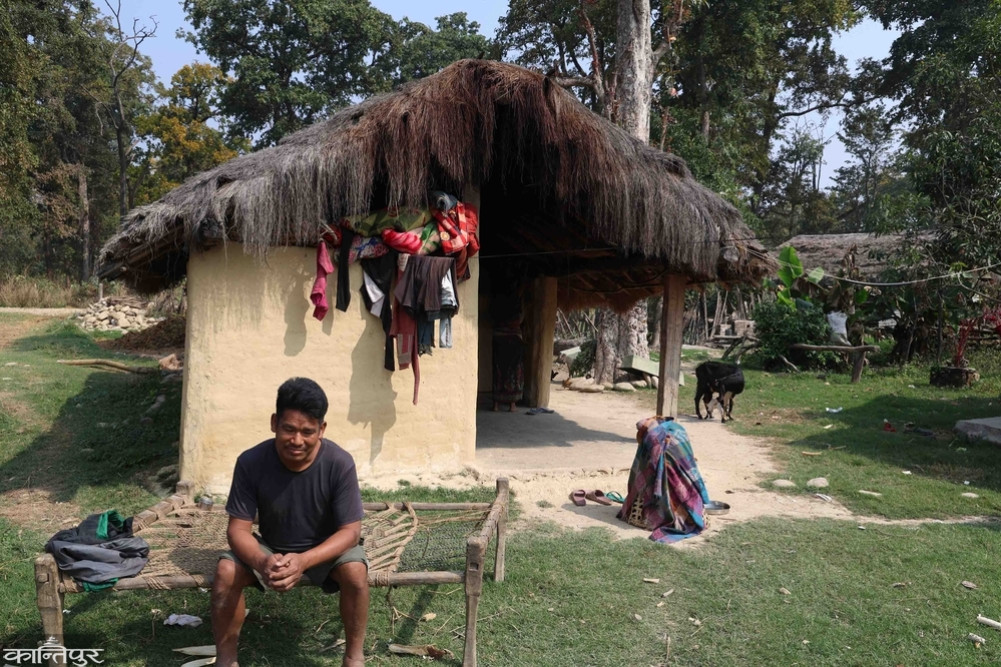
Many children here are deprived of education. Transportation facilities are not good. There is no health center for treatment. The residents here are often embarrassed when they talk about their problems.
We use Google Cloud Translation Services. Google requires we provide the following disclaimer relating to use of this service:
This service may contain translations powered by Google. Google disclaims all warranties related to the translations, expressed or implied, including any warranties of accuracy, reliability, and any implied warranties of merchantability, fitness for a particular purpose, and noninfringement.
Mahadev Tharu, 86, of Vijayanagar-1, Juwabairat, is not enthusiastic about voting this time. He has been voting since the election of the National Panchayat member held on 29 Baisakh 2043. He says, ‘This is my ninth time voting, but I am not very enthusiastic. No matter how much I vote, no matter how much the system changes, our situation has not changed.’
The Panchayat was overthrown and democracy was established. Democracy has also become a democracy and reached the republican period. But the residents of Juwabairat are struggling for basic needs. Many children here are deprived of education. Transportation facilities are not good. There is no health center for treatment. The residents here are hesitant when they talk about their problems.
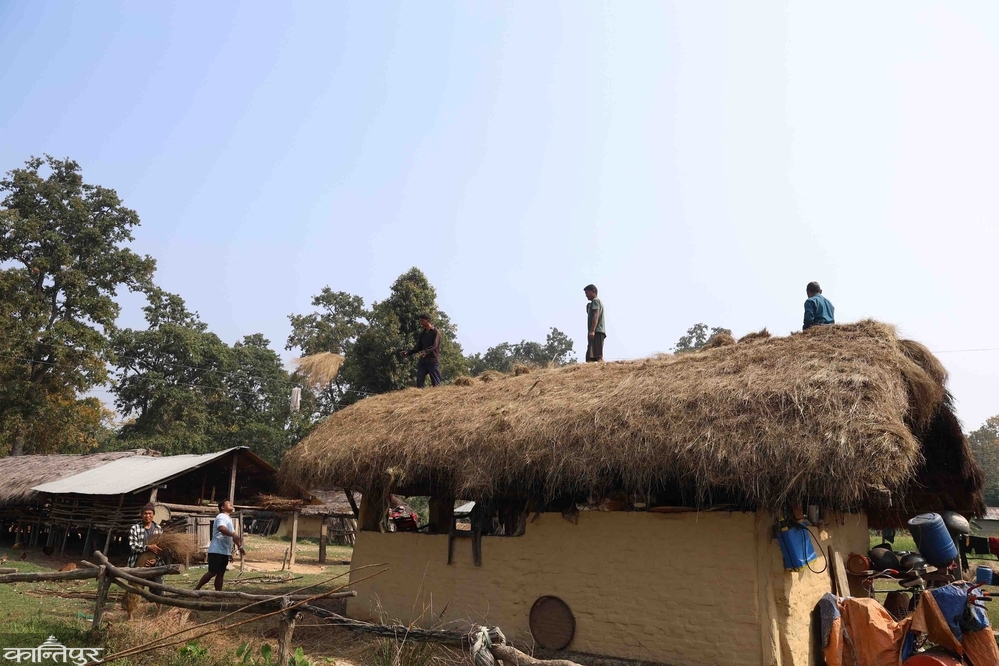
This is a border settlement in the northwest of Kapilvastu. Geographical remoteness, illiteracy and poverty have left Juwabairat very backward. The Arra River, which flows through the village, separates not only the district but also the border between Nepal and India. However, not only public representatives but also administrators do not reach settlements without infrastructure. It is difficult to reach the village where the Tharu community predominates. You have to travel 6 kilometers through the forest to reach the next village, Newlagunj, which is nearby.
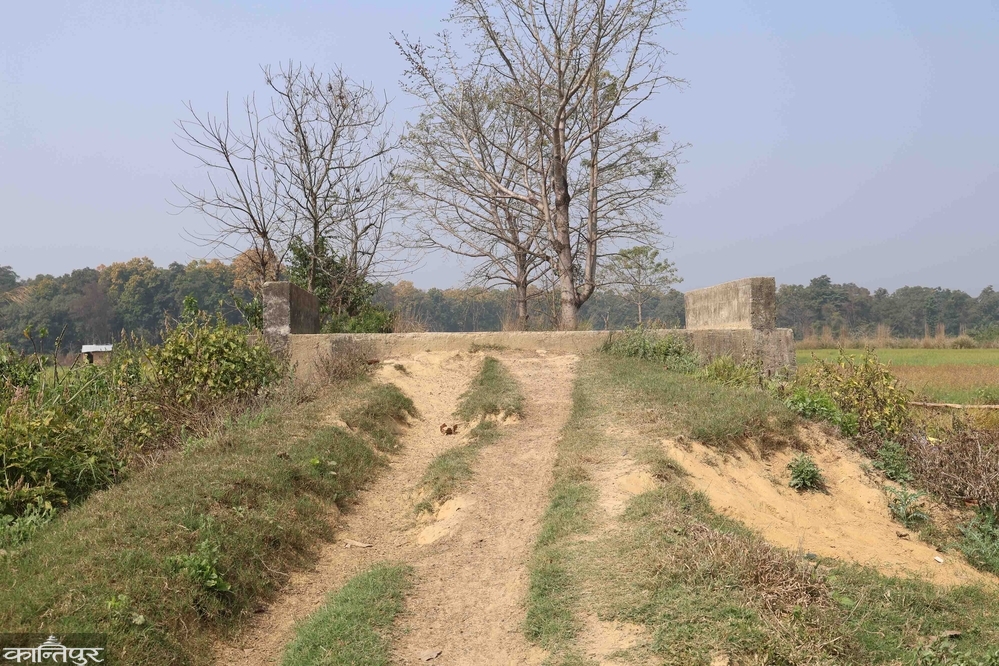
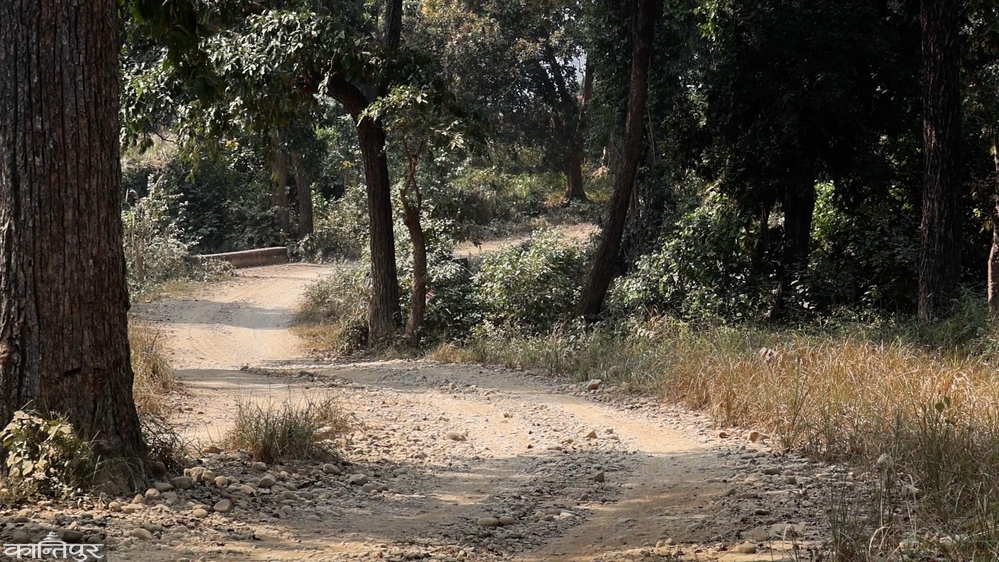
Till 2072, it was difficult to find a path in the forest. It was a narrow path. Nothing was ridden except bicycles. During Dashain-Tihar, the villagers would clear the bushes and prepare a walking path every year. In 2073, the then District Development Committee built a 6/7 meter wide road. But the dusty road has not been blacktopped. It is difficult to walk for 4/5 months during the rains.
Patiram Tharu, the village headman, said that when the road is muddy, you have to walk by pulling a bicycle. ‘There are 2/3 gullies on the forest path. Those gullies start flowing as soon as it rains. That also causes problems for movement,’ he said. The locals are not enthusiastic about the elections because the people's representatives are not interested in providing basic facilities to the settlements. 'Leaders come and go,' said Patiram, 'they make promises after meeting.'
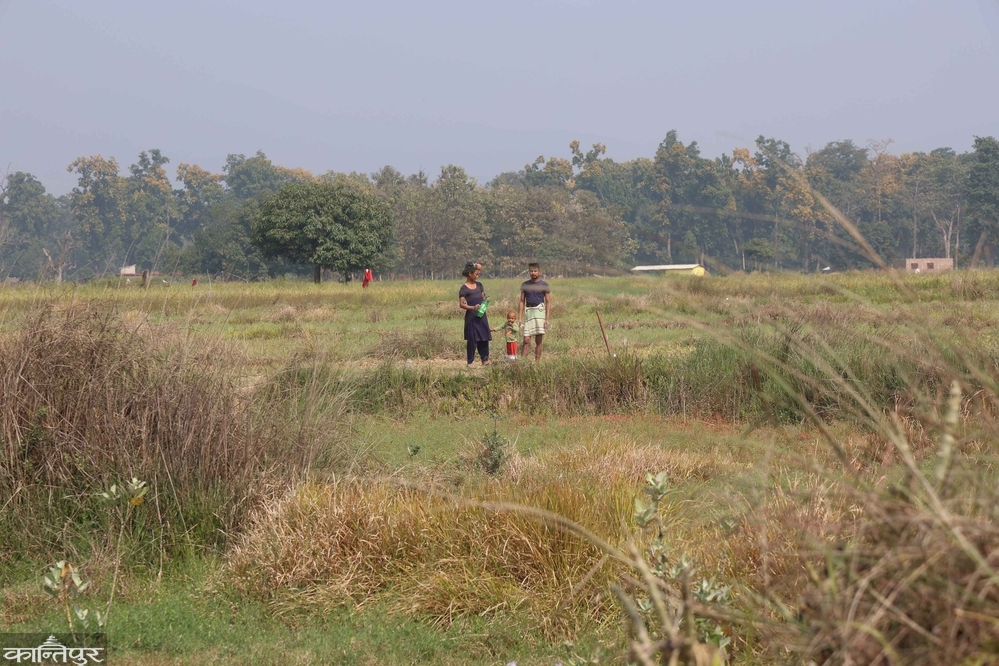
There is no school for students above grade 5 in the village, which has 145 houses. To study in grade 6, one has to travel 6 kilometers to Newlagunj. Even there, education is only available up to grade 8. To study grade 9, one has to travel 10 kilometers to Gugauli. Local Sushmita Thapa said that she dropped out of school after having problems going to Gugauli through the forest. 'The forest road crosses the Chirai and Bisuwa rivers on the way, and there is no bridge,' she said, 'I am afraid of the forest road, that is why I dropped out of school. There are 15/20 people like me in the village who have dropped out of school.'
The Kamana Basic School in the village lacks buildings and teachers. Due to the lack of classrooms, early childhood development and grade 1 students are taught together. Due to the lack of teachers, office assistants are also teaching. The school has 283 children enrolled. But only half come. Nisha Sigdel, the principal of the school, said that 11 girls who passed grade 5 have dropped out. “But that’s what we see in our records,” she said. “The dropout rate has increased because parents take their children with them when they go to work as wage laborers.” She said that the school ran a mother education program in the evening to make mothers literate, but it was not successful. This school was established in 2064. A five-room building was built in 2070.
To escape the hustle and bustle of home, the villagers here have to go to the market, which is 22 km away. They have to go to Chandrauta in Nepal and Pachpedwa in India. Both markets are at the same distance. To pay the electricity bill, they have to go to Krishnanagar, which is 30 km away. Electricity reached the village in 2074. Only four years ago did the villagers get to talk on mobile phones. After the establishment of Nepal Telecom’s BTS tower in Newlagunj in 2078, communication has become easier. A local Tharu immigrant said that before that, it was very difficult. ‘That’s why I feel sick of seeing the leader candidate,’ he said, ‘We won by voting for the same party because they would work. We had hopes that they would improve the living standards of the poor and needy. However, the leader went to Butwal, Dang and Kathmandu to improve his living standards. Ours is the same.’
To get basic health services, one has to reach Newlagunj, located 6 km east. During the rains, the Arrar River floods, cutting off contact with India. The muddy road and 2/3 of the roads on the Nepal side bring traffic to a standstill. When we go to Bhukra and Bhojpur markets in India for shopping, Indian security personnel harass us. ‘They say, ‘Stay there, don’t come here.’ That’s why we don’t feel like going to the Indian market,’ said local Harka Bahadur Rana Magar, ‘The road to Nepal is not good. The villagers have become like frogs in a well. The leader has made us only a vote bank.’
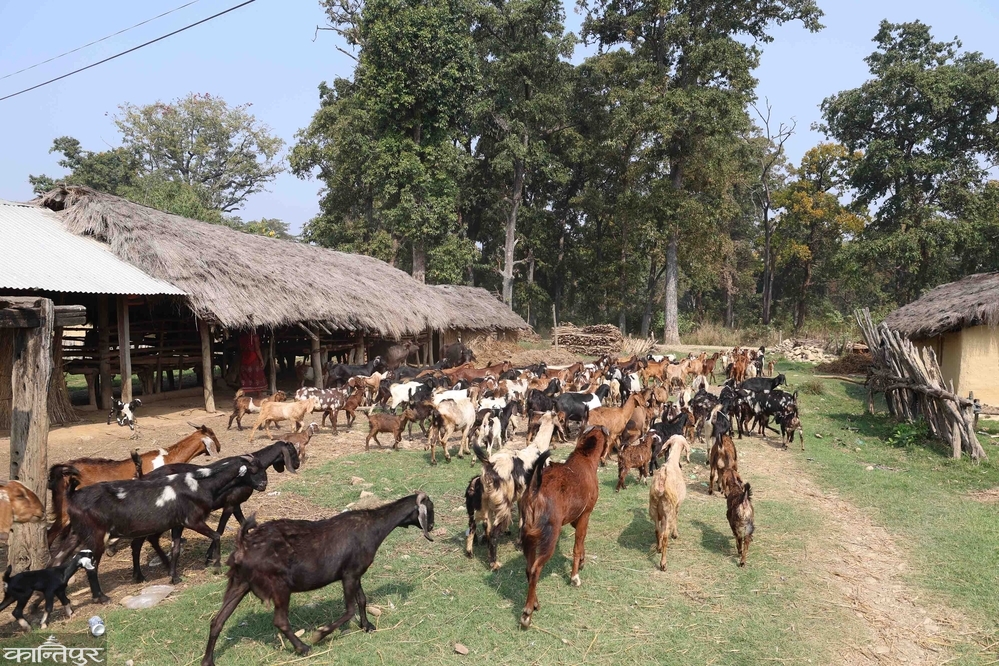
Although it was once a landlord’s settlement, now no one has more than one bigha of land. Otherwise, the average is 12/15 kathas. Most of them have been living on 5/7 kathas. Locals say that even if they barely get enough to eat, it is not enough to cover the cost of living. That is why they are forced to go to work as wage laborers. There are houses with mud walls and thatched roofs. Some houses are made of thatch and have tin roofs. Only a few have built concrete houses. Since they are close to the forest, they have been earning a living by raising goats, chickens and pigs. There are no public transport. Motorcycles and bicycles are the main means of transport.
Local Bal Bahadur Tharu said that the excitement of the elections has not been seen in the village. ‘Even now, we have to be like frogs in a well,’ he said, ‘We have to go to Newlagunj even to vote. That is why I am in a dilemma whether to go or not this time.’ He said that the lack of income generation and employment as well as development and construction works according to the people’s wishes has increased the distaste for politics among the locals.
Bal Bahadur also said that the consciousness of voting without being pressured by anyone in the election has been raised. ‘This situation has been created by our leaders,’ he said. Juwabairat falls in Kapilvastu-3. In this constituency, 36 candidates, including 13 from parties and 23 independents, have registered their candidacies. There are 148 centers in 72 polling stations in this constituency, which has 118,404 voters.