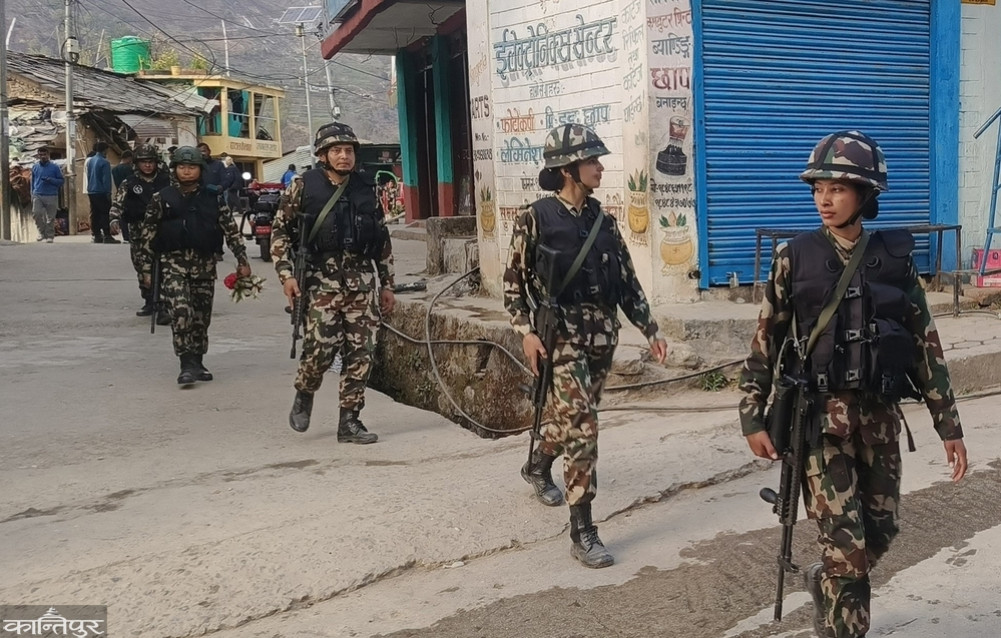
The army has taken charge of the outer security perimeter at polling stations and during the counting process, and if necessary, the army has also been given the authority to take joint command of the people deployed from all four security agencies.
We use Google Cloud Translation Services. Google requires we provide the following disclaimer relating to use of this service:
This service may contain translations powered by Google. Google disclaims all warranties related to the translations, expressed or implied, including any warranties of accuracy, reliability, and any implied warranties of merchantability, fitness for a particular purpose, and noninfringement.
This time, the Nepal Army has been given the responsibility of securing the transportation of ballot papers to the counting center after the voting. In the past, only the police and the Armed Police Force were mobilized to secure the transportation of ballot papers. The Election Commission and the Ministry of Home Affairs have stated that the presence and role of the army in security has been increased, citing the fact that the election is being held under 'unusual circumstances' this time.
Security mechanisms have been activated for the elections to be held on 21 Falgun. According to the ‘Election Integrated Security Action Plan-2082’ approved by the Central Security Committee, the Army, Nepal Police, Armed Police Force, National Investigation Department and Election Police have been mobilized across the country. According to the Army, about 80,000 soldiers have been mobilized for election security.
According to the Home Ministry, about 71,000 security personnel from the Nepal Police have been deployed for the elections. The Nepal Police has been given the responsibility of managing the internal security of the polling stations. The Election Police will provide assistance around the polling stations. About 35,000 security personnel are being deployed from the Armed Police, which has been given the responsibility of managing the security of the second perimeter. The Army has taken charge of the outer security perimeter. If necessary, the Army has also been given the right to take joint command of the manpower deployed from all four security agencies.
According to the Home Ministry, security personnel are being mobilized after assessing the situation after voting, transportation of ballot boxes, counting of votes and the results of the votes. The Nepal Army and Armed Police teams deployed in the outer security perimeter have set up ‘temporary bases’ in each constituency. The election police deployed at the polling stations have been given separate 'election security training' and have been deployed to their workplaces from Tuesday. All the manpower will reach the polling stations within a few days.
This is the first time that the army has been made responsible for taking the ballot boxes to the counting center after the voting. In the 2064 Constituent Assembly election, the army was limited to barracks. At that time, the Armed Police Force, Nepal Police and Temporary Police were mobilized for election security.
In the second Constituent Assembly election of 2070 and the House of Representatives/Provincial Assembly and local level elections of 2074 and 2079, the army was mobilized with the responsibility of the outer perimeter. This time, however, preparations have been made for the army to take command of security based on the need. 'Security management has been arranged keeping in mind the risks and challenges,' Home Ministry Spokesperson Anand Kafle told Kantipur.
Former Chief Election Commissioner Bhojraj Pokharel says that it is natural to increase the role of the army and provide security since the election is being held under special circumstances. Election Commission Spokesperson Narayan Prasad Bhattarai informed that security arrangements have been made to ensure that political parties and candidates peacefully convey their ideas and agendas to the voters and that voters vote fearlessly. ‘To monitor and control activities contrary to this, and if there is an unusual situation, force will be used in sequence, and it is everyone’s responsibility to conduct the election peacefully,’ he says.
Former Chief Election Commissioner Bhojraj Pokharel says that it is natural to increase the role of the army and provide security since the election is being held under special circumstances.
‘In the first Constituent Assembly, the army was limited to barracks, we mobilized the police and armed and temporary police as assistants, and in most subsequent elections, security arrangements have been made with the army,’ he says.
Pokharel says that it is the government’s primary responsibility to provide proper security as there is a risk of looting and vandalism of ballot boxes after voting. ‘The vote given by the people, along with the mandate given by the people to govern the country, is basically the property of the people. Such votes should be protected effectively, and how or by which security agency will be provided is a matter for the government to identify,' he says.
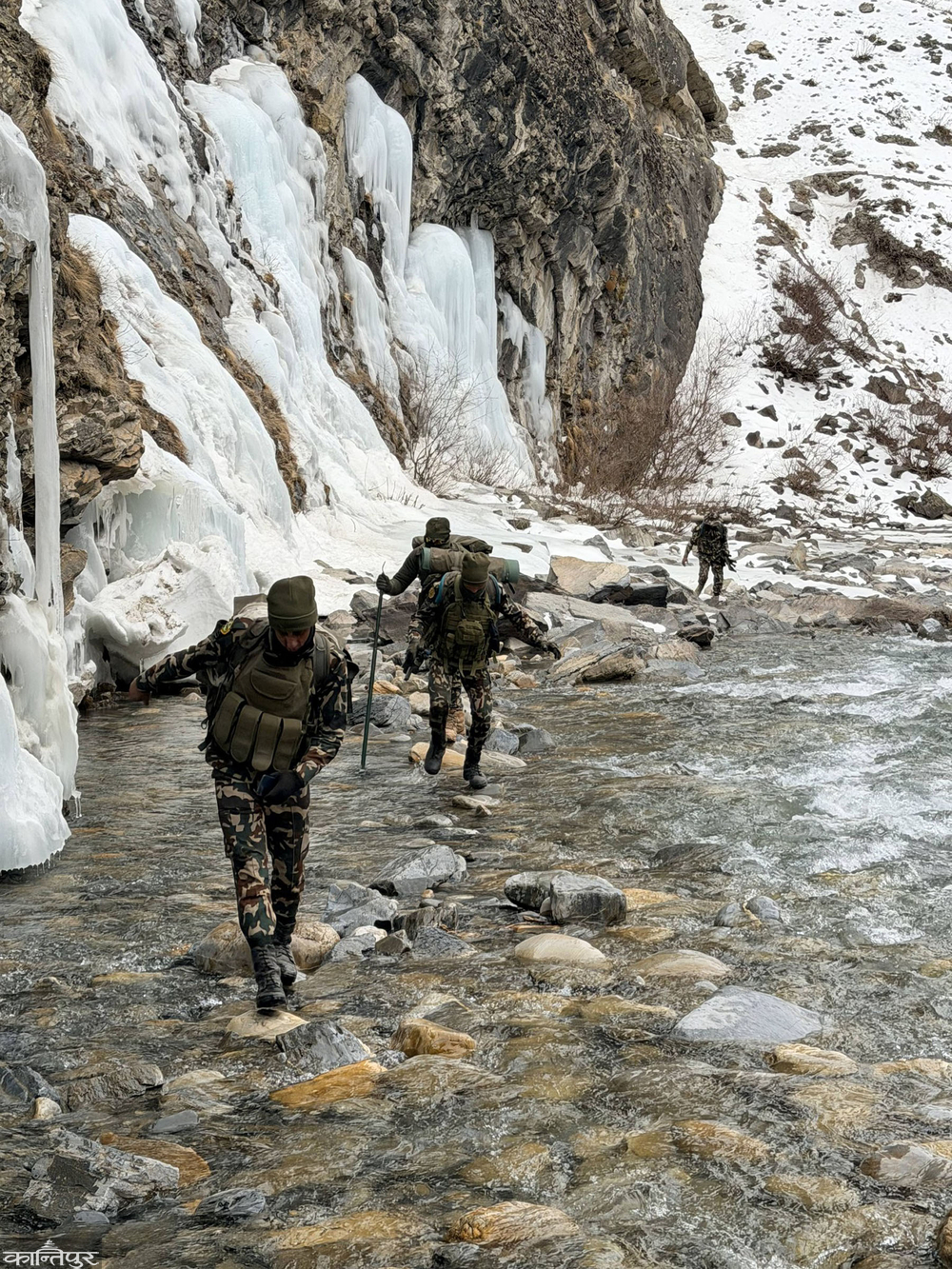
Former Chief Commissioner Pokharel says that since reliable security assurance in elections is a psychological aspect, deploying the army will provide a sense of fear to those involved in criminal activities and a guarantee of security for those who want peace. One temporary base each for the army and the armed forces has been set up in 165 constituencies. The army has been deployed in three roles, long-distance, medium-distance and short-distance, including foot patrol, striking force, and mobile patrol, through the same base.
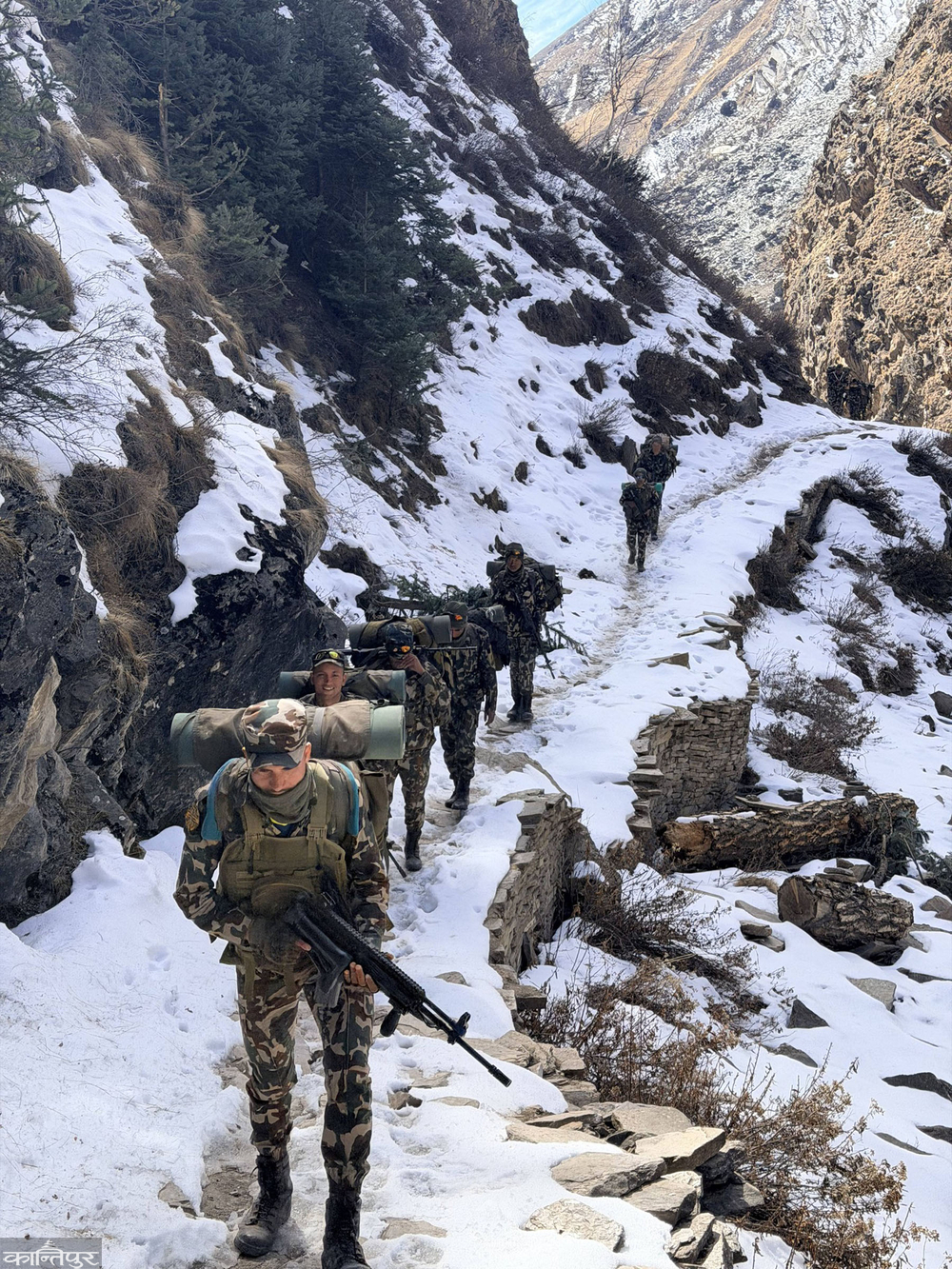
Security arrangements have been made so that the army can arrive within 20 to 30 minutes in case of an anti-election incident/activity. The armed police are being deployed to reach the scene within 10 minutes. Nepal Police and Election Police are located in the inner perimeter of the polling station.
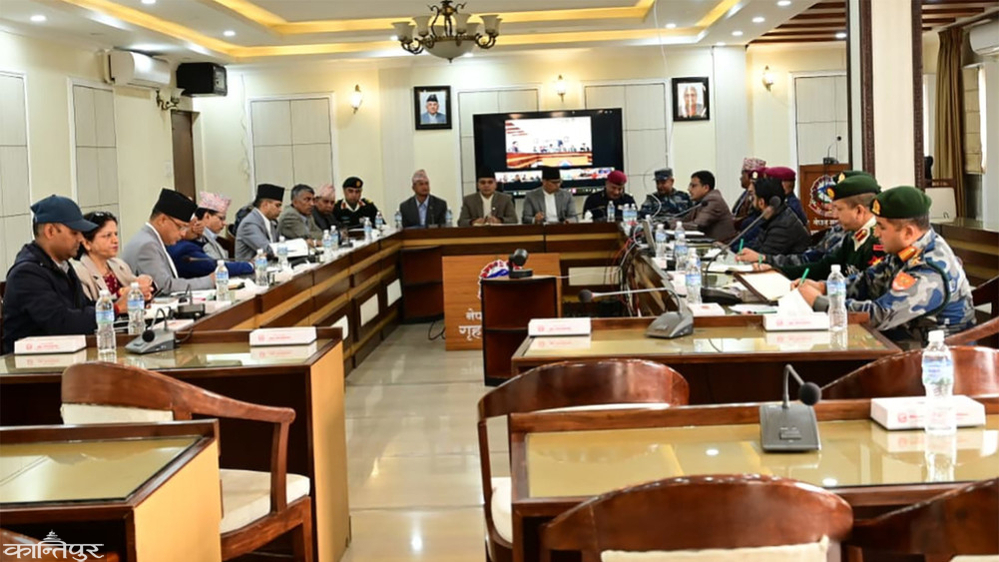
The Commission had a discussion with the security chiefs on Tuesday regarding the election security preparations and challenges being made by the government. The meeting of the High-Level Election Security Committee led by Election Commissioner Sagun Shamsher Jabra was attended by Acting Chief Election Commissioner Ram Prasad Bhandari, Army Lieutenant General Pradeep Jung KC, Home Secretary Rajkumar Shrestha, Inspector General of Police
Dan Bahadur Karki, Inspector General of Armed Police Raju Aryal, and Chief of the Investigation Department Tekendra Karki, among others.
In the meeting, Acting Chief Election Commissioner Bhandari directed the heads of security agencies to increase surveillance against anti-election activities and control such activities. On Tuesday, a meeting of the Central Security Committee was held under the chairmanship of Home Minister Om Prakash Aryal and all security agencies were instructed to control activities that could affect election security.
‘The Security Committee has instructed to mobilize all four security mechanisms and keep the reserve forces ready to make the election security effective,’ said an official who participated in the meeting. ‘The government is vigilant about this as forces trying to disrupt religious/communal harmony, prevent the election from happening and make it a failure are also active in various parts of the country.’
Prime Minister Sushila Karki also held a meeting with the heads of security agencies in Baluwatar on Tuesday. The meeting discussed and reviewed the election preparations and the overall security situation in detail. After the meeting, Karki said, ‘There is no room for doubt in the security arrangements. All mechanisms are being deployed with necessary vigilance, strict monitoring and effective coordination, keeping in mind the potential challenges and risks. The government is leaving no stone unturned to ensure that the election is held in a clean, fair, fearless and peaceful manner.’
According to the Police Headquarters, more than 1,200 weapons were looted from the police in the vandalism, arson and destruction on 24 Bhadra, of which more than 400 have not yet been returned. More than 14,000 prisoners and detainees escaped from police custody cells and various jails that day, and about 4,000 are still at large.
The Election Commission has designated 11,901 polling stations and 23,112 polling stations across the country. One-third, or 4,114 polling stations, have been placed on the highly sensitive list. 4,442 polling stations are listed as sensitive and 2,845 as general security challenges. Targeting the elections, the Ministry of Home Affairs has instructed the district administration offices across the country to surrender weapons kept with government permits to the administration during the election period, but more than 15,000 such weapons have not yet been surrendered by the general public. 'Looted weapons and escaped prisoners are the main challenge for peace and security, and since the elections are also taking place at this time, it is natural that this is a risk,' a police officer told Kantipur. 'On the other hand, weapons and ammunition that were kept with government permits by the general public in the past are yet to be surrendered, and this has also become a challenge.' The meeting recommended to the government to ban the sale and transportation of alcoholic beverages for a week before and during the election. The commission's spokesperson Bhattarai informed that the government has also recommended to 'seal' the Nepal-India and Nepal-China borders for 72 hours for the elections.
Nepal has an open border of about 1,880 kilometers with India. There is a 1,414-kilometer border with China. Citizens of both Nepal and China can travel on visas and temporary passes issued by the local administration in border districts. There are preparations to stop issuing passes during the election period. It has been recommended to conduct checks on essential goods and services during the election and completely close movement for the rest.
The Election Commission has designated 11,911 polling stations and 23,112 polling stations across the country. One-third, or 4,114 polling stations, have been placed on the highly sensitive list. 4,442 polling stations are listed as sensitive and 2,845 as general security challenges.
In Kathmandu Valley, 278 polling stations are on the general, 237 polling stations are on the sensitive and 12 polling stations are on the highly sensitive list. In Koshi, 647 polling stations are on the general, 237 sensitive and 12 highly sensitive list. In Madhesh, 159 are on the general, 755 sensitive and 1,246 highly sensitive list. In Bagmati (excluding the valley), 437 are on the general, 497 sensitive and 1,288 highly sensitive list.
In Gandaki, 392 are on the general, 577 sensitive and 328 highly sensitive list, in Lumbini, 471 are on the general, 738 sensitive and 358 highly sensitive list. In Karnali, 161 are on the general, 422 sensitive and 358 highly sensitive list and in Sudurpaschim, 300 are on the general, 394 sensitive and 481 polling stations are on the highly sensitive list.