The case has been scheduled for hearing in a joint bench of Supreme Court Justices Sapana Pradhan Malla and Nripadhwaj Niraula.
We use Google Cloud Translation Services. Google requires we provide the following disclaimer relating to use of this service:
This service may contain translations powered by Google. Google disclaims all warranties related to the translations, expressed or implied, including any warranties of accuracy, reliability, and any implied warranties of merchantability, fitness for a particular purpose, and noninfringement.
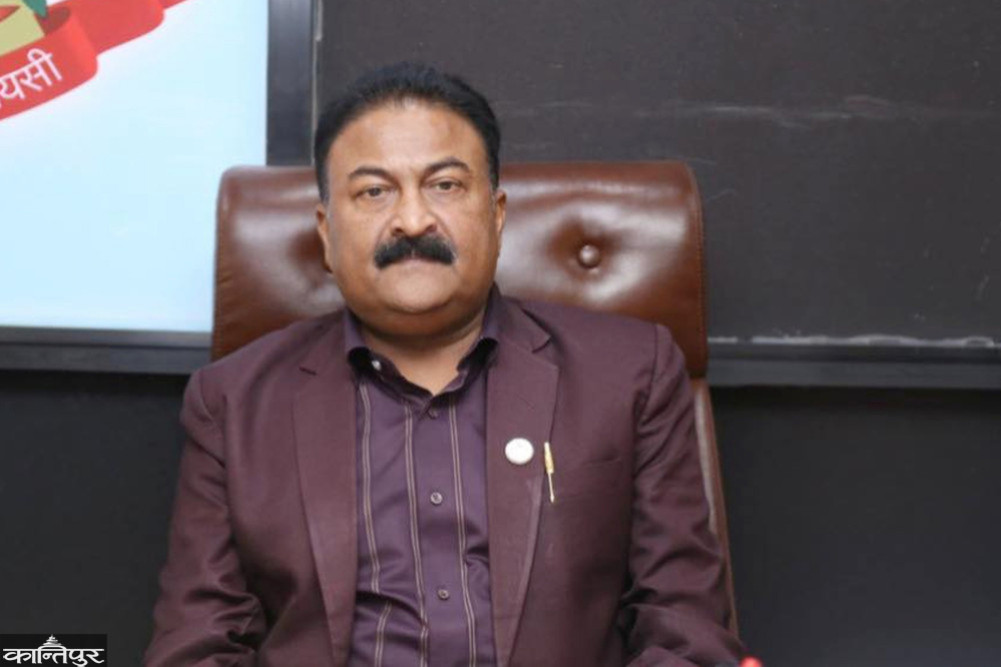
The Supreme Court is hearing the petition of former minister Rajkumar Gupta, who is in detention under the order of a special court in the Litchwari land case in Pokhara.
Gupta had approached the Supreme Court against the special court's order to send him to prison in a corruption case. The petition has been scheduled for hearing in a joint bench of Supreme Court Justices Sapana Pradhan Malla and Nripadhwaj Niraula.
Earlier, the Supreme Court had ordered a request for a report on former minister Gupta's petition. In the Pokhara Lychibari corruption case, a bench of Special Court Chairman Sudarshan Dev Bhatt and Justices Dilli Ratna Shrestha and Bidur Koirala had sent him to prison for remand. The Commission for the Investigation of Abuse of Authority had filed a corruption case in the special court, saying that evidence was found that the then minister Gupta had taken a bribe of Rs 5.3 million from a real estate businessman on the pretext of stopping the transfer of the chief officer of the Kaski-based Land Revenue Office and making him a member of the Land Commission.
The Commission for the Investigation of Abuse of Authority had accused Minister Gupta and former minister Ranjita Shrestha of abusing their positions and taking a bribe of Rs 2.5 million in exchange for providing work facilities.
Gupta, while giving a statement in court, had claimed that the charges against him were false and that he had not taken a bribe from anyone. However, the court ruled that he could not be considered innocent based on the evidence immediately available.