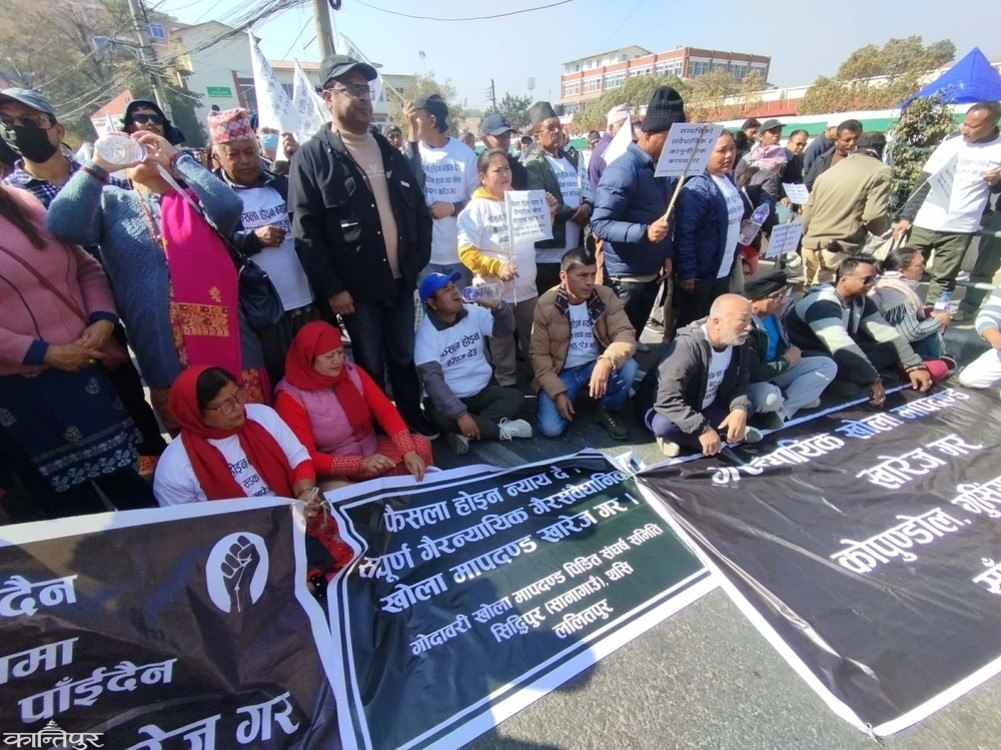
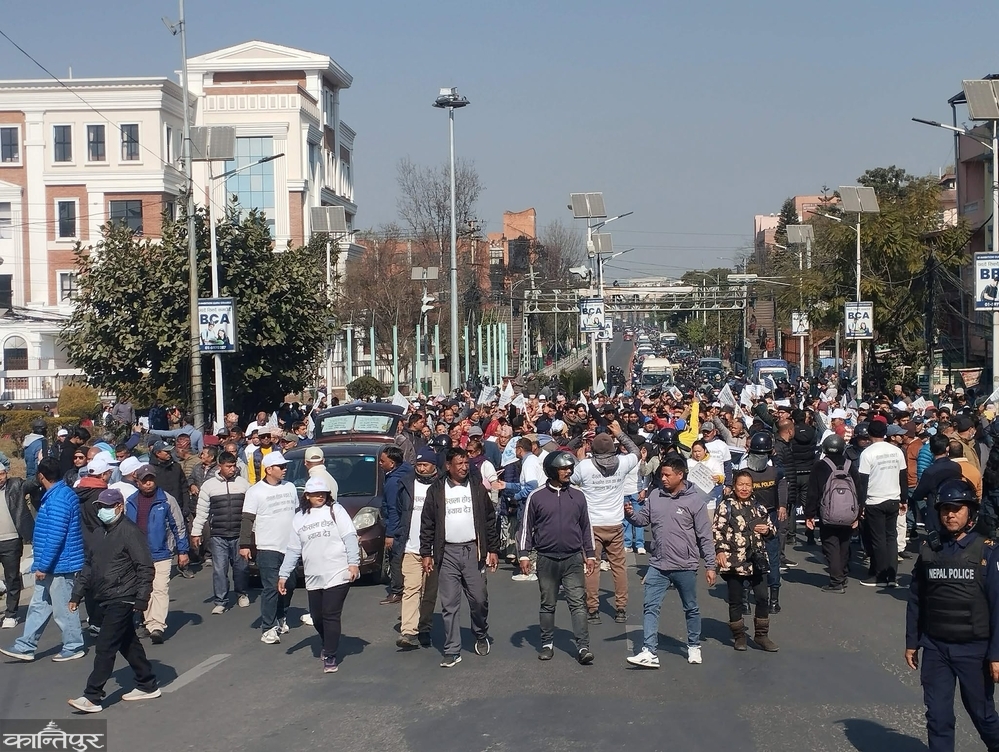
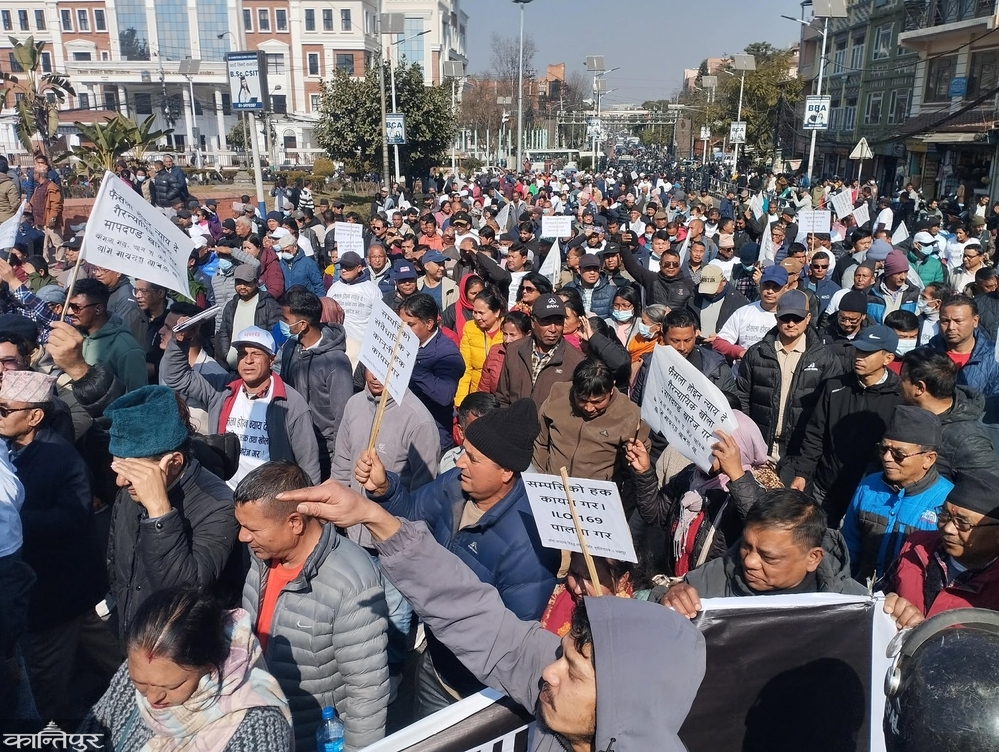
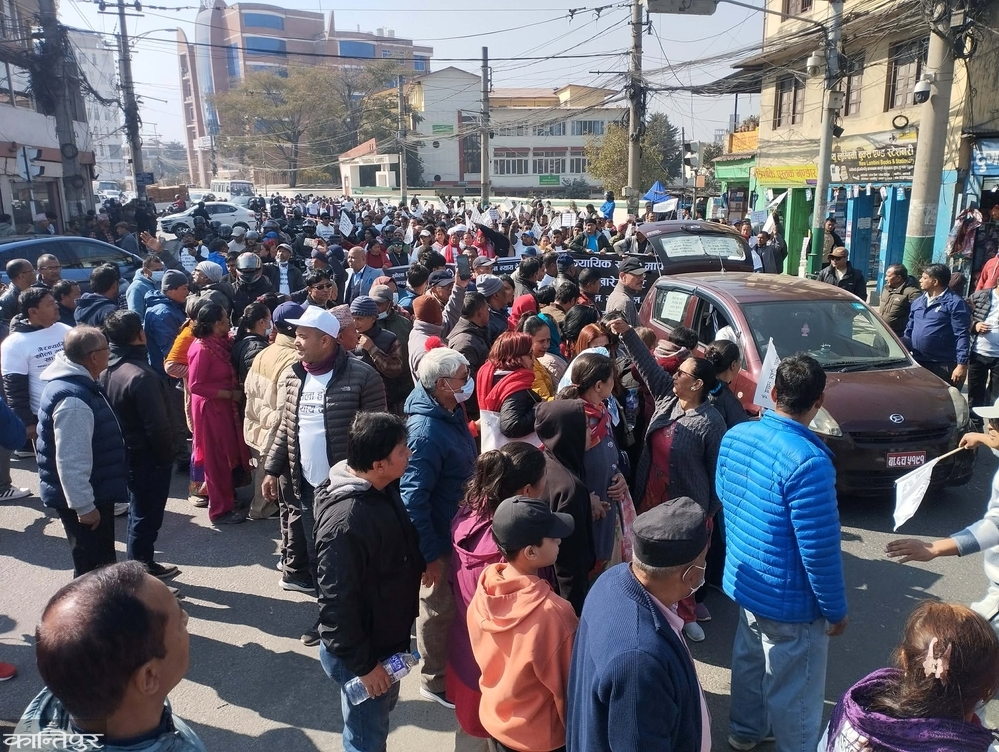
As the hearing began in the Supreme Court, stakeholders have demonstrated at Maitighar Mandala.
We use Google Cloud Translation Services. Google requires we provide the following disclaimer relating to use of this service:
This service may contain translations powered by Google. Google disclaims all warranties related to the translations, expressed or implied, including any warranties of accuracy, reliability, and any implied warranties of merchantability, fitness for a particular purpose, and noninfringement.
The hearing of the review writ regarding the 20-meter standard on the right and left sides of the riverbank area has begun in the full bench of the Supreme Court.
As soon as the hearing began at the Supreme Court, stakeholders have demonstrated at Maitighar Mandala. They have demonstrated with play cards demanding justice, saying that the previous decision is not valid.
Today, a presentation has been scheduled before the full bench of Justices Sunil Kumar Pokharel, Balkrishna Dhakal and Nripadhwaj Niraula. 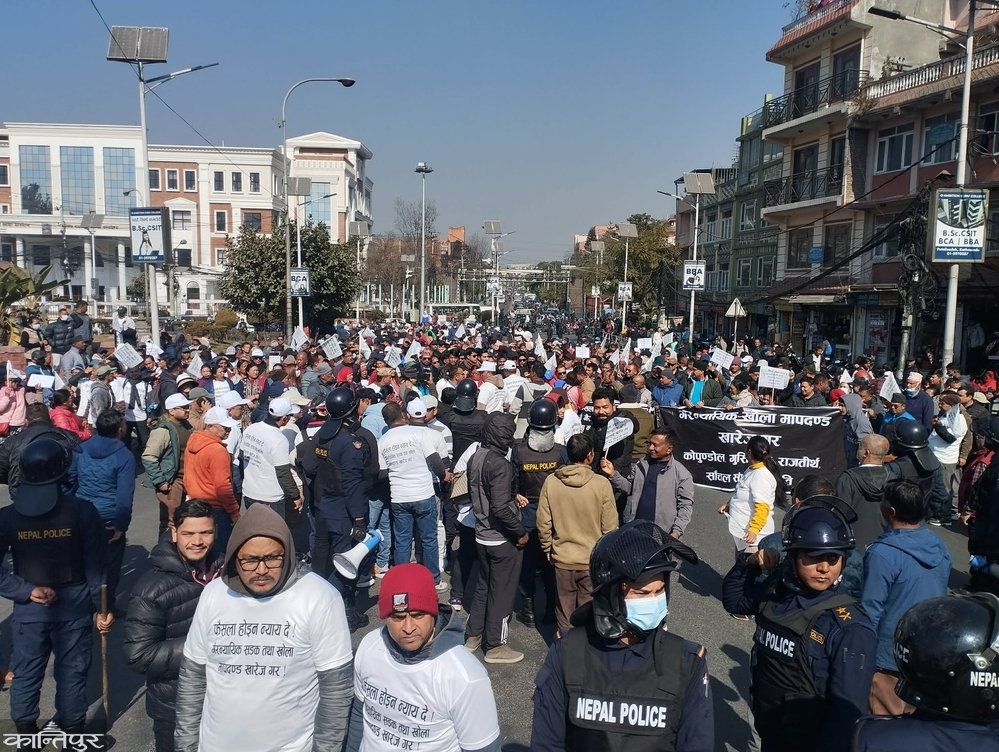
Earlier, the Supreme Court had ordered the withdrawal of the case file in the review writ of the decision to leave a 20-meter gap on the river banks. The decision was delivered on 20 Poush 20, 2080, stating that structures should be built by leaving 20-20 meters on the banks of the Bagmati, Bishnumati and other rivers in the valley.
The then Law Secretary Phadindra Gautam had filed a review petition on behalf of the government, saying that the decision could not be implemented. The government has argued that the implementation of the Supreme Court's decision to establish a 20-meter standard on the river banks in the Kathmandu Valley will be complicated for three reasons.
The government had argued that it would have to pay huge financial compensation, demolish many archaeological sites and face huge opposition from the people.