This time, 2,300 automated cameras will be used to scientifically determine the number of tigers, their habitat, and the status of their prey species.
We use Google Cloud Translation Services. Google requires we provide the following disclaimer relating to use of this service:
This service may contain translations powered by Google. Google disclaims all warranties related to the translations, expressed or implied, including any warranties of accuracy, reliability, and any implied warranties of merchantability, fitness for a particular purpose, and noninfringement.
The tiger is as beautiful as it is rare. The fifth national census of the powerful yet docile tiger is starting from December 1.
To determine the number of tigers that are attractive to look at and attractive to look at, this time a systematic scientific census will be conducted across the country. According to the Department of National Parks and Wildlife Conservation, the census has been planned by dividing the Chitwan-Parsa, Banke-Bardiya and Shuklaphanta-Laljhadi corridors into three blocks. These blocks include the national park, corridor and surrounding intermediate protected areas. A grid of 2,100 to 2,200 automatic camera traps will be installed in an area of about 8,400 square kilometers. A tiger census has been conducted in Nepal every four years.
The census will be started by installing cameras in the Chitwan-Parsa block on Poush 1 and 2, said senior ecologist and coordinator of the National Tiger Census Technical Committee Haribhadra Acharya. A grid of two by two square kilometers will be created and a pair of cameras will be installed on each side.
Since the block is large, it will be divided into three sections and the counting will be done by gradually moving the cameras. There are 800 to 900 grids here. Acharya said that about 500 cameras are required to make one section of 250 to 300 grids. Due to the lack of cameras, the counting will start in the next section only after the work on one section is completed. It is estimated that it will take more than two months to complete the counting of this block.
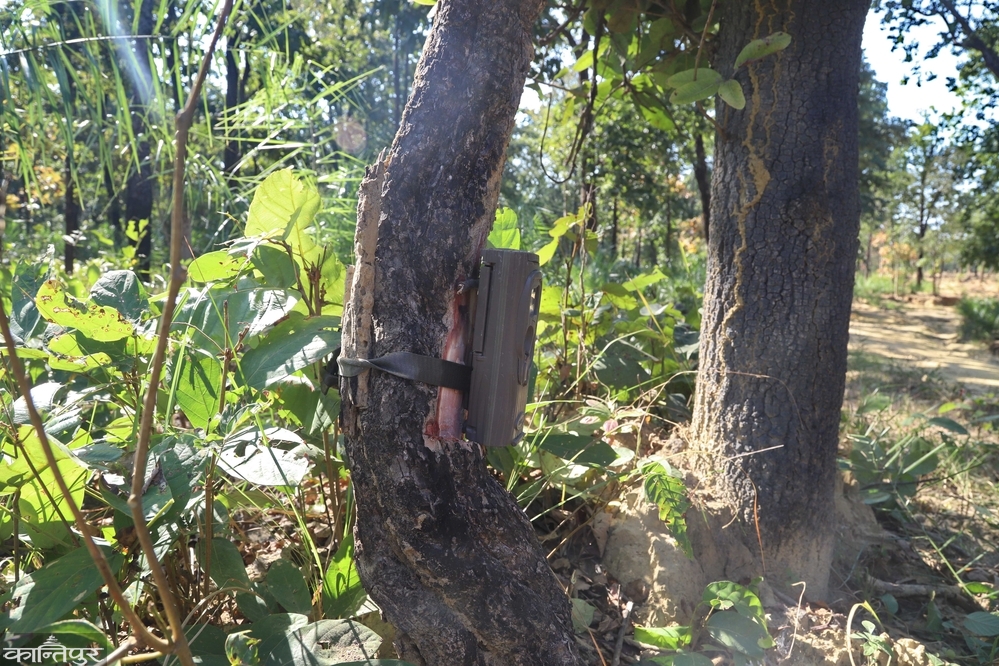
The Banke-Bardiya block has been divided into five sections. Two each have been made in Bardiya and Banke and one section in Dang. About 800 grids of two by two square kilometers will be divided into five sections and the counting will start from the Bardiya section, said Ajit Tumbahamphe, head of the National Nature Conservation Trust (NTNC), Bardiya.
About 500 automatic cameras are required for this block, of which more than 300 cameras have arrived so far. The counting will begin in Bardiya from Pus 5.
Shuklaphanta-Laljhadi corridor will be counted as a single block. There are 260 grids here. The department has stated that work will begin in Shuklaphanta after the counting of the Chitwan-Parsa block is completed and the cameras are empty.
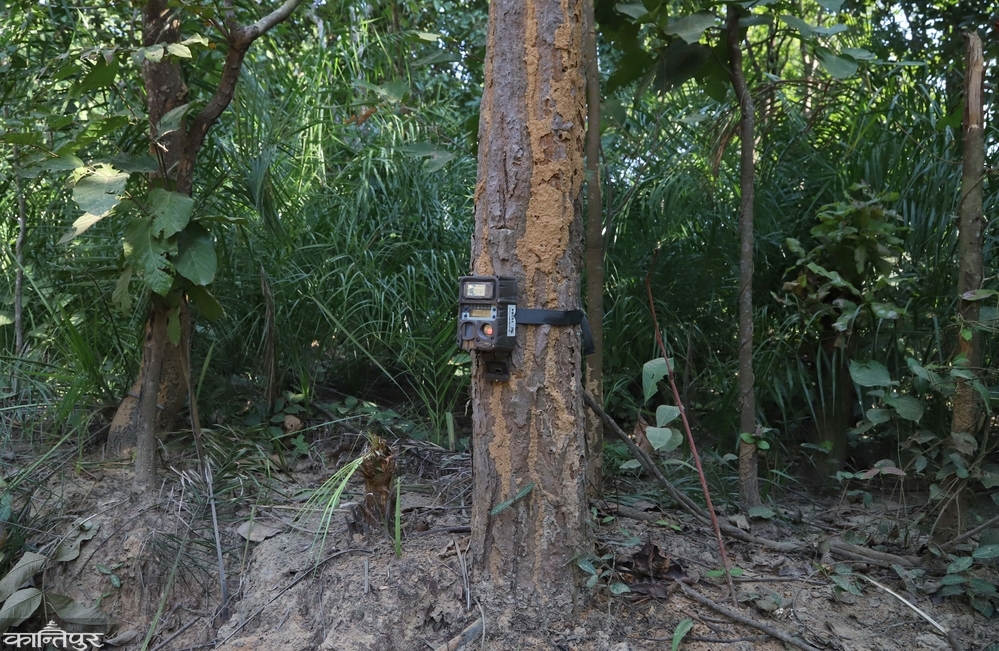
Cameras will be kept at one location for 15 nights. It is said that it will take at least 22 days to complete the counting of one block as it takes about a week to install and return the cameras. Since counting in all areas at once requires a lot of manpower and cameras, the counting has been done in small sections in a phased manner.
While 1,843 cameras were used in 2022, 2,300 cameras will be used this time, said NTNC Member Secretary Dr. Naresh Subedi. The counting, which will start from Pus, will continue till Chaitra. During this period, a tiger occupancy survey will also be conducted from Mahakali to Koshi. The survey is conducted by following feces, urine, footprints and marks in the areas where tigers have been seen or reached.
250 human resources will be mobilized
The census will be conducted in coordination with the Department of National Parks and Wildlife Conservation, with the support of related bodies such as the National Trust for Nature Conservation, WWF and ZSL. About 250 skilled human resources will be deployed across the country for the census. Citizen scientists, local residents, students and employees of the Division Forest Office will also be involved as needed.
Arrangements have been made to monitor the condition of the camera, collect memory cards and report by setting up a tent in a safe place near the forest. The camera takes photos with date, time and location, making data analysis easy. At night, the flash automatically takes photos.
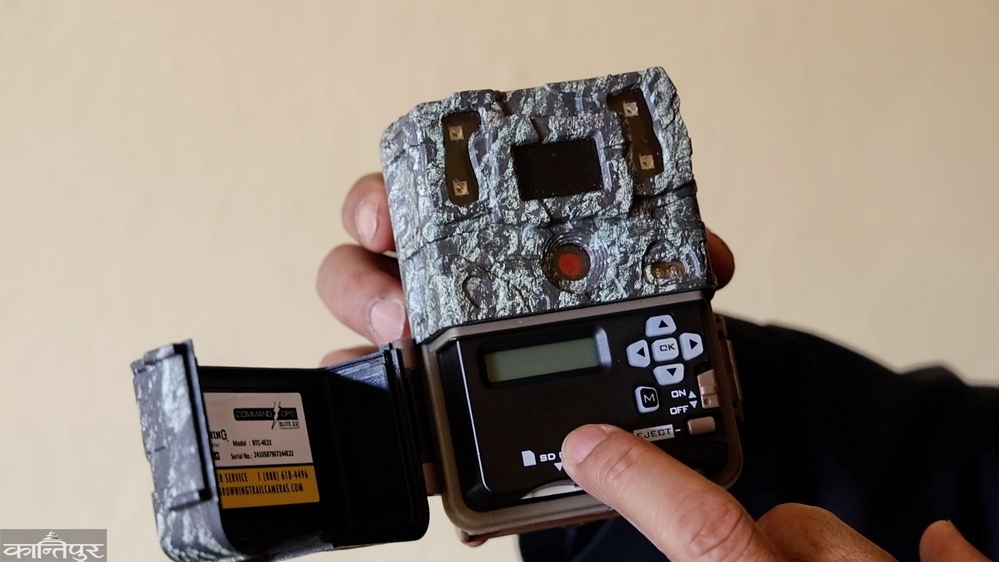
Cameras will be placed near roads, river banks, double roads, fire lines, ravines, gorges, salt and water sources. Since tigers move more from such places, the chances of photo capture are high.
Trees or sticks have been planted 4/5 meters from the road and 45 to 60 cm above the ground. The camera's sensor will automatically start taking photos with changes in wind and temperature.
Along with the tiger census, the number of prey species including deer and wild boar will also be monitored. This is called the 'line transect' method. The density will be determined by counting the number of prey species per kilometer, said NTNC Bardiya Chief Tumbahamphe. In addition, a 'patch occupancy survey' will be conducted to understand human activity around the forest area.
‘This count is useful not only to know the number of tigers, but also the condition of their habitat and food species,’ said Tumbahamphe, ‘based on this, it will help in planning park management and tourism development.’
How are they distinguished?
Generally speaking, all tigers look the same. However, tigers are different from each other. For countries where tigers are found, this animal is also a symbol of prestige.
Earlier, the number of tigers was estimated by analyzing tiger footprints and other signs. Since 2009, automatic cameras have been installed to determine the number of tigers. Automatic cameras are installed on the roads where tigers roam most in tiger areas. If a tiger or anything else crosses it, the camera automatically takes a photo.

The stripes on the body of a tiger are different for each individual. Its yellow body has black stripes. The black stripe is seen from the back to the belly, and from the belly to the back. The face is also decorated with black stripes in different patterns. Each tiger has such stripes in different ways. Like human fingerprints, these stripes become the main means of identifying tigers.
The images collected for about three months will be analyzed using the ‘SCCR’ method through software. Senior ecologist Acharya said that the results will be made public after the expert team re-examines them to ensure that there are no errors. If all the processes are successful, the goal is to make the results public on World Tiger Day, which falls on July 29, 2026.
Why is the tiger important?
Since the tiger is a large predator of the forest, its conservation strengthens the entire ecosystem. ‘While doing development work, we destroy the tiger’s home. We build roads and settlements by destroying forests and then say that tigers have entered settlements,' NTNC Bardiya chief Tumbahamphe said, 'Tiger has not entered settlements, settlements have entered forests. The benefits from tigers are in billions. We live by counting the damage in hundreds/thousands. Tigers are carnivores but not violent. If there is any danger to tigers, it is from humans.' He said that protecting tigers while maintaining human-tiger coexistence is the need of the day.
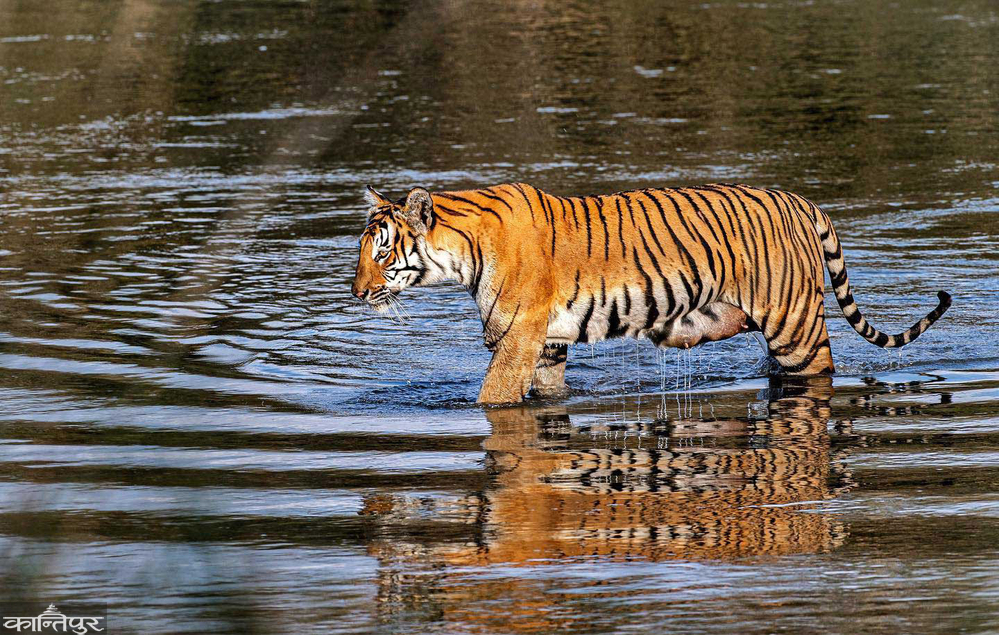
Since tigers are a great heritage of wildlife tourism, it should be protected, says WWF Nepal representative Dr. Ghan Gurung. 'In Bardiya, land that was not sold for 35,000 katthas until 6 years ago is now not available for even 35 lakhs due to tigers. This has led to the development of tourism, the hotel business has flourished, employment opportunities have been created and the entire country has benefited,’ he said.
Since the tiger is the king of the jungle, everyone is eager to see it, says tiger expert Dr. Baburam Lamichhane. ‘That is why a systematic count has to be conducted to know how many tigers there are,’ he said. ‘The natural ecosystem of the forest where tigers are protected automatically improves.’ He says that even if one tiger is protected, many aspects are protected.
When scientific counting began in 2009, there were 121 tigers across the country. Then, 198 were counted in 2013, 235 in 2018, and 355 in 2022.
The largest number of tigers is in Chitwan National Park and the surrounding forest areas. In the 2022 census, it was revealed that there were 128 tigers in Chitwan, 125 in Bardiya National Park, 25 in Banke National Park, 41 in Parsa, and 36 in Shuklaphata.
At a time when 93 percent of the world's tiger habitat and 97 percent of its population have declined in the past 100 years, the fact that the number of tigers in Nepal has nearly tripled in 12 years is a good thing for conservation, says tiger expert Dr. Hemsagar Baral. 'Although it is a moment of joy for this country to increase its international recognition and sometimes even lead to human-tiger conflicts that take lives,' he said. 'Therefore, if it can be shown that tigers and humans can coexist, it will be even more exemplary for the world.'

