Janata Samajwadi Party Nepal, one of those who voted for the government, has withdrawn its support, so the petition demands that a vote of confidence should be taken, and since the government has not initiated any process for that, an interim order should be issued.
We use Google Cloud Translation Services. Google requires we provide the following disclaimer relating to use of this service:
This service may contain translations powered by Google. Google disclaims all warranties related to the translations, expressed or implied, including any warranties of accuracy, reliability, and any implied warranties of merchantability, fitness for a particular purpose, and noninfringement.
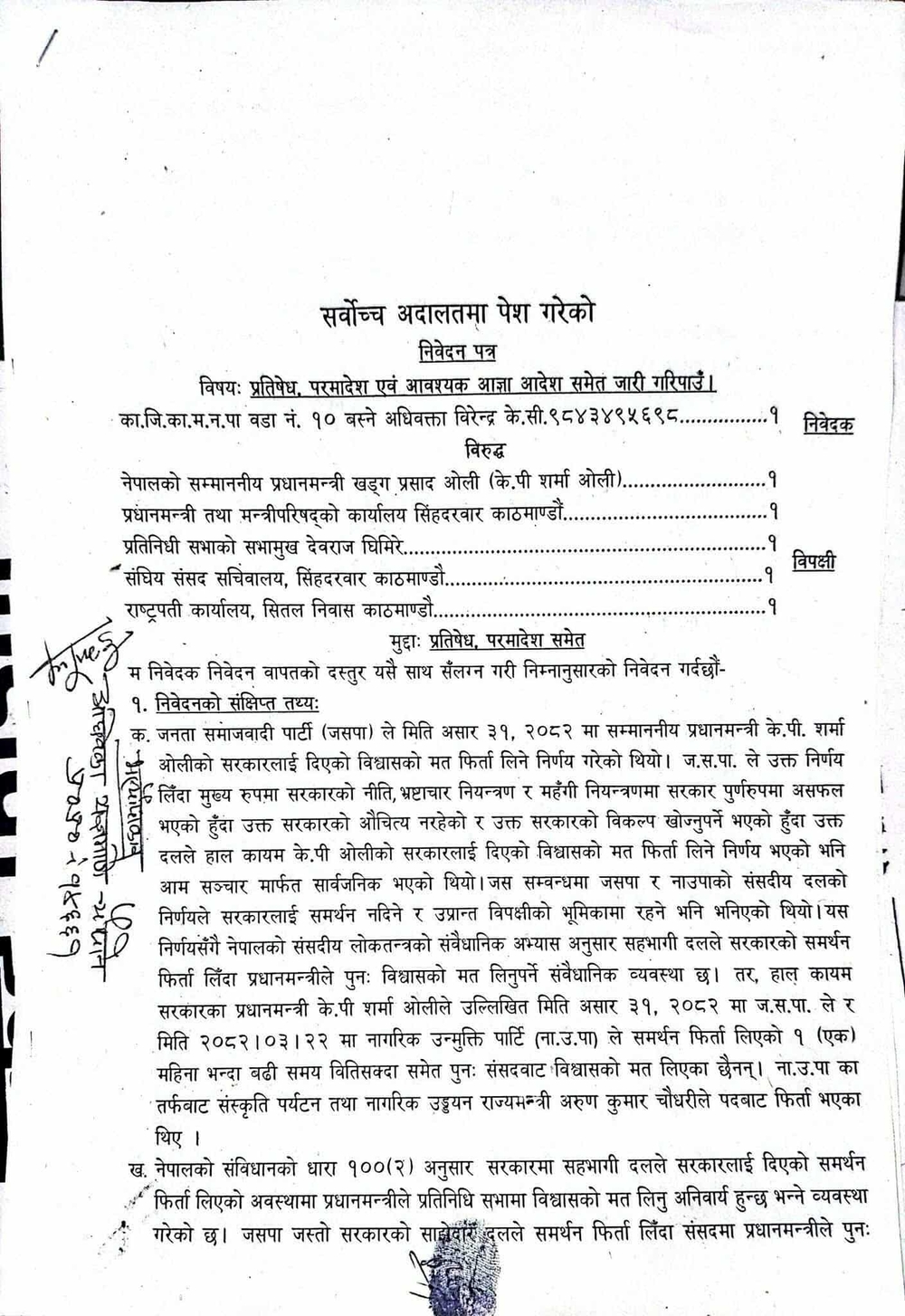
A petition has been filed in the Supreme Court saying that Prime Minister KP Sharma Oli should take a vote of confidence.
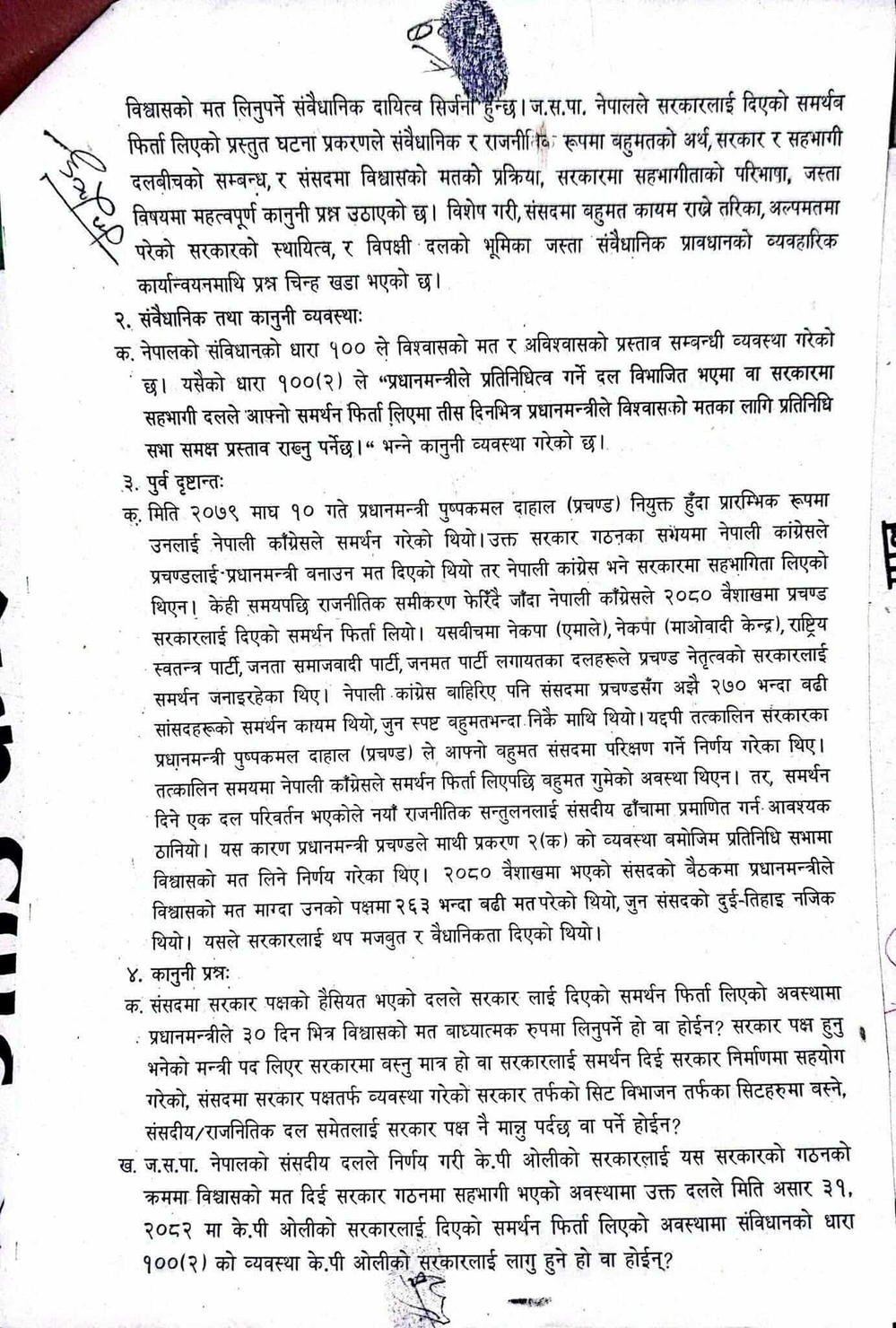
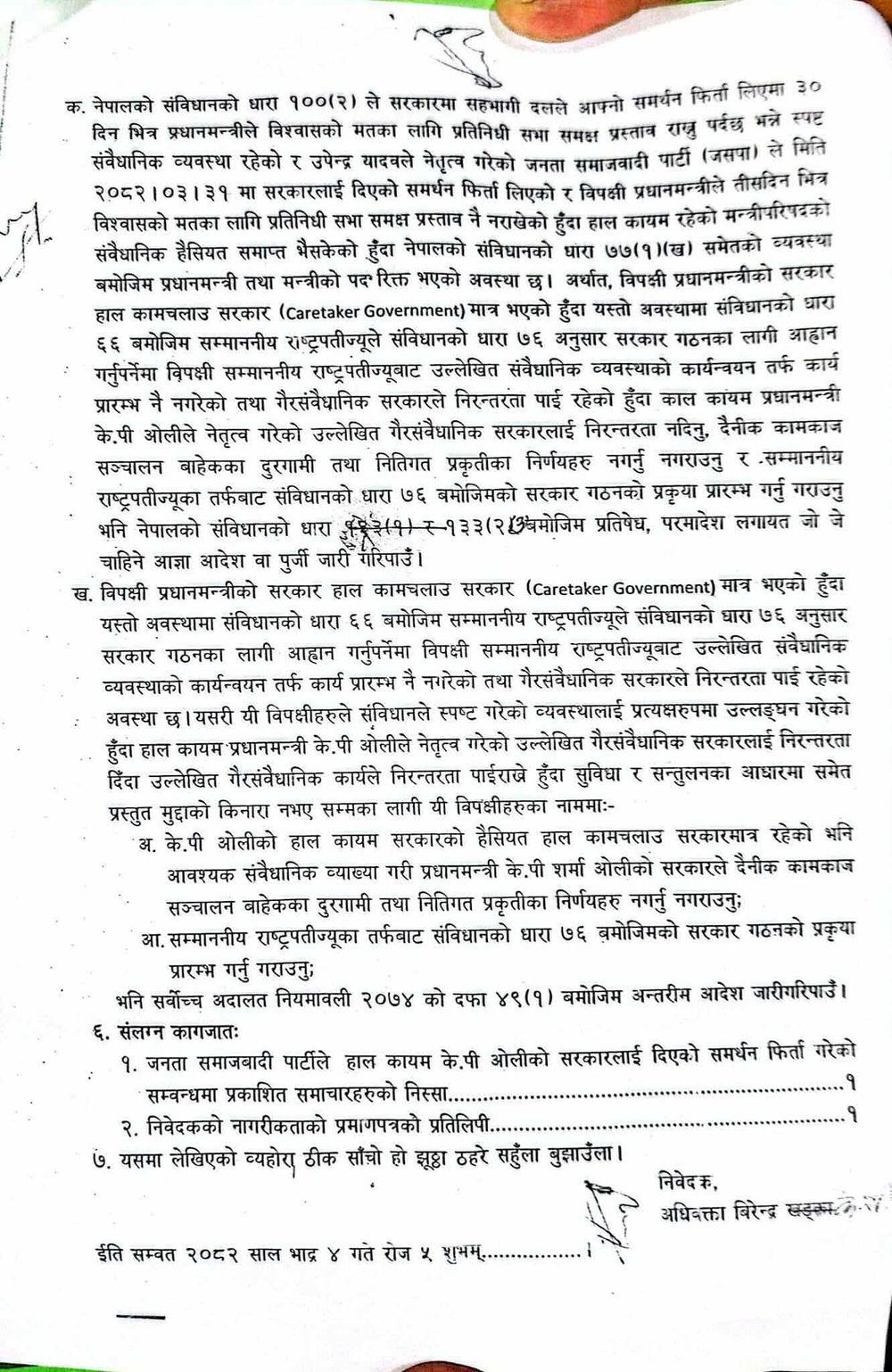
Janata Samajwadi Party Nepal, one of the people who gave a vote of confidence for the government, has withdrawn its support, so a vote of confidence should be taken and since the government has not initiated any process for that, it has been demanded in the writ that an interim order should be issued. Advocate Birendra KC filed a writ petition in the Supreme Court on Thursday.
Since Jaspa announced that it had withdrawn its support to the government on June 32, it has been mentioned in the writ that the vote of confidence should be counted from the same day. It has been claimed in the writ that the government did not proceed with any process for a month after the withdrawal of support and that this action is against the constitution. Prime Minister Oli, Prime Minister and Cabinet Office, Speaker Devraj Ghimire, Federal Parliament Secretariat and President's Office, Shital Niwas have been made opponents in the writ.
Article 100 of the Constitution has provisions on votes of confidence and no-confidence . Article 11(2) states that if the party participating in the government withdraws its support, within thirty days the Prime Minister must submit a proposal to the House of Representatives for a vote of confidence. In sub-section (3) of the same article, there is a provision that the prime minister will be relieved of his post if the proposal submitted in that way cannot be passed by the majority of the members in the House of Representatives.