We use Google Cloud Translation Services. Google requires we provide the following disclaimer relating to use of this service:
This service may contain translations powered by Google. Google disclaims all warranties related to the translations, expressed or implied, including any warranties of accuracy, reliability, and any implied warranties of merchantability, fitness for a particular purpose, and noninfringement.
The government has re-introduced the requirement to register the International Mobile Equipment Identity (IMEI) number on every mobile device. To stop the illegal import and use of mobile sets, Finance Minister Bishnu Paudel has included the subject of IMEI registration in his budget speech for the next financial year.
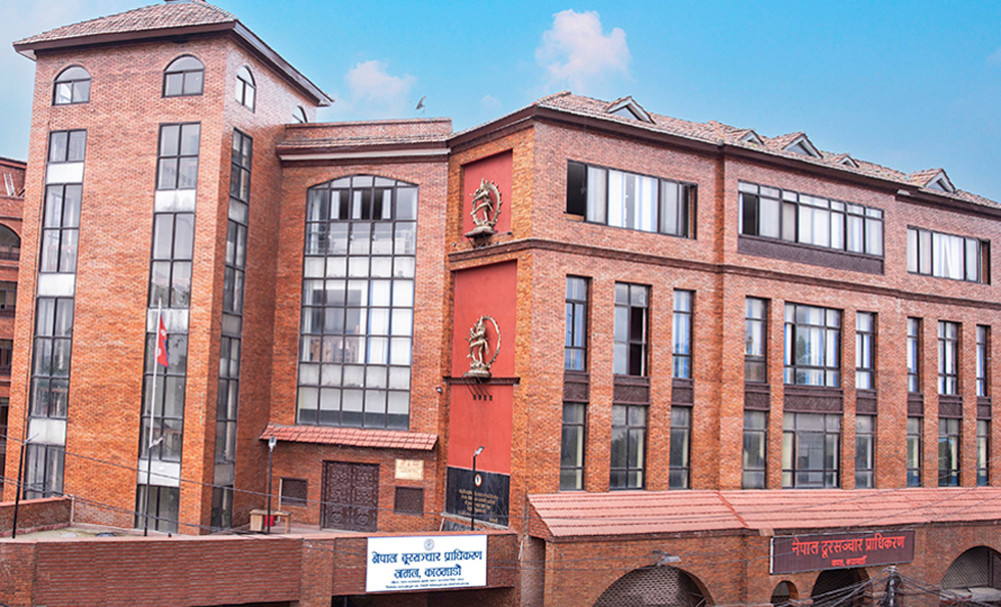
Even earlier, the Nepal Telecommunication Authority had requested users to register IMEI for implementing the Mobile Device Management System (MDMS) system. The software of MDMS has a portal to register the IMEI number of the mobile.
The regulatory authority had earlier informed about MDMS that it has separate sub-domains for importers and individual users. The authority said that separate interfaces have been made for mobile importers, customs offices, law enforcement agencies, mobile operators, authorities and general public.
Although an attempt was made to implement MDMS with the aim of stopping the illegal import of mobile sets, it is currently stalled due to the issue of corruption in the purchase of its equipment. Based on the IMEI number, the mobile phone is classified as valid or invalid.
Authority sent a notice to all mobile devices that MDMS will be implemented from 2nd May 2080, and mobile sets without IMEI registered in the system will not be used. From the authority's website, you can still see whether your mobile's IMEI is registered or not and whether it is registered in the MDMS system before purchasing a new mobile.
The IMEI number is usually 15 digits long. When buying a mobile phone, these numbers are written on the SIM slot or battery. IMEI of no mobiles match each other.
Last February, the special court found two former chairmen of the authority, Digambar Jha and Purushottam Khanal, and contractor companies Numera (M) SDN Berhad Malaysia, Namaste Global Communication Pvt Ltd Singapore and OSI Consulting Pvt Ltd (India) who worked in the joint venture, on charges of corruption in purchasing equipment and consulting services to install the MDMS system.
Special court chairman Teknarayan Kunwar and judges Ritendra Thapa and Vidur Koirala's joint bench sentenced the three convicts last February to a fine of Rs 5 crore 80 lakh 14 thousand 828 74 paise and one year imprisonment.
Another corruption case has been filed by the Commission for Investigation of Abuse of Authority against the employees of the Telecommunication Authority who were acquitted in MDMS.
According to the commission, a corruption case has been filed against the then chairmen of the authority, Jha and Khanal, the then members of the authority Dhanraj Gyawali and Tika Prasad Upreti, the directors of the authority Vijaykumar Rai, Surendralal Hada and Dipesh Acharya, the deputy directors Revatiram Panth, Suresh Basnet, Harinya Prasad Bastakoti, Achutanand Mishra and Sanjeev Adhikari.
Consultant Vanrise Solutions (SAL Offshore) and its CEO Jamal Anauti, local agent Connection Trade Link Private Limited and its chairman Dilip Kumar Gurung and director Tej Prasad Kharel have also been filed a corruption case for misusing state property and causing damage. The authority has demanded 3 billion 218.3 million bigo from everyone.
Although MDMS is currently suspended, registration of IMEI numbers of legally imported mobile phones is being done regularly. In the budget, the government has changed the administrative structure of telephone ownership charges.
In the proposed new arrangement, landline telephone connection and in case of mobile telecom, the tax levied on SIM card and recharge fee has come under the administration authority. Earlier, the Internal Revenue Department used to administer the telephone ownership fee.