We use Google Cloud Translation Services. Google requires we provide the following disclaimer relating to use of this service:
This service may contain translations powered by Google. Google disclaims all warranties related to the translations, expressed or implied, including any warranties of accuracy, reliability, and any implied warranties of merchantability, fitness for a particular purpose, and noninfringement.
On Thursday, 17 years have been completed since the establishment of the Democratic Republic of Nepal. The royalists protested against this system on the day of the Republic Day. Rashtriya Prajatantra Party, Rashtriya Prajatantra Party Nepal has officially announced a movement against the Federal Democratic Republic.
In the past, the voice of the monarchists has been muted, but in recent times, loud voices have been heard against the republican system. But the parties that fought for the establishment of a republic by displacing the monarchy are failing to lay a solid foundation for a federal democratic republic. Even though the monarchical system of governance changed, the parties could not fully implement the republican values.
The main leaders of the major political parties brought the republican system. But the economic and social conditions of the common people have not changed as expected when they are engaged in the game of building and destroying the government in turn. Due to which the question is being raised about this system today.
Most of the questions in the democratic system seem to arise because of the parties. The democratic system develops and moves forward in time. But the political parties of Nepal have failed to create the basic law to develop the democratic republic institutionally and create the administrative structure.
Instead, when the parties are focused on the interests of power, the common people are getting angry and frustrated. If it is not properly managed, there is a risk of a population explosion one day.
2065 On June 15, 2065, after the federal republic was established in the country, 14 governments have been formed. Major leaders of the Congress, UML and Maoists were in the race for power during this period. Because of this, political stability could not be achieved. The graph of disappointment was increasing when the parties that established the republic and created the constitution were not serious in favor of economic reforms to increase the standard of living of the common people.
Since 2064, Congress chairman Sher Bahadur Deuba twice, UML chairman and current prime minister KP Sharma Oli three times, Maoist chairman Pushpa Kamal Dahal three times, then Congress chairman late Girija Prasad Koirala once, Sushil Koirala once, CPN United Socialists chairman Madhav Kumar Nepal once, Nepal Samajwadi Party chairman Baburam Bhattarai once and former judge Khilraj Regmi (Chairman of the Cabinet) have been prime ministers once.
After the promulgation of the constitution in October 2072, the federal democratic republic system was implemented in the country. One in the union, seven in the province and seven hundred and fifty-three local governments became active . But the federal government and the state government became more infamous because they were more busy in power-grabbing. Especially when the union and state governments were unstable, the monarchists found ample space to question the republican system.
The state government could not work effectively when the main party did not show readiness to enact laws in the federal parliament, including the police, employees, etc., which are very necessary for the state. Federalism was questioned as the state government could not work visibly. Especially since the provincial government structure is expensive to run, there has been a demand for abolition of the province.
Chief Ministers and Ministers of the province had to sit down due to the lack of necessary laws and powers. From the outside, it was seen that the state chief minister, ministers and parliamentarians took the facility . The expectation from them to strengthen the province could not be fulfilled due to the lack of necessary laws.
During this period, seven hundred and fifty-three municipalities became active as local permanent governments. Despite the many shortcomings of the local government, it was able to serve the general public directly and develop local resources. Local governments that have succeeded in working according to the spirit of federalism have preserved the reputation of federalism.
According to the provisions of the interim constitution issued in the year 2063, the election of the Constituent Assembly was held for the first time in the history of Nepal in March 2064. That election formed a 601-member Constituent Assembly. The Legislative Parliament of the same Constituent Assembly declared a republican country by ending the 238-year-long monarchy on 15th May 2065.
It took two weeks for Narayanhiti to be vacated after the dialogue between the government and the outgoing King Gyanendra Shah . Gyanendra held a press conference on May 29, 2065 and left Narayanhiti Dabar and moved to Nagarjuna Dabar where the government had arranged for him to live.
Despite the establishment of a republic in the country, the son of the Nepali people had to wait until July 2065 to be elected president. Muluke got its first president in July 2065. The then Congress MP Dr. Ramvaran Yadav was elected the first president of the country. The main basis for the Nepalese "son of the people" becoming the head of state for the first time was the republican system.
After the first Constituent Assembly failed to draft a constitution, the second election of the Constituent Assembly was held in November 2070. The Constituent Assembly was dissolved in May 2069 without issuing the constitution. Even though the Constitution of Nepal was issued on October 3, 2072, the country was moving towards a federal democratic republic system.
The most beautiful aspect of this political system is the provision that the ``son of the people'' is the head of state, that is, the president. So far, the country has had three presidents and vice presidents. In October 2073, for the first time, a woman was elected as the head of state. Former UML leader Bidya Devi Bhandari became the second President of the Republic of Nepal.
Ramchandra Poudel has been elected as the third President. He was elected president in February 2079. The Constitution of Nepal has placed the President as the head of state and guardian and guardian of the Constitution. It is mentioned in the constitution that "promotion of national unity, compliance and protection of the constitution shall be the duty of the president".
Bharat Bimal Yadav, the then president of Sadbhavna Party, agitating for the end of monarchy, said that there could be no alternative to republic. He says that even though the republic has many weaknesses, there is no alternative to it. "Monarchy cannot be an alternative to republic," he said.
There can be no other beautiful system like a democratic republic.
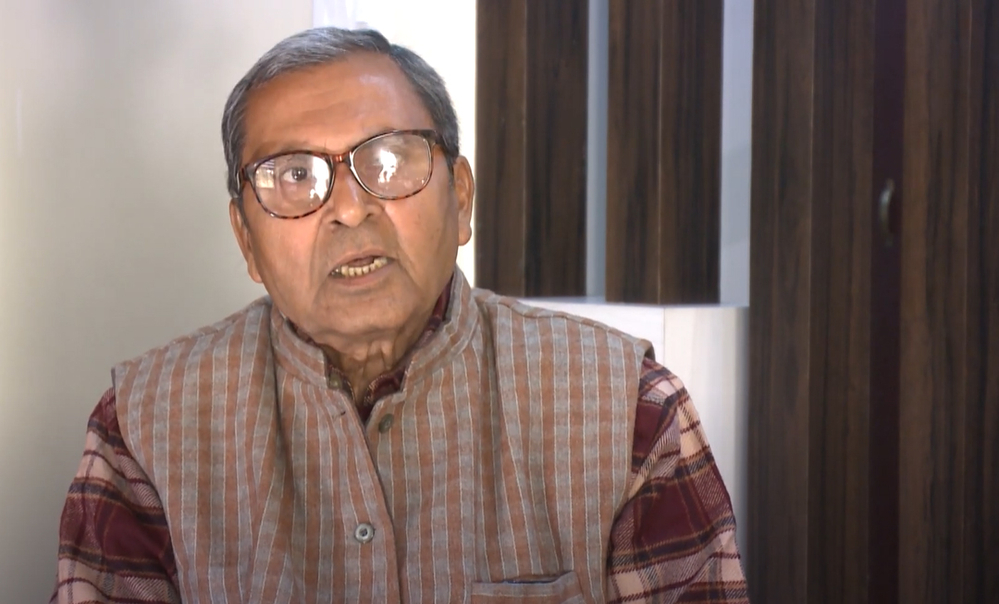 There were many expectations and hopes when the Republic was established . A republican system is not what it should be. People had high expectations. couldn't happen But it cannot be said that nothing has happened in the country. Now everyone can work and speak freely. Now the monarchists are able to speak because of the republican system . Before the mass movement, who could speak in the king's tent? Now, both monarchists and republicans are able to talk with fun.
Why was the question raised about the republic?
The kind of democratic style that should be within the major political parties. Didn't happen. The leaders of major parties should be honest towards the country and the nation. could not be They focused on gaining more power. The leading leaders did not seem to be sincere towards the people and development. Corruption should be controlled in the country. not happening But despite these shortcomings, a monarchy cannot be an alternative to a republic. No matter how weak it is, the monarchy cannot be imagined as an alternative to the democratic republic. The deficiencies in this system should be rectified.
What is the reason for not being able to prepare a strong base of the republic?
The federal republic must be reformed. There is a lot of corruption in those levels of government. Those governments are plagued by corruption. As if the state and local governments have won the union to do corruption. We said that we will establish Singha Durbar in each village. Now, in some cases, it seems like small royal palaces in the villages. There can be no other system as beautiful as a democratic republic. Establishing a monarchy in the country is unthinkable in the present situation.
This seems to be a distaste for the system, isn't it?
The actions of the leaders of the major parties have caused distaste among the general public. The parties had to institutionalize the republic and run according to the will of the people. The working style and conduct of the leaders of major parties had to be improved. Speech behavior should be improved . There had to be a common consensus to strengthen the republican system . Good governance should be strictly implemented in the country and the corrupt should be severely punished. There should be an end to various discriminations and social reforms. Even if this happens, the democratic republic will become stronger.

