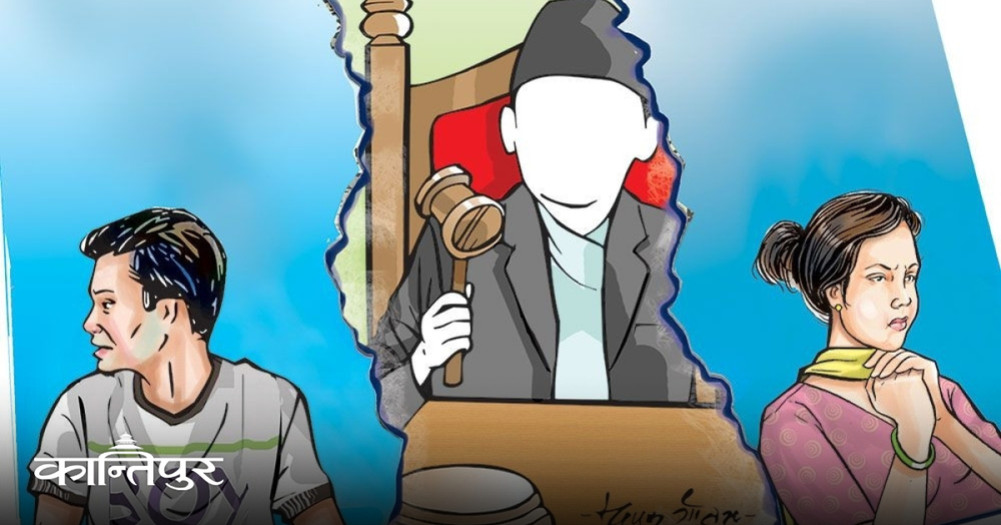
According to the precedent of the Supreme Court, three conditions should be fulfilled for a foreign court decision to be legally recognized
We use Google Cloud Translation Services. Google requires we provide the following disclaimer relating to use of this service:
This service may contain translations powered by Google. Google disclaims all warranties related to the translations, expressed or implied, including any warranties of accuracy, reliability, and any implied warranties of merchantability, fitness for a particular purpose, and noninfringement.
The Supreme Court has decided that the divorce filed in a foreign court will be legally recognized in Nepal as well. In the case of divorce between Narayan Sapkota of Nawalparasi and Pramisa Dawadi of Chitwan, the Supreme Court has decided that international jurisdiction is applicable and based on the judgment made abroad according to the principles of international private law, it will be recognized in Nepal as well.
The decision of the Supreme Court has also set a new precedent in this issue of divorce. Judges Hariprasad Phuyal and Nripadhwaj Niraula have said that three conditions must be fulfilled for a foreign court decision to be legally recognized. The first condition is that the court of the country in which the decision was made must be recognized and enforceable in that country.
In the second condition, the judgment must be final without existing conditions that can be appealed or reviewed. The third condition of the Supreme Court is that the judgment should be issued by a competent court. In the case of Sapkota and Dawadi, as these three conditions are fulfilled, the decision of the foreign court will be legally recognized in Nepal, according to the Supreme Court decision.
"Although the divorce decision made by the Federal Circuit Court of Australia for the divorce of the defendant/plaintiff and the appellant/defendant will be recognized on the basis of the principles of private international law, section 706 of the Civil Code, 2074 and the legal principles propounded by this court," the judgment says, "Eight months before that date, the defendant/plaintiff will file a lawsuit in the district court beginning with the appellant/defendant." While there is still a right, the decision of the High Court of Pokhara to confirm the decision made by the district court and the defendant/plaintiff to get a share of two parts from the property of the registered Sresta Mille Vide mentioned in the order submitted by the defendant, should not be changed otherwise, as it is appropriate in the spirit of law and justice. Sapkota went to Australia after marriage. And, after a while, he also called his wife. However, in Australia, a divorce case was registered in the court of their agreement. While the case was going on in Australia, Dawadi filed a case in the Nawalpur District Court, demanding a portion of maintenance as Sapkota did not treat her like a wife.
The Australian court decided to divorce them. Sapkota filed a reply in the district court, insisting that Dawadi's case should be dismissed as there is no legal obligation to give her share in Nepal as she has been divorced in Australia. However, District Judge Vidur Koirala decided on Chait 5, 2074 that even though there was a divorce in Australia, Pramisa had already filed a partial suit in Nepal and decided to get a share according to the law.
In the appeal filed by Sapkota against that, the Pokhara High Court also upheld the decision of the first court on August 17, 2076. In the case filed by Sapkota against the decision of the High Court, the Supreme Court also upheld the decision of the High Court and the district and decided that the divorce in a foreign court will be recognized in Nepal.